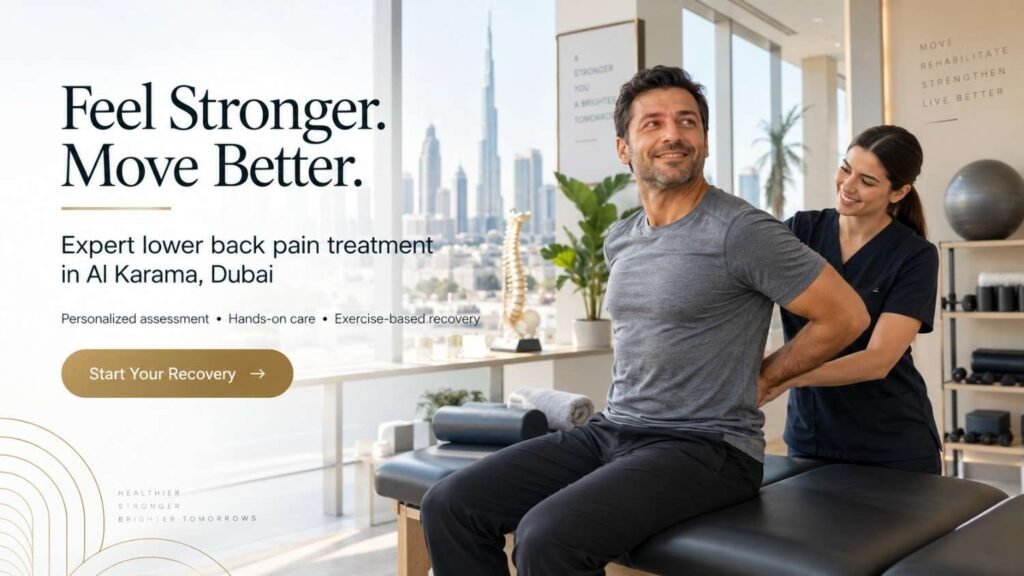
Recover smarter with sports physiotherapy in Dubai at Physioveda Medical Center. Our DHA-licensed physiotherapists support athletes, runners, gym-goers, footballers, and padel players with sports injury recovery, return-to-sport rehabilitation, mobility, strength, and long-term performance care in Al Wasl/Jumeirah and Al Karama.

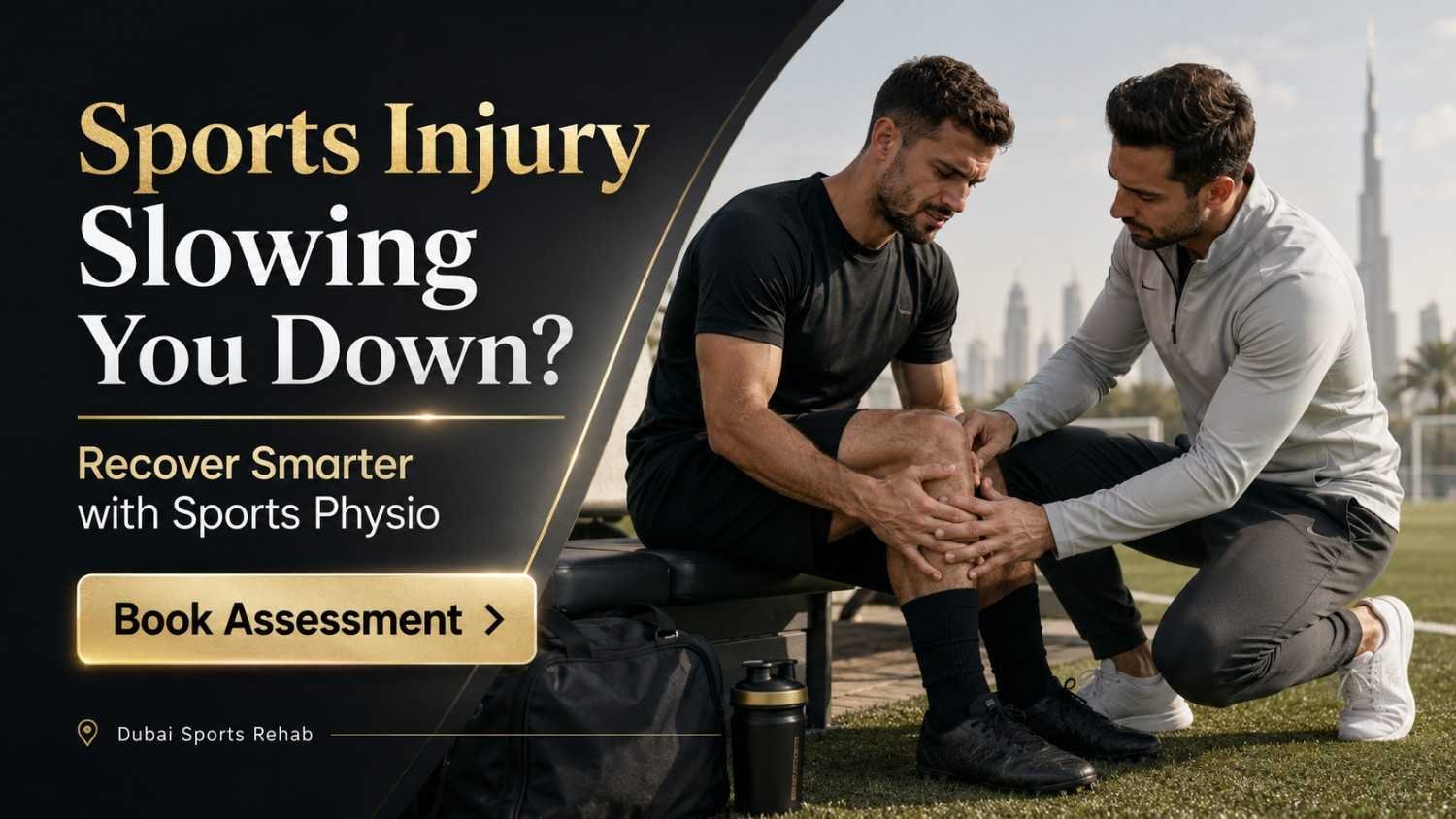
Sports physiotherapy Dubai is not only for athletes after a major injury; it is also for the runner with recurring knee pain, the padel player whose shoulder keeps tightening, the footballer returning after an ankle sprain, or the gym-goer who feels strong but keeps getting the same lower-back flare-up. In Dubai, people train hard. Many play football after work, join CrossFit-style sessions, run on weekends, play padel two or three times a week, and still sit long hours at a desk.
At Physioveda Medical Center, our DHA-licensed physiotherapists see a common pattern: active people often wait until pain starts affecting performance before they ask for help. By then, the problem is not always just “one tight muscle” or “one weak joint.” It may involve mobility, strength, posture, muscle imbalance, training load, running form, recovery habits, or old injuries that were never fully rehabilitated.
This is where structured sports physiotherapy in Dubai may help. The goal is simple: recover well, move better, reduce injury risk, and stay active for longer.
What Is Sports Physiotherapy Dubai?
Sports Physiotherapy Dubai

Sports physiotherapy Dubai is a specialised area of physiotherapy focused on sports injuries, athletic movement, recovery, performance support, and safe return to activity. It is not only about pain relief. A good sports physiotherapist Dubai approach looks at why the pain started, what tissue may be irritated, how the body is compensating, and what the athlete needs to return to their sport safely.
For example, a runner with knee pain may not only need knee treatment. We may need to assess hip strength, ankle mobility, foot control, running load, cadence, recovery, and training surfaces. A padel player with shoulder pain may need shoulder care, but also thoracic mobility, scapular control, grip load, and serving mechanics.
Sports physiotherapy may support conditions such as:
- ACL injuries and post-surgical rehabilitation
- Meniscus irritation and knee pain
- Ankle sprains and instability
- Hamstring, calf, and groin strains
- Shoulder pain, rotator cuff irritation, and throwing injuries
- Tennis elbow and golfer’s elbow
- Achilles and patellar tendon pain
- Lower back pain linked with lifting, running, or sport
- Plantar fasciitis and heel pain
- Postural overload affecting sports performance
At Physioveda Medical Center, our assessment philosophy is full-body. We do not look only at the painful area. We look at the complete movement chain because sport rarely stresses one joint in isolation.
Why Athletes and Active People in Dubai Need Sports Physiotherapy
Sports Physiotherapy Dubai

Sports physiotherapy Dubai is becoming more important because it has a strong active culture. People train in gyms, run near beaches and parks, play football, padel, tennis, cycling, swimming, Pilates, and high-intensity group classes. Many are not professional athletes, but they still train with professional-level intensity.
The problem is that the body does not only respond to motivation. It responds to load, recovery, sleep, nutrition, work stress, mobility, and movement quality. We often see active people who are strong, but not balanced. They may lift heavy but have limited ankle mobility. They may run regularly but have weak hip control. They may play padel three times a week but never work on shoulder stability.
Common overload risk factors include sudden changes in training intensity, playing multiple sports in the same week, returning too quickly after a break, exercising in heat, poor recovery between sessions, long sitting hours, unsupportive footwear, and ignoring early warning signs. This is why sports injury treatment Dubai should not be delayed until the injury becomes severe.
Early physiotherapy assessment may help identify the real reason behind repeated pain and guide a safer training plan.
Sports Physiotherapy Dubai
Recovery Is Not Rest Alone
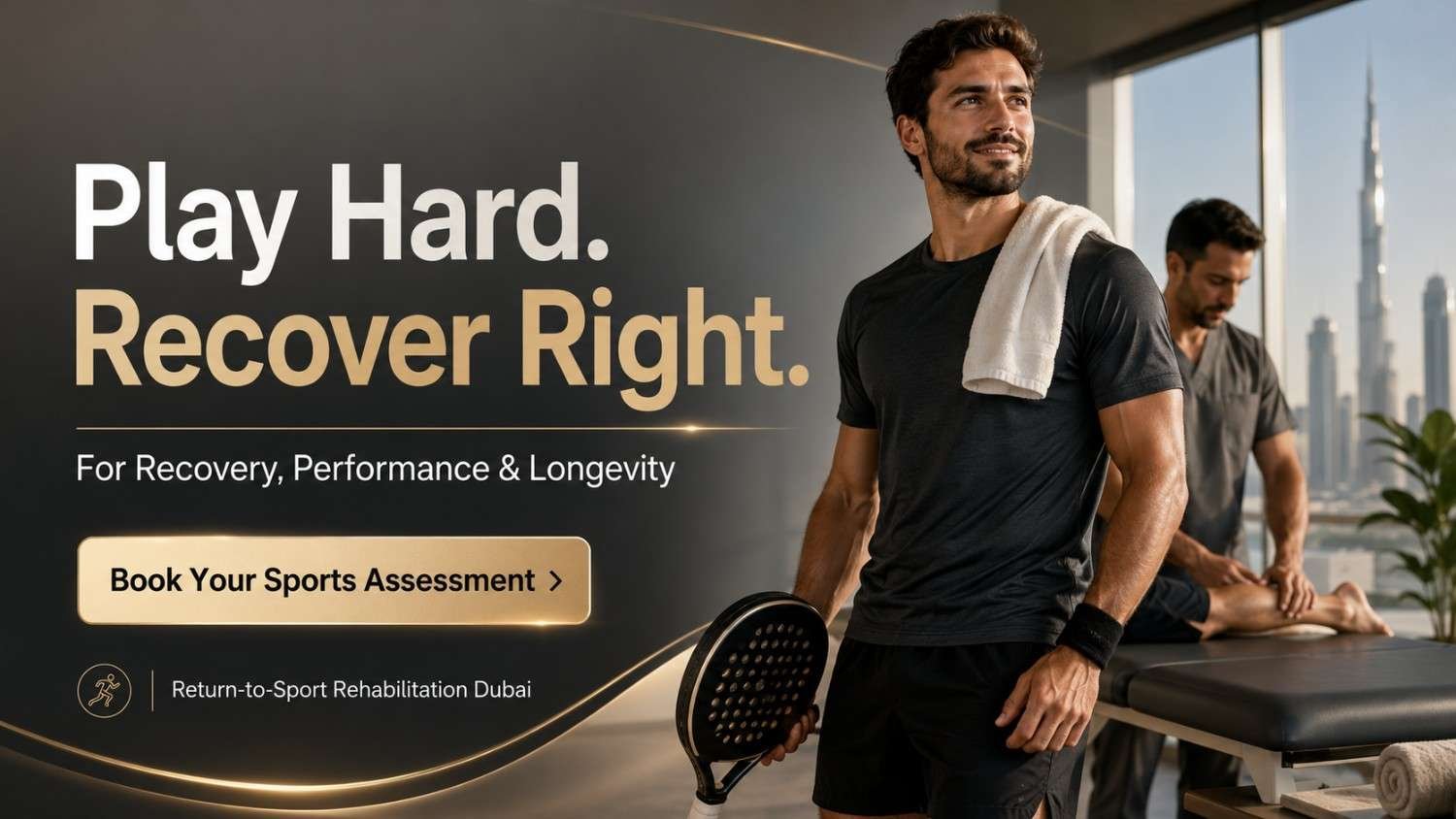
Sports rehabilitation Dubai has moved far beyond the old advice of “just rest until it feels better.” Rest has a role, especially in the early stage of injury, but complete rest for too long can lead to stiffness, weakness, loss of confidence, and slower return to sport.
A modern approach to soft-tissue injuries often uses the PEACE & LOVE framework described by Dubois and Esculier in the British Journal of Sports Medicine, and summarised by Physio-Pedia here: PEACE & LOVE Principle.
In simple language, PEACE focuses on early care: protect the injured area, elevate when needed, avoid unnecessary irritation, compress where suitable, and educate the patient. LOVE then focuses on the next stage: load the tissue gradually, maintain optimism, support circulation through safe activity, and use exercise to rebuild capacity.
This does not mean everyone should start exercising aggressively after injury. It means recovery should be guided. Athletes who come to us after a hamstring strain often feel better after a few days, but the tissue may not be ready for sprinting, sudden acceleration, or match play. That is where structured progression matters.
Good sports physiotherapy may help you move from pain control to mobility, then strength, then sport-specific loading, and finally confident return to training.
When Does a Sports Injury Need Urgent Medical Attention?
Sports Physiotherapy Dubai
Sports injury treatment Dubai should always begin with safety. Some injuries need urgent medical assessment, not physiotherapy alone.
You should seek urgent medical attention if you have:
- A suspected fracture or you heard a crack at the time of injury
- A joint that gives way, feels unstable, or looks deformed
- Inability to bear any weight or walk more than a few steps
- Head injury, dizziness, confusion, vomiting, blurred vision, or concussion symptoms
- Severe swelling or bruising that is increasing
- Numbness, tingling, coldness, or colour change around the injured area
- Signs of infection such as fever, heat, redness, or feeling unwell
The NHS guidance on sprains and strains also highlights urgent review when pain is severe or worsening, swelling or bruising is significant, weight-bearing is not possible, or infection signs are present: NHS sprains and strains guidance.
Physiotherapy can be very useful for many sports injuries, but it should not replace emergency or medical care when red flags are present. At Physioveda Medical Center, our DHA-licensed physiotherapists can assess whether physiotherapy is suitable or whether referral is needed.
Common Sports Injuries Treated With Sports Physiotherapy in Dubai
Sports Physiotherapy Dubai
Knee Injuries
ACL physiotherapy Dubai is one of the most important parts of knee injury recovery, whether the injury is managed conservatively or after surgery. Knee injuries are common in football, padel, running, basketball, gym training, and any sport involving cutting, jumping, twisting, or sudden deceleration.
ACL injuries often happen when the knee collapses inward, the foot is planted, and the body changes direction quickly. Meniscus injuries may occur with twisting or deep loaded bending. Patellofemoral pain often appears in runners, gym-goers, and people doing repeated squats, stairs, or lunges.
Physiotherapy may include swelling control, range-of-motion work, quadriceps and hamstring strengthening, hip control, balance training, landing mechanics, and return-to-sport drills. For broader knee pain guidance, you can also read our knee pain treatment in Dubai blog.
Ankle Sprains
Ankle sprain physiotherapy Dubai is important because many ankle sprains feel “fine” after a few days, but the joint may remain unstable. Ankle sprains commonly happen in football, padel, tennis, basketball, running, and gym exercises where the foot lands awkwardly or rolls inward.
A mild sprain may involve stretching of ligaments. A more serious sprain may involve ligament tearing, swelling, bruising, and difficulty walking. If the ankle keeps rolling again and again, it may affect confidence and performance.
Physiotherapy may include swelling management, joint mobility, calf and foot strengthening, balance training, proprioception drills, hopping control, change-of-direction work, and gradual return to running or sport. You can also read our detailed guide on ankle pain treatment in Dubai.
Hamstring Strains
Hamstring strains are common in footballers, runners, sprinters, and athletes who accelerate quickly. They often occur during sprinting, overstretching, or sudden speed changes. Athletes who come to us after a hamstring strain often say, “It felt better, so I played again,” and then the pain returned.
The challenge with hamstring injuries is that pain reduction does not always mean sprint readiness. The muscle needs progressive loading, strength through range, pelvic control, and gradual exposure to speed.
Physiotherapy may include soft-tissue work, mobility, eccentric hamstring strengthening, glute activation, running drills, sprint progression, and return-to-play testing.
Shoulder Injuries
Shoulder injuries are common in padel, tennis, swimming, gym training, boxing, and overhead sports. Pain may come from rotator cuff irritation, shoulder impingement-type symptoms, instability, tendon overload, or poor scapular control.
The shoulder depends heavily on coordination between the neck, upper back, shoulder blade, and arm. A padel player with shoulder pain may not only need shoulder strengthening; they may also need thoracic mobility, scapular stability, grip-load management, and better control during overhead shots.
Physiotherapy may include manual therapy, mobility work, rotator cuff strengthening, scapular control, progressive loading, and sport-specific movement retraining.
Lower Back Pain in Athletes
Lower back pain in athletes may affect runners, lifters, footballers, golfers, tennis players, and gym-goers. It may be linked with repeated extension, rotation, poor lifting mechanics, hip stiffness, core endurance deficits, or sudden training spikes.
Many active people try to stretch the back repeatedly, but the real issue may be hip mobility, trunk control, breathing mechanics, or load management. That is why full assessment matters.
Physiotherapy may include pain-relief strategies, manual therapy, mobility training, core control, glute strengthening, lifting-form correction, and graded return to sport. You can explore our back pain treatment service for more information.
Tendon Pain
Tendon pain includes Achilles tendinopathy, patellar tendon pain, tennis elbow, and golfer’s elbow. These problems are common in runners, jumpers, footballers, tennis players, padel players, and gym users.
Tendon pain often builds gradually. It may feel stiff at the beginning of activity, improve during warm-up, then return later or the next morning. This is common in Achilles and patellar tendon cases.
Physiotherapy may include load management, progressive strengthening, isometric exercises, eccentric or heavy-slow resistance training where suitable, mobility work, sports technique review, and adjunct therapies if clinically appropriate. For heel-related conditions, you may also read our guide on plantar fasciitis, heel pain, and flat foot rehab.
Our Sports Physiotherapy Assessment Approach
Sports Physiotherapy Dubai
Sports physiotherapist Dubai assessment at Physioveda Medical Center is not a quick look at the painful joint. We assess the person, the sport, the training routine, and the movement pattern.
A typical assessment may include:
- Pain and injury history
- Training and competition load discussion
- Previous injury or surgery review
- Posture assessment
- Muscle imbalance screening
- Joint mobility testing
- Strength testing
- Balance and proprioception checks
- Movement pattern analysis
- Gait or running observation where relevant
- Sport-specific movement review
- Recovery and lifestyle discussion
We use PPCM, the Physioveda Posture Correction Matrix, as a structured framework behind our assessment. PPCM helps us look at posture, movement chain, muscle imbalance, joint loading, and functional patterns together. This is especially useful for athletes because pain in one area may be influenced by another area.
For example, knee pain may be affected by hip control and foot mechanics. Shoulder pain may be affected by upper-back stiffness. Lower-back pain may be affected by hip mobility and training load. PPCM allows our team to connect these patterns and design a more complete plan. You can read more about our approach on our posture correction and ergonomics page.
What Sports Physiotherapy in Dubai May Include
Sports Physiotherapy Dubai
Manual Therapy
Sports physiotherapy Dubai may include manual therapy to support pain reduction, joint mobility, and soft-tissue comfort. This may involve joint mobilisation, soft-tissue techniques, assisted stretching, or hands-on movement correction.
Manual therapy is usually not the whole treatment. We use it to prepare the body for better movement and exercise, not as a replacement for strengthening and sport-specific rehab.
Sports Massage & Myofascial Release
Sports massage Dubai may help with muscle tightness, recovery, soreness, and movement comfort when used appropriately. It can be useful for runners, footballers, gym-goers, and people who train frequently.
At Physioveda Medical Center, sports massage and myofascial release may be combined with mobility work, activation, and load guidance. You can explore our dedicated sports massage service for more details.
Mobility & Flexibility Training
Mobility is not just stretching. It is the ability to control movement through a usable range. Athletes often need mobility in the ankles, hips, thoracic spine, shoulders, and wrists depending on their sport.
A runner may need ankle and hip mobility. A padel player may need thoracic rotation and shoulder mobility. A lifter may need hip and ankle mobility for safer squat mechanics.
Strengthening & Load Management
Strengthening is central to sports rehabilitation Dubai. Injured tissues need gradual exposure to load so they can tolerate sport again. Load management means deciding how much training is suitable, what should be reduced, and what can continue safely.
This may include progressive resistance exercises, tempo work, isometrics, eccentric loading, single-leg strength, core endurance, and return-to-running progression.
Balance & Proprioception Training
Balance and proprioception are essential after ankle sprains, ACL injuries, knee pain, and lower-limb injuries. Proprioception is the body’s ability to sense joint position and movement.
Training may include single-leg balance, unstable-surface control, landing drills, hopping, cutting, and sport-specific reaction drills. These exercises may reduce the risk of repeated injury when used as part of a complete programme.
Functional & Return-to-Sport Training
Functional training bridges the gap between clinic exercise and real sport. This may include squatting, lunging, jumping, landing, sprinting, cutting, throwing, lifting, or sport-specific drills.
For return-to-sport rehabilitation Dubai, we do not want the athlete to feel good only in the clinic. We want movement to hold up under the demands of the sport.
Shockwave Therapy, Dry Needling & TECAR
Some athletes may benefit from adjunct therapies depending on assessment findings. These may include shockwave therapy for selected tendon or soft-tissue conditions, dry needling for suitable muscle-related pain patterns, or TECAR therapy as part of a broader rehabilitation plan.
These therapies are not magic shortcuts. They may support recovery when combined with correct exercise, load management, and movement retraining.
Return to Sport: Why Timing and Criteria Matter
Sports Physiotherapy Dubai
Return-to-sport rehabilitation Dubai should not be based only on pain. Pain reduction is important, but it does not automatically mean the athlete is ready for match play, sprinting, jumping, heavy lifting, or competition.
The return-to-sport process is better understood as a continuum. Physio-Pedia describes stages such as return to participation, return to sport, and return to performance: Return to Sport.
In clinic, this means we look at more than symptoms. Readiness may include:
- Strength symmetry
- Joint mobility
- Balance and stability
- Sport-specific control
- Ability to tolerate training load
- Confidence in movement
- Safe acceleration, deceleration, landing, and change of direction
- No major swelling or delayed pain response after activity
A footballer after an ankle sprain may first walk pain-free, then jog, then run, then cut, then return to controlled drills, then team training. A gym-goer after lower-back pain may move from bodyweight control to loaded patterns, then heavier lifts, then full training.
Good timing protects confidence. Returning too early may increase the risk of recurrence. Waiting too long without proper rehab may create fear, weakness, and loss of performance.
Sports Physiotherapy for Different Activities in Dubai
Sports Physiotherapy Dubai
For Footballers
Footballers need speed, cutting, balance, strength, and endurance. Common injuries include ankle sprains, ACL injuries, hamstring strains, groin pain, calf injuries, and knee pain.
Physiotherapy for footballers may focus on sprint mechanics, landing control, agility, single-leg strength, hip control, and match-specific conditioning. For ligament injuries, you can also read our blog on physiotherapy for ligament tear.
For Padel & Tennis Players
Padel and tennis place repeated load on the shoulder, elbow, wrist, spine, hips, and knees. Common issues include shoulder pain, tennis elbow, golfer’s elbow, calf strains, knee pain, and lower-back pain.
Physiotherapy may focus on shoulder blade control, rotator cuff strength, thoracic mobility, grip-load management, hip rotation, and recovery between matches.
For Runners
Runners commonly experience knee pain, Achilles tendon pain, plantar fasciitis, calf tightness, hip pain, shin pain, and lower-back discomfort. Often, the issue is not only running itself, but how quickly distance, pace, hills, or intensity increased.
Physiotherapy may include running observation, strength work, cadence discussion, mobility, footwear guidance, calf capacity training, and graded return-to-running plans.
For Gym-Goers
Gym-goers may develop shoulder pain, lower-back pain, knee pain, wrist pain, or tendon overload. Heavy lifting with poor mobility or fatigue can irritate joints and soft tissues.
Physiotherapy may focus on lifting mechanics, mobility, core control, shoulder stability, hip and ankle mobility, exercise modification, and load management so training can continue safely where appropriate.
Performance Longevity: Training Smarter, Not Just Harder
Sports Physiotherapy Dubai
Sports physiotherapy Dubai should not only be about coming back after injury. It should also support performance longevity — the ability to keep training, playing, and progressing for years without constantly breaking down.
This matters because many athletes do not lose performance only because of one big injury. They lose consistency because of repeated small problems: a hamstring that keeps tightening, a knee that swells after football, an ankle that rolls again, or a shoulder that becomes painful after padel. Over time, these problems affect confidence.
At Physioveda Medical Center, we also use V-FIT, a Physioveda-developed concept that works alongside the athlete’s coach or trainer. V-FIT is not a replacement for strength and conditioning coaching. It supports the athlete through mobility, recovery, movement quality, injury-risk reduction, and physiotherapy-based maintenance.
Incomplete rehab can affect an athlete’s confidence and long-term consistency. When the body does not feel reliable, the athlete starts holding back. They stop sprinting fully, avoid certain lifts, hesitate before jumping, or lose trust in the injured side. Proper rehab may help rebuild both physical capacity and movement confidence.
Injury Prevention and Long-Term Athletic Maintenance
Sports Physiotherapy Dubai
Sports injury treatment Dubai is important, but long-term maintenance is equally valuable. Injury prevention does not mean avoiding every injury. Sport always carries some risk. The goal is to reduce avoidable risk and keep the body prepared for the demands of training.
A practical maintenance plan may include:
- Regular mobility work for sport-specific restrictions
- Strength training for weak links
- Balance and proprioception drills
- Movement screening every few months
- Warm-up planning
- Recovery guidance
- Training-load review
- Coordination with trainers or coaches
- Early assessment when small pain keeps returning
For example, a runner may need calf and hip strength work even when pain has reduced. A padel player may need shoulder and thoracic mobility between games. A gym-goer may need technique modifications and recovery planning during heavy training phases.
Our aim is not to stop active people from training. The aim is to help them train smarter.
Who Can Benefit From Sports Physiotherapy in Dubai?
Sports physiotherapy Dubai may benefit many types of active people, not only professionals. This includes:
Professional athletes
Amateur athletes
Footballers, runners, cyclists, swimmers, and racket-sport players
Gym members and weightlifters
Weekend sports players
People returning after injury
Post-surgical rehabilitation cases
ACL, meniscus, ankle sprain, tendon, and ligament injury cases
People with repeated pain during training
Active people who want injury-risk reduction and performance longevity
If pain is affecting your training, performance, confidence, or daily movement, a physiotherapy assessment may help you understand what is happening and what to do next.
Why Choose Physioveda Medical Center for Sports Physiotherapy Dubai?
At Physioveda Medical Center, our sports physiotherapy team works with active people across different levels — from regular gym-goers to runners, footballers, padel players, and post-injury cases.
Reasons patients choose us for sports physiotherapy Dubai include:
- DHA-licensed physiotherapists
- Two Dubai locations: Al Wasl/Jumeirah and Al Karama
- Full-body assessment approach
- PPCM: Physioveda Posture Correction Matrix
- V-FIT support for active people and athletes
- Insurance-friendly process
- Sports massage, manual therapy, exercise rehab, and advanced modalities where suitable
- Multidisciplinary referral support when medical review is needed
Our focus is simple: assess properly, treat safely, progress gradually, and help you return to activity with better confidence.
Book Your Sports Physiotherapy Assessment in Dubai
If you are dealing with a sports injury, recurring pain, reduced mobility, or fear of returning to training, our DHA-licensed physiotherapists can assess your movement, identify contributing factors, and guide a structured recovery plan.
Book your sports physiotherapy Dubai assessment at Physioveda Medical Center.
Call: 800 8332
WhatsApp: +971 56 546 1900
FAQs
What is sports physiotherapy?
Sports physiotherapy is a specialised area of physiotherapy focused on sports injuries, recovery, movement quality, and safe return to activity. It may include assessment, manual therapy, exercise rehabilitation, load management, and return-to-sport planning.
Who needs sports physiotherapy in Dubai?
Anyone who plays sport, trains in the gym, runs, plays padel, football, tennis, or has recurring pain during activity may benefit from sports physiotherapy. It is useful for both injury recovery and long-term athletic maintenance.
Can sports physiotherapy help prevent injuries?
Sports physiotherapy may help reduce the risk of certain injuries by improving strength, mobility, balance, movement control, and training-load awareness. It cannot remove all injury risk, but it can help active people prepare their body better.
Is sports physiotherapy only for professional athletes?
No. Sports physiotherapy is also for amateur athletes, gym members, runners, weekend players, and active adults. If your body is under sporting or training load, sports physiotherapy may be relevant for you.
What is return-to-sport rehabilitation, and why does timing matter?
Return-to-sport rehabilitation is the staged process of moving from injury recovery back to training, sport, and performance. Timing matters because pain relief alone does not always mean the body is ready for sprinting, jumping, cutting, lifting, or competition.
Should I rest completely after a sports injury, or keep moving?
In the early stage, some protection and relative rest may be needed. But complete rest for too long can lead to stiffness and weakness, so movement should usually be reintroduced gradually when safe and appropriate.
How long does sports physiotherapy recovery usually take?
Recovery time depends on the injury type, severity, age, training load, general health, and sport demands. A mild strain may improve in a short period, while ligament injuries, tendon pain, and post-surgical cases may need a longer structured plan.
When should I see a doctor instead of (or before) a physiotherapist?
You should seek urgent medical care if you suspect a fracture, cannot bear weight, have a joint that feels unstable or deformed, have severe swelling, infection signs, numbness, or symptoms after a head injury. These situations need medical assessment, not physiotherapy alone.
Conclusion
Sports physiotherapy Dubai is about more than treating pain. It is about understanding your injury, rebuilding movement, restoring confidence, and helping you stay active for the long term. Whether you are a runner, footballer, padel player, gym-goer, or weekend athlete, structured physiotherapy may support recovery, performance, and longevity. At Physioveda Medical Center, our DHA-licensed physiotherapists are here to assess your movement properly and guide your next step safely.
Disclaimer
This blog is for general educational awareness only. It does not replace medical consultation, diagnosis or emergency care. Treatment suitability depends on individual assessment. If you experience a suspected fracture, a joint that feels unstable, inability to bear weight, or symptoms of a head injury, seek urgent medical attention.
Related Reading
For more guidance, explore our related resources on knee pain treatment in Dubai, ankle pain treatment in Dubai, sports massage, posture correction and PPCM, and physiotherapy for ligament tear. You can also follow Physioveda on Instagram at @physioveda for movement tips, clinic updates, and educational posts.
Book a Consultation
It’s easy and free!
Tags:acl physiotherapy dubaiankle injury physiotherapy Dubaiankle rehab Dubaiankle sprain physiotherapy Dubaideep tissue sports massage dubaiDHA licensed physiotherapist Dubaifootball injury physiotherapy Dubaigolfer’s elbow physiotherapy Dubaihamstring injury treatment Dubaihamstring strain physiotherapy Dubaiinjury prevention physiotherapy Dubaiknee injury physiotherapy Dubaiknee pain treatment Dubaimeniscus injury physiotherapy Dubaimobility training Dubaimuscle recovery dubaipadel injury physiotherapy Dubaiperformance physiotherapy Dubaiphysiotherapy Al Karamaphysiotherapy Al Waslphysiotherapy clinic dubaiphysiotherapy in Dubaiphysiotherapy JumeirahPhysioveda sports physiotherapyPhysioveda sports physiotherapysports physiotherapy Dubaireturn-to-sport rehabilitation Dubairunning injury physiotherapy Dubaishoulder injury physiotherapy Dubaishoulder pain physiotherapy Dubaisports injury physiotherapy dubaisports injury treatment dubaisports massage dubaisports massage therapist dubaisports physio dubaisports physiotherapist Dubaisports physiotherapy Dubaisports rehabilitation dubaistrength rehab Dubaitennis elbow physiotherapy Dubai