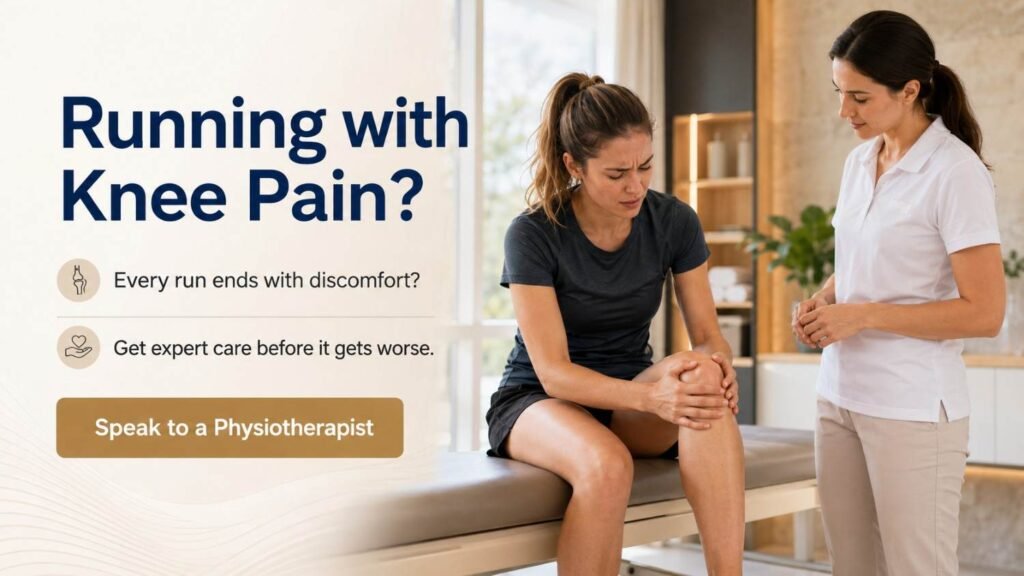
Knee pain can disrupt daily life, making walking, climbing stairs, and even sitting uncomfortable. This comprehensive guide explains how expert physiotherapy addresses knee pain, from detailed assessment to movement retraining and strength training. Learn about our evidence-based approach to knee pain treatment in Dubai, and discover how Physioveda’s specialists can help you recover safely.

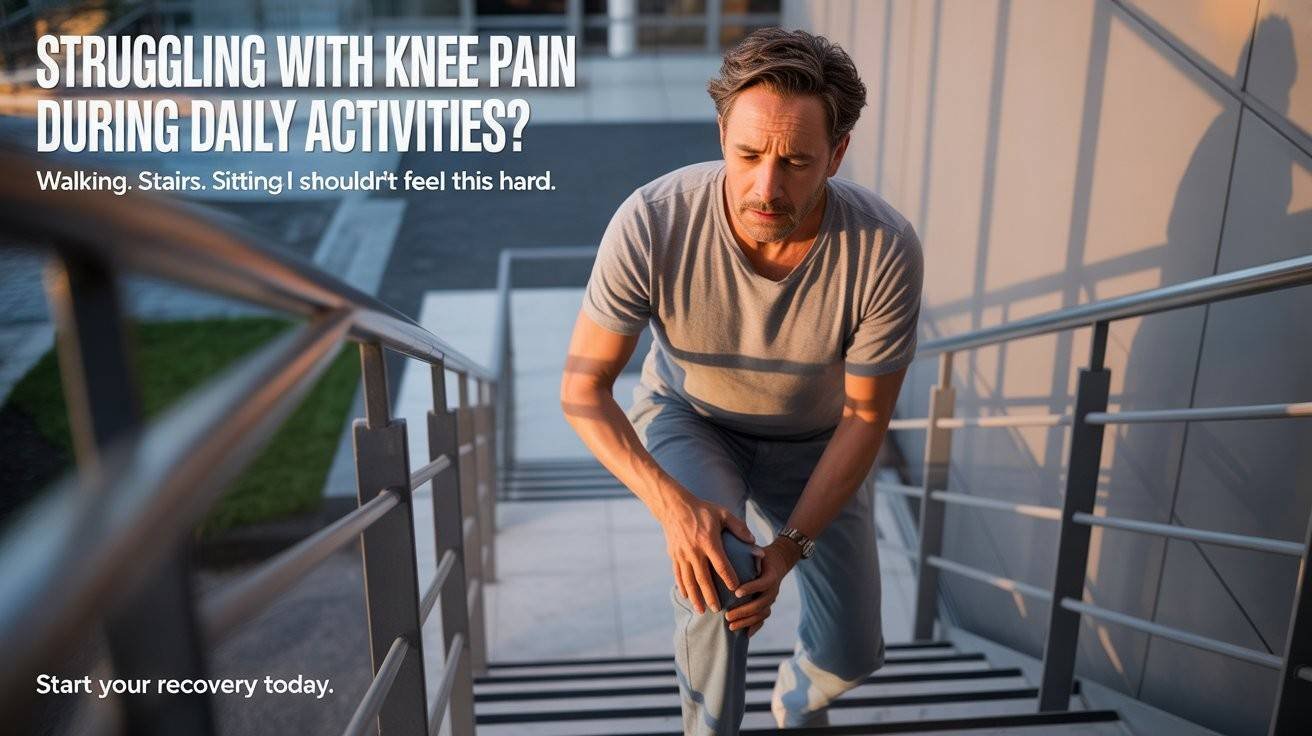
If you are looking for knee pain treatment in Dubai, then read this completely. Knee pain can significantly disrupt walking, stair climbing, sitting, exercise, and everyday activities. It affects people of all ages – from active youngsters to busy professionals to seniors. Importantly, pain in the knee is often not just a knee problem: issues with the hip, ankle or general biomechanics may be contributing. That’s why a proper knee pain treatment plan always starts with understanding the root cause. Expert physiotherapists spend time listening to your story (when pain started, what activities hurt, etc.) and perform a comprehensive assessment of your movement. This full-body evaluation – checking hip and ankle mobility, foot alignment, gait and posture – ensures we address the true source of pain. Only after understanding why the knee hurts do we move to treatment.
Detailed Knee Pain Treatment in Dubai
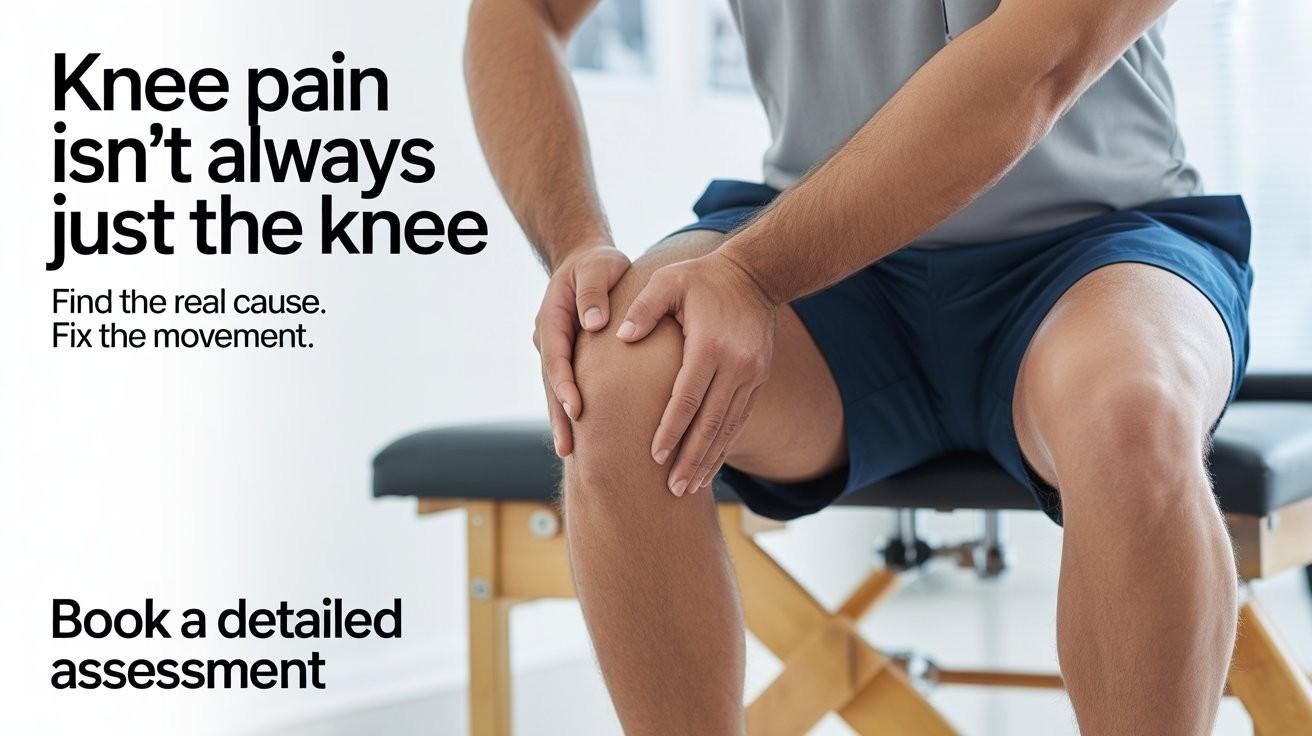
Knee Pain Treatment in Dubai. In the initial physiotherapy session, the therapist will gather your medical history and perform a thorough physical examination of the knee and related areas. They will note exactly where the pain is, what activities aggravate it (e.g., walking vs. squatting), and any swelling or stiffness present. The clinician measures knee range of motion (flexion/extension) and assesses joint mobility. The knee cap (patella) is palpated and mobilized to check for tightness or misalignment. Muscles are evaluated for strength – in particular the quadriceps, hamstrings, calves and hip muscles. (In fact, physiotherapy guides emphasize testing key muscles like the quadriceps, hamstrings, gluteus medius/maximus and gastrocnemius/soleus.) Weakness or imbalance in these muscles often underlies knee pain. The therapist will also examine ankle dorsiflexion and foot posture, since limited ankle motion or flat feet can shift extra load onto the knee.
Knee Pain Treatment in Dubai. Additionally, your movement is analyzed: how you stand, walk and perform basic tasks. Observation of squats, lunges or stair stepping can reveal faulty patterns (like the knee caving in) that need correction. Special orthopedic tests may be used if indicated (for example, Lachman’s test for a suspected ACL tear, or McMurray’s test for meniscus injury). These help pinpoint injuries to ligaments, cartilage or tendons. Knee pain rarely has a single cause; common contributors include muscle weakness (especially around the hip or ankle) and reduced joint mobility. For instance, our hip muscles control thigh alignment – if the hips are weak, the knee may drift inward on a squat. Tight calf muscles or limited ankle range can also force the knee to compensate, causing strain. By the end of the assessment, the physiotherapist will have a detailed picture of how your knee, plus the whole leg, is functioning. This guides a tailored treatment plan that targets the true sources of pain.
Early-Stage Pain Relief and Mobilization for Knee Pain Treatment in Dubai
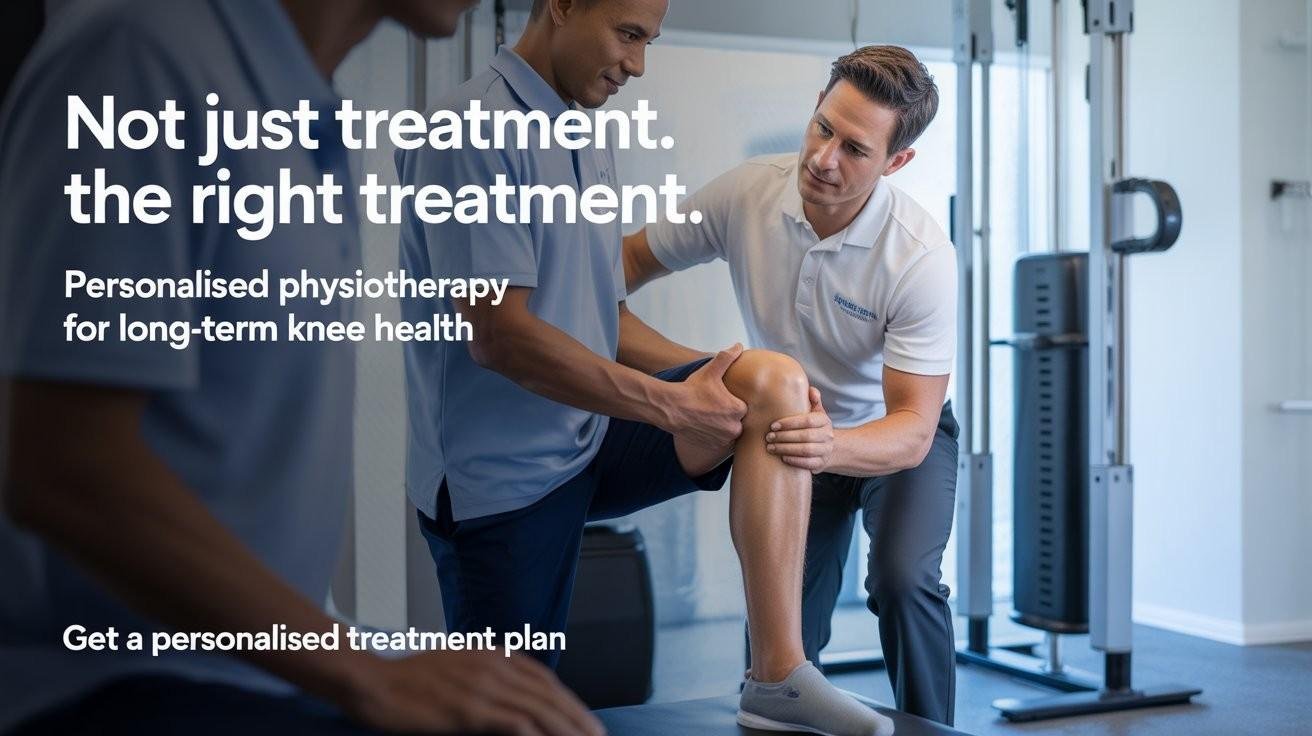
Knee Pain Treatment in Dubai. When knee pain is acute or severe, the first treatment goal is calming pain and reducing inflammation. This often involves manual therapy and gentle modalities. Manual techniques might include soft-tissue release (massage, myofascial work) to tight muscles around the knee (e.g. quadriceps, hamstrings, calf and iliotibial band). Joint mobilizations can gently improve the gliding motion of the knee joints. For example, specific patella mobilizations (gliding the kneecap) or tibiofemoral glides can ease stiffness and break pain cycles. These hands-on methods have been shown to reduce pain and improve short-term mobility when combined with exercises.
Physiotherapists may also use electrotherapy modalities in this phase if appropriate. Techniques like TENS (electric nerve stimulation), IF (interferential) or pulsed ultrasound can provide pain relief and decrease inflammation. Modalities are used judiciously as an adjunct – they are especially useful when pain is too intense for exercise. For example, a TENS unit on the knee can block pain signals, allowing us to begin movement work more comfortably.
Swelling (effusion) is managed with rest, ice and elevation initially. Elevating the leg above heart level and wearing a compression sleeve or bandage can help fluid drain from the knee. Importantly, gentle “pumping” movements of the ankle and knee (like flexing and extending the foot, or mild quad contractions) are encouraged to engage the muscle pump and reduce swelling. A physical therapist will guide you through safe range-of-motion exercises (e.g. heel slides, gentle knee bends) to keep the joint moving without aggravating it. This early stage of treatment is all about protecting the knee and controlling pain, so that you are ready to progress to rehabilitation once the worst settles.
Correcting the Root Cause for Knee Pain Treatment in Dubai
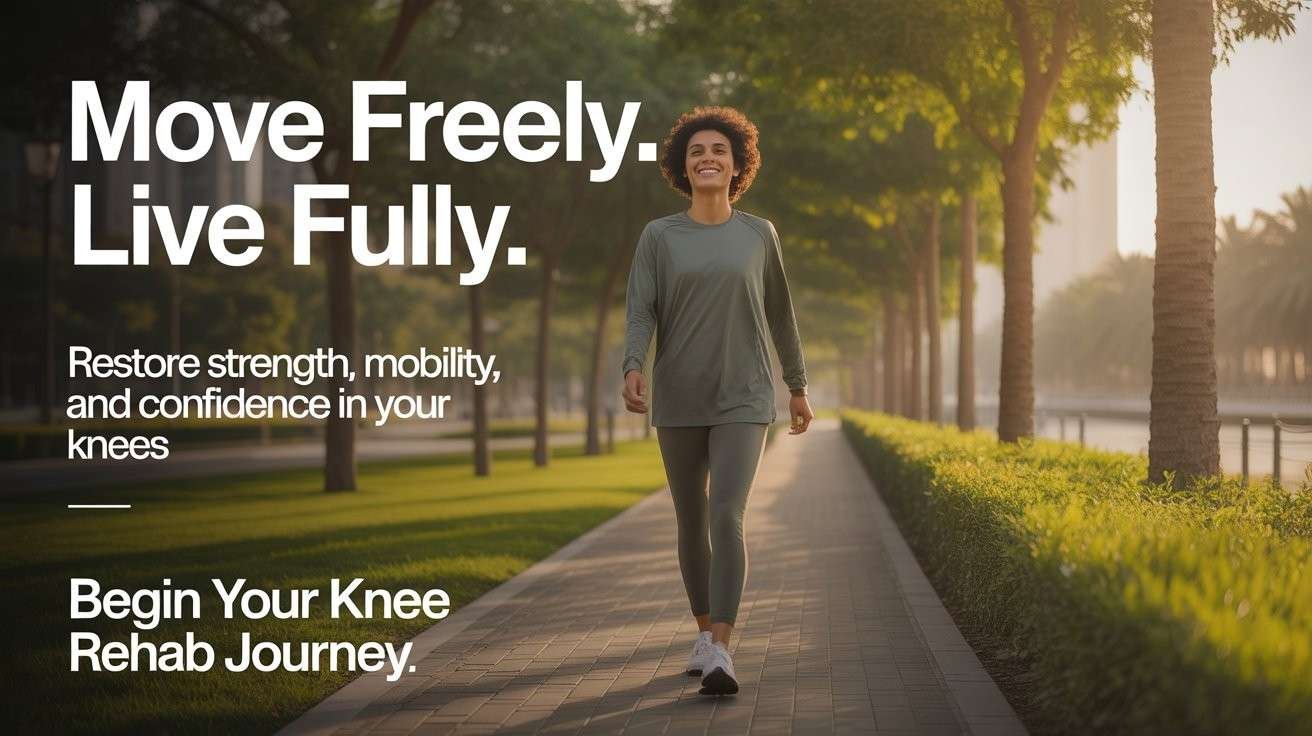
Knee Pain Treatment in Dubai. Once acute pain is under control, the focus shifts to fixing faulty movement patterns and strengthening support around the knee. Simply relieving pain is not enough – we aim for a long-term solution by correcting the underlying causes. The physiotherapist will have observed your functional movements (squats, lunges, stair climbs, walking, running). They identify errors like dynamic knee valgus (knee collapsing inward), excessive forward knee travel, or foot pronation. For example, if your knee dives inward during a squat, it often signals weak hip abductors or poor glute control. During therapy, a therapist will teach you how to perform those movements correctly. We might re-train a proper squat pattern (knees tracking over feet) or normalize your walking gait by cueing hip alignment and foot placement.
Movement retraining is about breaking bad habits. Exercises are prescribed with an emphasis on form. For instance, you may practice lunges or step-ups in front of a mirror, focusing on keeping the knee aligned. We may add hip-control drills (like band-resisted side steps) to prevent knee collapse. If your patella is tracking improperly, taping techniques or exercises to align the kneecap may be used. A typical program at this stage includes functional exercises such as bodyweight squats, mini lunges and controlled step-downs – all done slowly to train neuromuscular control. Gait re-education might involve treadmill training or guided walking drills. By retraining how you move, the knee is no longer overloaded by poor mechanics. This reduces stress on the joint and sets the stage for safe strengthening.
Restoring Knee and Surrounding Mobility for Knee Pain Treatment in Dubai
Stiffness can perpetuate knee pain, so improving flexibility is a key step. Treatment targets any motion restrictions in the knee and nearby joints. Restoring full knee flexion (bending) and extension (straightening) is crucial – even a small loss of extension can cause discomfort. The therapist will use manual stretching and joint mobilization to achieve this. For example, passive knee extension stretches or anterior tibial glides can improve knee straightening.
We also address tight muscles and joints that influence the knee. Limited ankle dorsiflexion (bending) can force the knee to compensate on each step, so we may mobilize the ankle or stretch the calves and Achilles. Hip rotation and hip flexor tightness affect knee alignment, so stretches for the hip flexors and rotators (like pigeon pose or lunges) are prescribed. Hamstring tightness pulls on the knee too – we include hamstring stretches to allow comfortable knee extension. As one clinical review notes, many patients with patellofemoral pain have tight gastrocnemius (calf), soleus, hamstrings or quadriceps that limit knee mobility. Thus, a routine stretching plan (calf stretch, hamstring stretch, quad/hip flexor stretch) is part of rehab. Improving range of motion helps the knee move smoothly during daily activities and exercise.
Strengthening Program for Knee Pain Treatment in Dubai
A progressive strengthening program for Knee Pain Treatment in Dubai is the cornerstone of durable knee rehabilitation. Building muscle support around the joint helps it share load and reduces pain. We begin with foundational exercises and gradually progress intensity.
For the quadriceps (the powerful front-thigh muscles), we often start with gentle activation drills. Examples include quad sets (tightening the thigh muscle while pushing the knee down), straight leg raises (lifting the leg while keeping the knee straight), and short-arc knee extensions (extending the knee against minimal resistance). These exercises can be done lying down or seated, especially if weight-bearing is still painful. As strength improves, we progress to closed-chain work like mini-squats (partial squats) and sit-to-stand movements from a chair. For example, repeatedly standing up from a chair trains both quads and glutes in a functional pattern. Clinical evidence strongly supports quadriceps strengthening – research in patellofemoral pain syndrome shows that guided quad exercises significantly reduce pain and improve function.
Glute (hip) muscles are also emphasized. Strong glutes stabilize the pelvis and control knee alignment during activities. Common glute exercises include bridges (lifting hips up while lying on back), clamshells (side-lying hip abduction with knees bent), lateral band walks or side-stepping, and hip abduction movements. These target the gluteus medius and maximus. Hip strengthening has been shown to be an important component of knee rehab, and some programs combine hip and knee exercises for best results.
We never neglect the hamstrings and calves. Hamstring curls (standing or lying) and hamstring bridges work the back thigh, which helps with knee flexion control. Calf raises (heel lifts) strengthen the lower leg muscles that assist knee stability, especially on walks or stairs. Our exercise prescriptions always include a variety to cover all these muscle groups. Over time we increase difficulty (more repetitions, resistance bands, weights or unilateral exercises) to challenge the knee safely. Consistency is key: a long-term home exercise program is given, since steady strengthening has been shown to substantially improve pain and quality of life in knee conditions.
Functional Retraining for Knee Pain Treatment in Dubai
Getting stronger in the clinic is only half the battle; patients must transfer that progress to real-world movements. Once pain is lower and strength is building, we incorporate functional training that reflects your everyday and sport activities.
For example, if climbing stairs hurt you before, we practice stair stepping in the clinic. We will teach the right technique (like leading with the stronger leg or taking one step at a time) and gradually increase your confidence on stairs without pain. We also refine squat mechanics: practicing deeper squats or sit-down-on-floor and stand-ups helps you handle bending tasks at home or the gym. Gait training continues, possibly progressing to jogging or running drills for athletes. If sports are your goal, exercises will mimic your sport movement (e.g. gentle kicking, pivoting or cutting motions for soccer players). The therapist ensures you can perform these without knee pain.
Importantly, being pain-free on the treatment table is not the same as moving pain-free in life. That’s why we may do exercises like controlled step-downs (stepping off a low box while maintaining alignment) or simulate hiking motions on a sloped surface. The focus is on smooth, coordinated movement. Over time we increase complexity: balancing on one foot while catching a ball, or using agility ladders for sports people. This phase bridges the gap between isolated exercise and real-world function, ultimately making your knee “resilient” for daily demands.
Balance and Stability Training for Knee Pain Treatment in Dubai
Knee pain treatment in Dubai. Injury often disrupts your sense of joint position (proprioception), so specialized balance training is included. Many patients discover that even if strength improves, they still wobble or feel unsteady on one leg. We address this with proprioceptive drills: starting with simple single-leg stands, then adding challenge (closing eyes, standing on a foam pad, or doing small knee bends).
More advanced exercises include single-leg squats or step-ups (practicing one-legged squatting) and multidirectional balance moves. For instance, a single-leg squat or a crossover walking drill can improve control and knee awareness. Proprioceptive cones or stability balls might be used to add variety. The therapist might integrate knee-strength exercises with balance tasks (for example, lunges onto an unstable surface). All of this training enhances joint stability and helps prevent future injury.
By training your knee to stabilize itself actively, we improve confidence and reduce the tendency to re-injure. It is this combination of strength and neural retraining that leads to robust knee control. Balance work also improves agility and coordination, making everyday activities like walking on uneven ground or playing sports much safer and pain-free in the long run.
Activity Modification and Lifestyle Advice for Knee Pain Treatment in Dubai
A crucial part of physiotherapy is guidance on what to do outside the clinic. We provide practical advice tailored to your life. For example, we may suggest how to use stairs safely (taking it step-by-step or using the railing) or how to sit and stand from chairs with minimal knee stress. In the gym, you’ll learn how to modify exercises – for instance, using lighter weights and higher reps on the leg press, or avoiding deep squats that strain the knee initially. We emphasize that you do not need to “live in a bubble” but simply adjust activities. High-impact exercise like running or jumping may be reduced temporarily, with low-impact options (walking, cycling or swimming) encouraged instead.
Outside exercise, everyday habits matter too. We advise on proper footwear – wearing supportive, cushioned shoes that absorb shock can reduce joint load. For people with desk jobs, simple ergonomic fixes (adjusting chair height, using a footrest so knees are not bent too sharply) can make a big difference. We also coach on weight management if appropriate, since carrying extra body weight adds stress to the knees. Our therapists may discuss pacing: balancing activity and rest, and gradually increasing your walking or standing time each week.
Physiotherapy education also covers how to train safely. For example, learning correct form for exercises or lifting will prevent recurrence of pain. In short, we give clear do’s and don’ts: how to avoid aggravating the knee, how to protect it while it heals, and how to gradually return to your normal workload. These lifestyle strategies, together with rehab exercises, empower you to control your knee health in the long term.
Condition-Specific Knee Rehabilitation
Knee physiotherapy treatment in Dubai is personalized to the diagnosis. Different conditions require different emphases:
- Patellofemoral Pain Syndrome (“Runner’s Knee”): This causes pain around the kneecap, especially during squatting, stairs, or long sitting. Rehab focuses on patellar mobilizations, taping, and strengthening the quads and hip muscles to improve tracking.
- Osteoarthritis: For degenerative knee pain, therapy emphasizes gentle joint mobilization, pain-free strengthening, and low-impact cardiovascular exercise. We also work on walking mechanics and often include education on joint protection. (Osteoarthritis and cartilage wear are common in older patients.)
- Meniscus Irritation/Strain: A torn or irritated meniscus may cause pain on twisting or deep bending. Treatment includes regaining knee flexion gently and quad/hamstring strengthening. Sometimes, a brace or limiting certain movements initially helps.
- Ligament Sprains (ACL/MCL/PCL): Following a knee sprain, we begin with pain control and safe motion (avoiding overload). Once stable, we do strength and proprioception training to re-establish stability. Later, we introduce dynamic exercises to mimic sports demands.
- Patellar Tendinitis (Jumper’s Knee): Rehab uses controlled eccentric loading of the patellar tendon (e.g. slow straight-leg knee extensions) and quadriceps strengthening. We also address any tight muscles (like the calf) to reduce tendon stress.
- Iliotibial Band Syndrome: This outer-knee pain from the IT band often occurs in runners. Treatment includes ITB stretching, hip-strengthening (to control pelvic tilt) and foam rolling, along with correcting running form.
- Post-Surgical Rehab: After surgery (e.g. ACL reconstruction, meniscus repair, knee replacement), therapy follows a staged protocol. Initially we restore pain-free knee motion, then progressively strengthen muscles, and finally retrain balance and sports or daily activities. For example, physiotherapy is essential after ACL surgery to regain strength and stability over months.
Each patient’s program is adapted to their diagnosis, symptoms and goals. In all cases, we monitor progress and adjust the plan. While the exercises may differ, the overall aim remains the same: get you back to the activities you enjoy without pain.
What Effective Knee Physiotherapy Achieves
Good knee physiotherapy is goal-oriented and evidence-based. It is not just quick fixes. The ultimate aims are to reduce pain, restore full movement, improve strength, correct biomechanics, enhance function, and prevent future flare-ups. By the end of treatment, you should be able to move your knee through its normal range, stand and walk comfortably, and perform your daily and recreational tasks again.
Physiotherapy achieves these goals through a combination of techniques. Research shows that combining manual therapy with an exercise program leads to better outcomes than exercise alone. For example, one review found that adding joint mobilizations to strengthening exercises improved pain and function more than exercise by itself. Strength training is backed by strong evidence: isolated quadriceps strengthening significantly improves pain and function in knee conditions like patellofemoral pain. In practice, we see that patients who diligently follow their strengthening and rehab plan report markedly less pain and better movement.
Importantly, our approach emphasizes preventing recurrence. We educate you on how to move safely and strengthen properly so that knee pain doesn’t keep coming back. The goal is that once you’ve gone through rehab, you feel confident using your knee in daily life and sports without fear. As one expert summary notes, physiotherapy aims not just to treat current symptoms but to “avoid future knee pain” through education and self-management strategies.
Throughout the process, your progress is monitored. Milestones might include achieving a certain degree of knee bend, improving single-leg stability, or pain-free jogging. Even if full recovery takes time, each step builds toward lasting improvement. In short, effective knee physiotherapy doesn’t promise an overnight “cure,” but it provides a structured path to real recovery. By combining pain relief, motion, strength, and movement training, it helps you return to your life with a stronger, more resilient knee.
Trusted Knee Pain Treatment in Dubai at Physioveda
For those seeking knee pain treatment in Dubai, Physioveda offers a comprehensive, patient-first physiotherapy service. Our DHA-licensed physiotherapists have extensive experience with all knee conditions, and they provide one-on-one care in our modern clinics. We follow the evidence-based approach outlined above: detailed assessment, manual therapy, targeted exercises, and lifestyle guidance. Every plan is personalized – so whether you need gentle arthritis rehab or advanced sports rehabilitation, we tailor it to your needs. As one clinic notes, this includes gait analysis, movement retraining, dry needling, shockwave and more, all chosen to suit your diagnosis.
Conveniently located in Al Wasl (Jumeirah) and Karama, our clinic is equipped with advanced physiotherapy equipment. We maintain a high patient satisfaction (4.7★ Google rating), and our team is committed to helping Dubai residents stay active and pain-free. If knee pain is slowing you down, don’t wait. A proper assessment is the first step. We will listen to your history, examine your knee thoroughly, and explain the findings. Then we’ll design a clear rehabilitation plan – with manual techniques, specific exercises, and practical advice – to get you moving better.
Ready to address your knee pain? Our Dubai knee specialists are here to help. Book a knee pain physiotherapy assessment with Physioveda today, and take the first step towards pain-free walking, climbing stairs easily, and returning to the activities you love. You can contact us or call 8008332 to schedule an appointment. Our friendly team will guide you on the path to recovery.
Frequently Asked Questions (FAQ) for Knee Pain Treatment in Dubai
What happens during a knee pain physiotherapy assessment?
Your physiotherapist will ask about your symptoms and medical history, then examine your knee and lower limb. They will check pain location, swelling, and test range of motion. They’ll assess how your hip, ankle, and foot move, and perform strength and alignment tests (e.g. quads, glutes, hamstrings). Gait and functional movements (walking, squatting) are observed to spot any poor biomechanics. If needed, orthopedic tests for ligaments or meniscus may be done. All this helps identify the root causes of your knee pain
.
How does physiotherapy relieve knee pain?
Physiotherapy uses a mix of pain-relief techniques and rehabilitation exercises. Early on, manual therapy (joint mobilizations, muscle releases) and modalities (like TENS or ultrasound) can calm inflammation and stiffness
. Once pain is under control, progressive exercises strengthen the muscles that support your knee (especially the quadriceps and hip muscles) and stretch out tight tissues. Balance and movement retraining correct faulty patterns. Altogether, these methods reduce load on the knee, improve stability, and break the pain cycle
.
What exercises will help my knee pain?
Exercises are tailored to your condition, but generally include quadriceps strengthening (e.g. quad sets, straight-leg raises, mini-squats, sit-to-stand drills), hip/glute exercises (bridges, clamshells, side-stepping) and hamstring/calf work (leg curls, bridges, calf raises). Stretching exercises for the hamstrings, quads, calves and hip flexors are also used to improve flexibility
. As you improve, functional exercises like lunges, step-ups and single-leg squats are added. Your therapist will demonstrate each exercise and adjust difficulty as you progress.
How long does knee pain recovery take with physiotherapy?
Recovery time varies by condition and severity. We set goals and milestones together, so you can see steady progress. Remember, consistency with exercises and following therapist guidance helps speed up recovery.
When should I see a physiotherapist for knee pain?
It’s wise to seek physiotherapy if knee pain persists more than a few days, is worsening, or interferes with your daily activities. Also consult us if you notice swelling, instability (knee giving way), or if pain occurs with movement like stairs or squatting. Early assessment can prevent minor knee pain from becoming a chronic problem. In many cases, physiotherapy can address the issue before it requires medications or surgery. If you’re unsure, a quick evaluation at a clinic like Physioveda can clarify the cause and best next steps.
Can knee pain be treated without surgery?
Many knee problems respond very well to non-surgical physiotherapy. Conditions like early arthritis, mild meniscus irritation, or patellofemoral pain often improve with exercise, manual therapy and lifestyle changes. Even after surgeries like ACL repair or knee replacement, rehab is essential for recovery. Physiotherapy helps strengthen the joint so that surgery may be avoided or recovery is faster if you have had surgery. Our goal is always to maximize your knee’s function with the least invasive methods first, relying on evidence-based rehabilitation.
Will my knee pain come back after physiotherapy?
A key goal of our treatment is to prevent recurrence of pain. That’s why we correct movement patterns, build balanced strength, and teach you how to protect your knee during daily activities and exercise
. If you follow the advice on exercises and activity modification, the risk of knee pain returning is greatly reduced. We also provide ongoing support – periodic check-ins or maintenance exercises – to help keep your knee healthy in the long term.
For any other questions or to schedule a personalized knee pain treatment in Dubai, contact Physioveda today. Our knee physiotherapy specialists are ready to help you recover safely and effectively.
Read our previous Rehab Center Near Me
Plantar fasciitis treatment
Visit our Instagram
Book a Consultation
It’s easy and free!