Struggling with heel pain? Discover a complete, evidence-based approach to plantar fasciitis treatment in Dubai, including physiotherapy, shockwave therapy, and personalised rehabilitation designed to address the root cause.


Are you struggling with stubborn heel pain? As DHA-licensed physiotherapists in Dubai, we see many people whose daily routines are disrupted by the sharp, stabbing pain of plantar fasciitis. If you’ve been searching for plantar fasciitis treatment in Dubai, you’re likely frustrated by pain on your first steps in the morning or after a day on your feet. You need a plan that addresses all the underlying issues, not just a quick fix. Our Dubai clinic takes a warm, personalised approach: we listen to your concerns, perform a thorough examination, and combine evidence-based therapies (manual therapy, targeted exercise, shockwave therapy, and more) to tackle the root cause of your heel pain and guide you to lasting recovery.
What exactly is plantar fasciitis treatment in Dubai
What exactly is plantar fasciitis treatment in Dubai

plantar fasciitis treatment in Dubai. The plantar fascia is a thick, fibrous band of tissue that runs from your heel bone along the sole of your foot, supporting the arch. Plantar fasciitis occurs when this tissue becomes strained or irritated. In biomechanical terms, it’s often considered a degenerative condition rather than just inflammation. In practical terms, you might describe the pain as a sharp or burning discomfort under your heel or along your arch, often worse with the first few steps in the morning or after sitting for a while. The pain may improve as you warm up, but can flare up again with long periods of standing or walking. In short, plantar fasciitis is a common cause of chronic heel pain that calls for expert assessment and treatment.
Common Causes and Symptoms of Plantar treatment Fasciitis in Dubai
What exactly is plantar fasciitis treatment in Dubai
Plantar fasciitis treatment in Dubai. Plantar fasciitis has several contributing factors. Common causes include:
- Overuse and Loading: Long-distance running or walking, standing for many hours on hard floors, or sudden increases in activity can overload the plantar fascia.
- Foot Structure and Mechanics: Having flat feet, fallen arches, or very high arches changes how weight is distributed on the foot, putting extra stress on the fascia.
- Muscle Tightness: Tight calf muscles or Achilles tendons limit ankle flexibility, which increases strain on the plantar fascia when you walk or stand.
- Unsupportive Footwear: Shoes without adequate cushion or arch support (common in flip-flops or fashion shoes) can exacerbate heel stress.
The classic symptoms in Dubai patients include:
- Morning Heel Pain: Most people feel stabbing or burning pain under the heel on their first few steps out of bed.
- Activity-Related Pain: Pain often worsens again after long periods of standing, walking or exercise, then eases with rest.
- Tenderness: You may feel tenderness if you press on the inner edge of the heel or along the arch. The bottom of the foot may feel tight or irritated, especially after resting.
As one specialist notes, “pain in the bottom of the heel is the most common symptom… with the first few steps after getting out of bed… subsiding after a few minutes of walking.”. In short, if you have persistent heel pain (particularly sharp in the morning and after activity), these are warning signs that professional heel pain treatment is needed.
Comprehensive Approach Plantar treatment Fasciitis in Dubai
What exactly is plantar fasciitis treatment in Dubai

It’s frustrating when simple treatments don’t solve the problem. Relying on only one strategy — like ice, stretching, or a steroid shot — often misses other hidden issues, so the pain keeps coming back. Research shows exactly why: for example, a systematic review of plantar fasciitis therapies found that steroid injections gave fast short-term relief but had higher chances of recurrence, whereas therapies like shockwave (ESWT) and PRP injections provided more consistent long-term benefits. Similarly, a 2026 meta-analysis warns against a one-size-fits-all approach, stating that “treatment strategies for plantar fasciitis should be tailored to symptom duration and therapeutic goals rather than defaulting to one intervention alone.”.
In practice, this means if you only stretch or only take medicine, you might feel better temporarily but not solve the underlying problem. Many treatments fail because they focus on the symptoms (like reducing immediate pain) without correcting the root causes (biomechanics, muscle weakness, movement patterns, posture). For example, simply ignoring biomechanical issues or core stability often leads to recurrence. That’s why our philosophy is different: we use a truly comprehensive approach that addresses every piece of the puzzle – from the foot up through your posture – so that healing is effective and lasting.
Our Complete Approach to Plantar Fasciitis Treatment in Dubai
plantar fasciitis treatment in Dubai, We combine nine key services (integrated into a single plan) to tackle plantar fasciitis from every angle. Here’s what you can expect:
Detailed Clinical & Biomechanical Assessment
plantar fasciitis treatment in Dubai. The first step is a thorough assessment of how your body moves. We don’t just look at the heel – we examine your entire kinetic chain. This includes checking your foot arches, how you distribute weight when standing and walking (gait analysis), ankle range of motion (dorsiflexion), and calf muscle flexibility. We also assess your knees, hips, pelvis, and posture. For instance, we observe your walking and running pattern to spot any imbalances or overpronation. We may also review your shoe wear and daily activities. This detailed biomechanical analysis helps us pinpoint exactly what’s causing the stress on your plantar fascia. (For more on how biomechanics affect foot pain, see [Understanding Biomechanical Issues and Foot Pain].)
Hands-On Manual Therapy
Next, we use hands-on treatment techniques to relieve immediate tension and pain. This can include gentle myofascial release of the plantar fascia itself, soothing massage or trigger-point therapy on the calf muscles and foot muscles, and mobilization (gentle movement) of tight ankle and foot joints. We use skilled manual pressure and stretching on the soft tissues in your heel and calf to reduce tightness and break up scar tissue. These manual techniques help restore normal motion to the ankle and improve circulation. In fact, studies note that physiotherapy approaches – especially manual therapy combined with stretching and taping – are beneficial adjuncts to healing plantar fasciitis. Our hands-on work is customized to your tolerance: it’s targeted but gentle, aimed at improving flexibility and immediately reducing pain.
Advanced Electrotherapy & Technology-Based Care
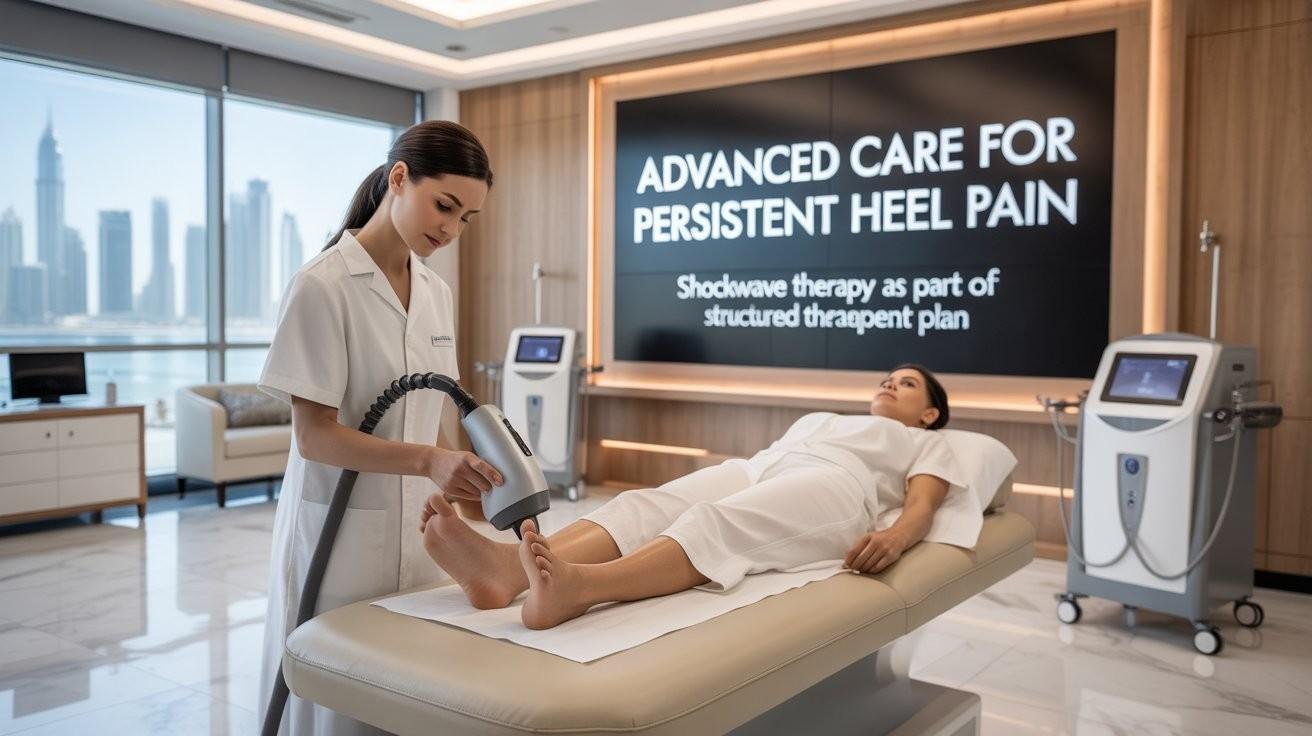
We complement manual care with the latest technology. One cornerstone is shockwave therapy (ESWT): a focused machine delivers acoustic pulses to your heel, stimulating healing in the plantar fascia. Research confirms ESWT has broad efficacy across multiple outcome measures and timepoints. In practical terms, we typically schedule 3–5 shockwave sessions (once a week) for chronic cases. This can significantly reduce pain and improve function. We also have therapeutic lasers and ultrasound therapy to reduce inflammation and accelerate tissue repair. Another option is TECAR therapy (a type of radiofrequency therapy) to gently heat deep tissues and boost circulation. These modalities are never used in isolation – we integrate them into your plan as needed. (Learn more about how and when we use shockwave in our blog [Shockwave Therapy in Dubai – What You Need to Know].)
Targeted Mobility & Flexibility Work
Once acute pain is under control, we teach you specific stretches and mobility exercises to keep tissues supple. These include plantar fascia stretches (such as towel stretches and rolling the arch over a ball), gastrocnemius (straight-knee) and soleus (bent-knee) calf stretches, and ankle mobility exercises (to improve dorsiflexion). Gentle stretching helps unload the plantar fascia and lengthens tight muscles. We’ll show you how to perform each stretch correctly, and we monitor your technique closely. These exercises are typically done daily at home, and we adjust them based on your progress. Improving flexibility in the calves and Achilles tendon is especially important, as tight calf muscles often worsen heel pain in Dubai’s active lifestyle.
Progressive Strength & Load Management
Strengthening is just as crucial as stretching. We design a graded strengthening program that starts with activating tiny intrinsic foot muscles and builds up. Early on, you might do foot doming or towel-scrunch exercises to awaken the arch-supporting muscles without much load. Then we gradually introduce resisted exercises: for example, heel raises (calf raises) starting with both feet, then progressing to single-leg raises. We also incorporate balance and stability drills. The key is progressive loading: we carefully control how much stress goes through the plantar fascia as you strengthen. We will never overload you too soon; instead, we increase reps, resistance, or impact in stages. This measured approach allows the fascia to adapt and strengthens your lower limb in a functional way. Over time, you’ll notice you can do more daily activities or sports tasks without pain.
Movement Correction & Gait Training
Because poor gait mechanics can perpetuate plantar fasciitis, we include movement retraining. We analyze your walking and running pattern in detail and teach you how to adjust it. For instance, if you overpronate (roll your foot inwards) or strike too much on your heels, we give cues and exercises to encourage a more even load distribution. We practice correct walking technique and balance during standing tasks. Functional movements are also addressed: we retrain how you squat, lunge, and climb stairs without shifting undue stress to your heel. We often use biofeedback or video analysis during sessions. By retraining movement, we help you walk and move in ways that reduce strain on the plantar fascia. (For more on gait and movement in our rehab, see [Gait Analysis and Movement Correction in Dubai].
Posture & Kinetic Chain Optimisation
Plantar fasciitis treatment isn’t just about the feet. We look at your whole body alignment – especially the hips, pelvis, and core – to find hidden contributors. For example, pelvic tilt or leg-length differences can alter how force travels down your legs into your feet. We include core stability and postural exercises (like Pilates or bridging) to ensure your pelvis and spine are properly aligned. We may also work on hip and glute strength because weak hips can make your legs drop inward, increasing foot pronation. Activities like the Pilates “bird dog” or planks (see image below) improve core control, which in turn supports better lower-body mechanics. This whole-body perspective ensures that your spine, pelvis, and lower limbs are working optimally together, so your plantar fascia is not overburdened. (For insights on posture’s role in pain, see [Posture and Lower Back Pain – The Hidden Connection].)
Structured Rehabilitation Progression
Our rehabilitation is carefully phased into early, mid, and advanced stages:
Early Phase (Pain Management & Mobility): During this stage, the goal is to reduce your pain and protect the heel. We use pain-relieving modalities (like ice or gentle taping), light manual mobilizations, and very gentle active range-of-motion exercises. You’ll learn how to keep weight off the heel if needed, using assistive devices briefly if your pain is severe.
Mid Phase (Strength & Load Building): Once pain is under better control, we shift focus to building strength and gradually increasing load on the foot. We continue more intense manual therapy and stretching, and add more challenging strengthening exercises (as described above). We might introduce weighted calf raises or longer balance holds. Throughout this phase, we progress your activity level bit by bit.
Advanced Phase (Functional Return): In the final phase, you resume your normal activities, sports, or job duties. We simulate real-life or sport-specific tasks (running drills, jump training, carrying weight) in therapy to ensure your foot can handle them. We refine any remaining issues in balance or technique to prevent re-injury. Each phase is guided by your feedback and progress – for example, if pain flares, we might lengthen the current phase until you’re ready to advance. This structured progression ensures you regain function safely and effectively.
Truly Personalised Care
Above all, every aspect of your treatment is tailored to you. No two patients are the same, even if they both have “heel pain”. We design your plan based on your specific history, examination findings, lifestyle, and response to therapy. Your exercises and manual therapy are adjusted each visit – for example, increasing a stretch or changing an exercise – based on how you’re doing. We track your pain and function closely, and we’re there to answer your questions every step of the way. You get one-on-one attention from an experienced physiotherapist who really listens. This personalized approach (versus a generic pamphlet or group session) means your care is focused on your unique needs, so you make progress in a way that feels right for your body and schedule.
What exactly is plantar fasciitis treatment in Dubai
How We Progress Your Rehabilitation for Plantar Fasciitis Treatment in Dubai
For plantar fasciitis treatment in Dubai, our phased approach ensures smooth progression and safe healing:
- Early Phase: We aim to calm inflammation and protect the heel. This might involve ice, foot taping, gentle joint mobilizations, and simple stretches. We also work on pain-free movement to keep the area from stiffening.
- Mid Phase: We aggressively strengthen the foot and supporting muscles. Your load is gradually increased – for example, progressing from calf raises on two feet to one-legged, or holding balances for longer. We may also reintroduce low-impact exercises like cycling or swimming.
- Advanced Phase: We reintroduce higher-impact or sport-specific activities (like jogging, jumping, or heavy lifting) only when you are ready. We train you how to move during these activities without reinjuring the fascia. At this point, you should be able to return to most normal activities with confidence.
At each stage, we check in on your symptoms. If something is too painful, we slow down or modify that aspect. This flexible progression is what leads to successful, lasting recovery.
Why Patients Choose Physioveda for Plantar Fasciitis Treatment in Dubai
What exactly is plantar fasciitis treatment in Dubai
Plantar fasciitis treatment in Dubai. Many patients in Dubai trust our clinic because of our experience, compassion, and proven track record. We are DHA-licensed physiotherapists with over 15 years of clinical experience helping people recover from heel pain. We genuinely care about your progress and spend time building a comfortable patient-therapist relationship. Our clinic adheres to Dubai’s high standards: as DHA guidelines emphasize, physiotherapy programs should improve strength and mobility, reduce pain, and restore optimal function, and that is exactly what we do.
For plantar fasciitis treatment in Dubai, we also stay on top of the latest research and evidence. Our approach is backed by studies like those cited above – for instance, using shockwave and tailored exercise based on what has been shown to work. But more importantly, we listen to your goals. Whether you want to keep up with your busy work, run, or simply walk without pain, we build the program around your needs. Unlike one-size-fits-all solutions, our care is completely individualized. Many Dubai residents choose us because we combine modern techniques with warm, empathetic care. You always leave our sessions feeling heard, better informed about your condition, and one step closer to that pain-free life.
FAQs for Plantar Fasciitis Treatment in Dubai
What exactly is plantar fasciitis treatment in Dubai
What causes plantar fasciitis, and who is most at risk?
Plantar fasciitis often results from repetitive strain on the foot’s arch ligament. Risk factors include overuse (e.g. runners or people standing long hours), foot structure (flat feet or high arches), tight calf muscles, and wearing unsupportive shoes. Being overweight or having jobs that keep you on your feet can also raise risk. Many active Dubai residents and athletes experience it. Our clinical assessment pinpoints your specific risk factors and addresses them in treatment.
How can physiotherapy treat plantar fasciitis in Dubai?
Physiotherapy offers a comprehensive treatment strategy. We use a combination of hands-on manual therapy, targeted stretching, strengthening exercises, and advanced modalities (like shockwave therapy). Each part of this plan addresses a different cause of your pain. For example, manual techniques loosen tight tissues, while exercises correct strength and movement. By tailoring therapy to you, a physiotherapist can effectively reduce pain and prevent recurrence. In our clinic in Dubai, we apply evidence-based methods in each session to help you heal.
Is shockwave therapy effective for plantar fasciitis (heel pain)?
Yes. Extracorporeal shockwave therapy (ESWT) is a well-researched, non-invasive treatment for chronic plantar fasciitis. Studies show ESWT provides broad pain relief and improves function over time
. Patients often experience reduced pain after just a few sessions. It works by stimulating the healing response in the tissue. We offer shockwave therapy in our Dubai clinic as part of a full treatment plan – it’s not a standalone cure, but combined with exercise and other therapies it can significantly accelerate recovery.
How long does it take to see improvement with physiotherapy for plantar fasciitis?
Every case is different, Our therapists will give you a realistic timeline based on your severity and guide you through each stage. Even if it feels slow, remember that a step-by-step approach is key to lasting relief, and we’ll be there to adjust your program and cheer you on.
Do I need custom orthotics or insoles for plantar fasciitis?
Sometimes orthotics can be helpful, especially if you have significant foot alignment issues (like very flat feet or overpronation). Custom insoles provide arch support that takes pressure off the plantar fascia. However, orthotics alone aren’t a complete solution. We focus on improving your foot muscle strength and biomechanics first. During your biomechanical assessment, we’ll determine if an orthotic is recommended. In many cases, patients improve greatly with therapy and simple over-the-counter inserts. If custom orthotics would help you, we can guide you to get the right pair.
What is gait retraining and how does it help with plantar fasciitis?
Gait retraining means adjusting your walking or running pattern to reduce stress on the plantar fascia. For example, some people strike the ground heel-first in a way that adds shock to the heel, or they roll their foot inward too much (overpronate). We use video analysis and hands-on cues to help you walk in a more balanced way. This might involve shortening your stride, keeping your knee slightly bent on landing, or strengthening your toes so you push off better. Correcting your gait can significantly reduce heel strain and is a key part of our treatment plan.
Are home stretches and exercises enough for plantar fasciitis, or should I get professional help?
While home stretches (like calf and plantar fascia stretches) are important, they often aren’t enough by themselves for chronic plantar fasciitis. A professional physiotherapist can ensure you’re doing exercises correctly, progress them appropriately, and add manual therapy and technology that aren’t available at home. Many patients can do some basic stretches on their own, but if pain persists for weeks, it’s wise to see a therapist. We can tailor the program to you and monitor your progress. If your pain is not improving with home care, booking a clinical assessment is a good next step.
When should I see a physiotherapist for heel pain in Dubai?
If you have plantar fasciitis symptoms (heel pain on first steps, tenderness under the heel) that last more than a week or two, it’s time to see a physiotherapist. Early intervention is key. Starting therapy in Dubai soon after symptoms begin increases the chance of a quick recovery and prevents chronic issues. Even if the pain is mild now, catching the problem early means we can address the underlying causes right away. Don’t wait until pain is severe or disabling – our team is here to help as soon as you notice persistent heel pain.
Ready to Finally Get Lasting Relief for Plantar Fasciitis Treatment in Dubai
What exactly is plantar fasciitis treatment in Dubai
If you’re dealing with persistent heel pain in Dubai, our team is ready to help you with a full clinical assessment. Book your appointment today and take the first step toward real, lasting relief. We look forward to guiding you through a personalized physiotherapy program so you can walk, run, and live without pain again.
Conclusion
Remember, plantar fasciitis management involves more than focusing only on the heel. A comprehensive approach – which includes a thorough assessment of your body, correcting your movement patterns, and a structured rehabilitation program – supports true healing and long-term foot function. By addressing the root causes, not just the symptoms, you give yourself the best chance at a full recovery and a pain-free, active life.
Read our previous blog on Ankle pain treatment in Dubai
Foot Pain Treatment in Dubai
Visit our Instagram
Book a Consultation
It’s easy and free!
Tags:biomechanical assessment dubaicustom insoles DubaiDHA licensed physiotherapist Dubaifoot arch pain treatment Dubaifoot pain treatment Dubaigait analysis dubaigait retraining Dubaiheel pain Dubaiheel pain treatment Dubaiheel spur treatment dubaiorthotics for plantar fasciitis Dubaiphysiotherapy for plantar fasciitis Dubaiplantar fascia pain relief Dubaiplantar fasciitis Dubaiplantar fasciitis exercises Dubaiplantar fasciitis stretches Dubaiplantar fasciitis treatment in Dubaishockwave therapy Dubaishockwave therapy for plantar fasciitis Dubaisports injury clinic Dubai foot pain