
You might recognize this scenario waking up at 3 AM with numb, tingling fingers and a burning pain in your wrist. Carpal Tunnel Syndrome treatment in Dubai. begins with that scary wake-up call. CTS happens when the median nerve in your wrist is compressed. Because so many of us spend long hours at computers and on …


You might recognize this scenario waking up at 3 AM with numb, tingling fingers and a burning pain in your wrist. Carpal Tunnel Syndrome treatment in Dubai. begins with that scary wake-up call. CTS happens when the median nerve in your wrist is compressed. Because so many of us spend long hours at computers and on our phones, CTS has become increasingly common. The good news? In many mild to moderate cases, physiotherapy can relieve these symptoms and restore hand function. As a senior physiotherapist in Dubai, I’ll walk you through what CTS is, why your lifestyle contributes to it, and exactly how structured physiotherapy treats it.
What Is Carpal Tunnel Syndrome Treatment in Dubai

Carpal Tunnel Syndrome Treatment in Dubai. The carpal tunnel is a narrow passage at the base of your palm formed by wrist bones and a ligament. Through this tunnel run the median nerve and tendons. When anything – swollen tendons, fluid retention, poor posture – increases pressure inside this tunnel, the median nerve becomes pinched. This causes the classic CTS symptoms.
Typical symptoms include:
- Numbness or tingling in the thumb, index and middle fingers (sometimes the half of the ring finger).
- Wrist pain or burning in the palm or forearm.
- Weak grip and dropping objects – you may feel “clumsy” or notice your hand strength is gone.
- Nighttime symptoms – hands frequently wake you up with numbness or pain.
- Symptom triggers – tasks like typing, using a mouse, scrolling on your phone or repetitive wrist tasks typically worsen the pain (even holding your phone or driving can bring it on)
Why Carpal Tunnel Syndrome Is More Common Than You Think
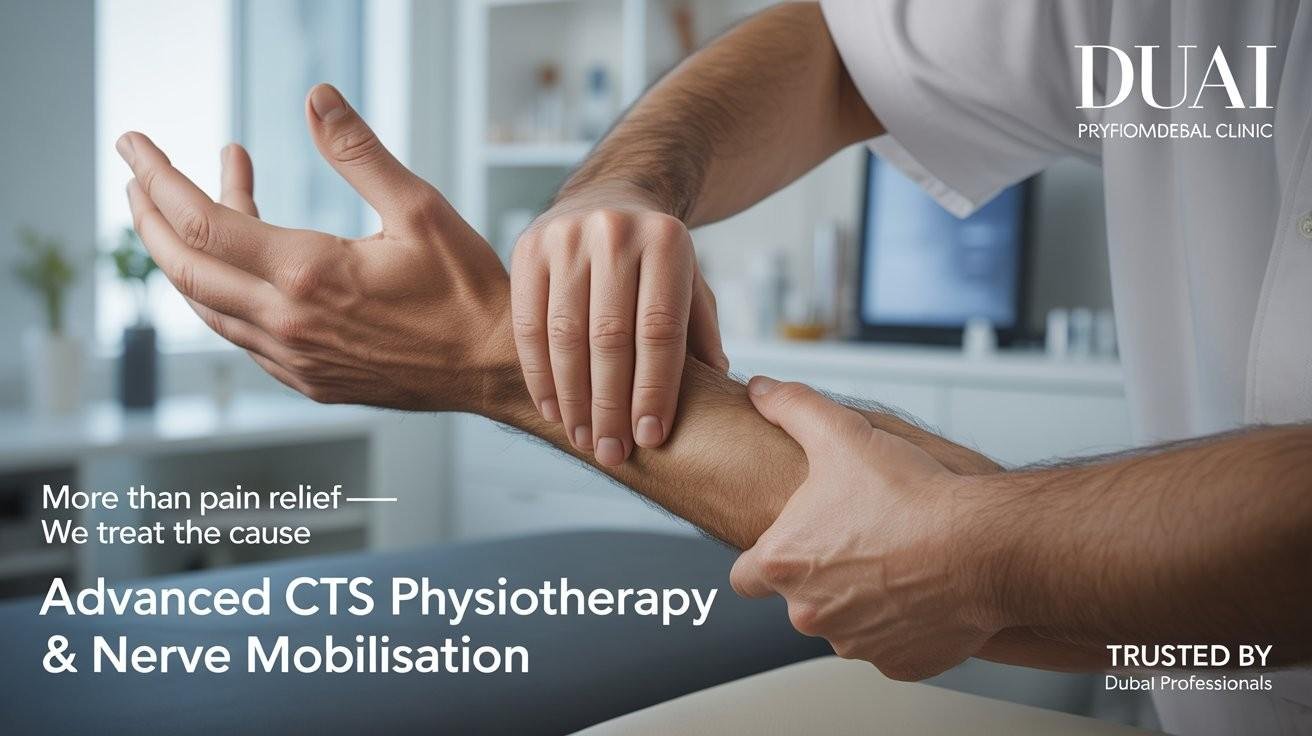
From my clinic’s perspective, CTS has become a daily story here. A digital workforce means many people sit at a desk all day, typing and swiping on phones. In fact, clinic notes that CTS “affects 3–6% of adults,” and it is especially frequent in our “desk-bound, smartphone-dependent population”. Repetitive computer and mouse work, prolonged smartphone use, and even the constant air‑conditioned, sedentary lifestyle conspire to irritate the wrist.
I also see many pregnant women in my clinic with CTS symptoms fluid retention during pregnancy can swell the carpal tunnel and compress the nerve. While pregnancy-related CTS often resolves after delivery, it’s still a common trigger (affecting up to 50% of pregnant women in late pregnancy). Other contributing factors include previous wrist injuries or surgeries, diabetes and thyroid issues, and obesity – but our biggest drivers tend to be office/tech work and device use.
The worst mistake? Waiting it out. Many people assume mild numbness will “go away on its own.” Unfortunately, that delay only lets the nerve stay compressed longer. As one expert review stresses, “conservative treatment success depends on early intervention; the longer nerve compression continues, the harder it is to reverse”. In other words, the earlier you address CTS, the better your chance of avoiding surgery and permanent damage.
How Is Carpal Tunnel Syndrome Treatment in Dubai Properly Assessed?

A proper CTS assessment is holistic, not just a quick look at the wrist. First, I take a full history: What activities trigger symptoms? How long have they been going on? Are they waking you at night? This helps confirm the pattern: CTS usually flares after repetitive work or at night, and improves if you shake your hand out.
Next is the physical exam. I test your grip strength and thumb muscles to see if weakness is present. I check wrist range of motion and feel for any tightness in the forearm muscles. I also perform classic CTS tests (like Phalen’s or Tinel’s) to see if they reproduce your tingling.
Importantly, I examine beyond the wrist. The NHS specifically advises that other areas – especially your neck and shoulder – should be checked. In my PPCM framework, we always start with a detailed posture and movement analysis. For example, a forward head posture or rounded shoulders can increase tension on the nerves running down your arm. If your neck or shoulder is tight, that extra tension can make wrist symptoms worse. So I check upper back alignment, shoulder blade position, and even neck mobility.
Finally, we review your ergonomics and habits. I’ll look at your desk setup (chair height, keyboard/mouse position) and your typical phone posture. Even your sleeping posture matters – many patients unknowingly sleep with bent wrists. If we find bad patterns, we’ll address them together.
Expert tip: CTS is often not “just a wrist problem.” It can involve nerve mechanics and body posture. By assessing the full chain from neck to hand, we uncover root causes. This is what separates a thorough physiotherapy evaluation from a basic wrist exam.
Carpal Tunnel Syndrome Treatment in Dubai: What Physiotherapy Actually Does
Physical therapy for CTS is not one-size-fits-all. We tailor a multi-pronged plan to each patient. Here are the main components we use at our clinic:
Nerve Mobilisation and Neurodynamic Therapy
Nerve gliding exercises (aka “neural mobilisation”) are a cornerstone of effective CTS care. These are gentle, active movements that “floss” the median nerve through the carpal tunnel. In my experience, nerve mobilisation is often the turning point for patients who’ve struggled for months. The motions reduce adhesions (scar-like tightness around the nerve) and improve nerve mobility. Research supports this too: adding median nerve gliding to treatment has been shown to yield better outcomes than splints alone. We teach you specific glide exercises (moving your wrist and arm in coordination) to calm the nerve and restore its sliding ability.
Manual Therapy
Hands-on techniques help loosen up structures contributing to CTS. We use gentle mobilisations of the wrist and carpal bones to restore proper joint motion. We also release tight muscles and fascia in the forearm (especially the flexor muscles) and even work on your elbow and shoulder. If your flexor muscles or forearm fascia are stiff, they can tug on the carpal tunnel contents. Treating the entire kinetic chain – up through the elbow, shoulder, and even neck – can relieve tension on the nerve. In practice, I’ll massage and mobilise tight spots (e.g. pronator teres, forearm flexors) and ensure your wrist joints glide smoothly. These manual techniques reduce pain and prepare the tissues for exercise.
Stretching Programme
We design a targeted stretching routine to ease pressure on the median nerve. Key stretches include wrist flexor stretches (keeping the arm straight while bending the wrist back), finger flexor stretches, and forearm supination stretches. We also stretch the chest and front shoulder (thoracic outlet areas) because a rounded posture can contribute to nerve irritation. Tight pecs or a stiff neck can indirectly compress nerves, so we include neck and upper back stretches too. As the NHS notes, “targeted wrist exercises to encourage movement, stretching and strengthening can help to improve your wrist and hand movement and pain”. By loosening tight muscles, these stretches reduce baseline pressure on the nerve. We provide these stretches as part of your home exercise plan.
Strengthening Exercises
Once pain decreases, we focus on gentle strengthening to prevent recurrence. This includes exercises for the wrist stabiliser muscles, thumb muscles (like abductor pollicis brevis), and grip endurance. We also strengthen the scapular (shoulder blade) muscles and postural core. Why scapular work? A weak shoulder posture means your nerve bed may be tense. By building better upper body strength, we protect the arm and wrist from overload. For example, scapular retraction exercises and light resistance band work can make a big difference in supporting nerve recovery. In short, the goal is to build resilience. Strengthening makes sure the problem doesn’t come back after treatment ends.
Electrotherapy
To help manage pain and nerve irritation, we sometimes use modalities like TENS (transcutaneous electrical nerve stimulation), interferential current (IFC), or ultrasound. For instance, TENS can provide pain relief by stimulating the nerves gently. Ultrasound may be applied to reduce inflammation in the carpal tunnel tissues. These tools are adjuncts – they help calm down symptoms but are always combined with exercise and manual therapy for lasting effect. We use them judiciously: for example, a course of ultrasound or laser might be added if there’s significant swelling, but only alongside the active therapies above.
Ergonomic Correction and Work Habit Retraining
This step is non-negotiable. If you return to the same aggravating posture, symptoms will likely come back. We teach you how to set up a wrist-friendly workstation and daily routine. This includes:
- Neutral wrist posture during typing – keep wrists straight (not bent up or down). Use a gel pad or wrist support as needed.
- Keyboard & mouse setup – keep them close and at elbow height. Use a split keyboard or a vertical mouse if it helps maintain neutrality.
- Phone posture – avoid cradling the phone with your wrist bent; use a speaker or hold the phone at ear level.
- Frequent breaks – every 30–45 minutes, shake out your hands and do a few nerve glides or stretches. Micro-breaks are crucial.
- Sleeping position – avoid curling your wrists under pillows. We often recommend a night splint or simply sleeping with a rolled towel under the wrist to keep it straight.
- Task modification – alternate heavy and light tasks, and vary hand activities. For example, avoid gripping tools too tightly and spread out heavy work. The NHS specifically advises varying activities and avoiding prolonged gripping or bent positions.
By correcting ergonomics, we remove the ongoing stress that compressed the nerve in the first place. This makes all other therapies work better and prevents relapse.
The PPCM Approach to Carpal Tunnel Syndrome Treatment in Dubai
At our clinic, we use the PPCM™ (PhysioVeda Posture Correction Matrix) framework to organize all of the above. PPCM™ is a structured program developed from over 20 years of experience. Its goal is to identify and fix root causes, not just patch symptoms. Applied to CTS, PPCM™ means we:
- Posture & Movement Analysis: We start with a detailed assessment of your posture, spinal alignment, shoulder position and movement patterns. For example, we look for rounded shoulders or forward head posture that might be contributing to CTS.
- Pain Relief: We immediately address pain and inflammation (through manual therapy, electrotherapy, splints) so you can move comfortably.
- Correction Plan: We then craft a personalized correction plan. This includes the nerve glides, manual treatments, stretches and strengthening exercises listed above, plus ergonomic fixes. The plan is guided by our assessment findings. As our documentation notes, we specifically “address posture, movement patterns, and muscle imbalance together”.
- Movement Re-education: We teach you how to move safely. This covers not only your wrist exercises but also teaching proper shoulder and spine alignment during daily activities (in other words, [shoulder and postural physiotherapy]).
- Tracking Progress: At each visit, we reassess. We might adjust your exercise prescription or ergonomics based on how you’re improving.
This PPCM™ system is what sets our care apart. It ensures we’re not just temporarily fixing pain but creating sustainable changes. In other words, we aren’t handing you a generic wrist stretch sheet – we’re fixing the whole chain of issues that led to CTS.
Home Physiotherapy for Carpal Tunnel Syndrome in Dubai
For busy Dubai patients, we also offer home physiotherapy visits. Our licensed physiotherapists can come to your home or office, bringing all the treatment tools with them. The advantage is convenience – you get expert care on-site in your own environment (and we can even assess your own desk).
Whether at home or in-clinic, every patient receives a custom home exercise program. Typical home exercises include:
- Median nerve glides (to do several times per day).
- Wrist mobility exercises (gentle flexion/extension stretches).
- Forearm and finger stretches (to loosen tight flexors).
- Postural exercises (e.g. chin tucks, shoulder blade squeezes) to counteract slouching.
- Scapular strengthening moves (like wall slides or resistance band rows) if needed.
Patients also learn how to monitor their own symptoms and adjust activity. If you’re short on time or mobility, just ask about our [home physiotherapy Dubai] service – it’s the same clinically rigorous care delivered at your doorstep.
Who Is Most at Risk of CTS?
Certain groups commonly develop CTS symptoms in our city:
- Office & Tech Workers: People spending long hours typing or using a mouse. The combination of repetitive keystrokes and awkward wrist angles is a classic recipe for CTS.
- Smartphone-Heavy Users: Constant thumb and finger movements when scrolling or gaming on phones – especially with a bent wrist – can trigger CTS.
- Manual Workers: Construction workers, assembly line laborers, or anyone doing repetitive gripping and lifting with tools.
- Pregnant Women: Hormonal fluid retention in pregnancy can swell the carpal tunnel. Up to half of pregnant women experience some CTS symptoms, usually in the third trimester.
- Post-Surgical or Injury Patients: People recovering from wrist fractures, arthritis, or surgery may develop secondary CTS and need targeted rehab.
- Anyone with Previous Wrist Issues: Even a past sprain can cause subtle changes that predispose to CTS years later.
These groups should be particularly vigilant. If you see yourself here, it’s worth taking early action rather than waiting.
When Should You See a Physiotherapist for Carpal Tunnel Syndrome Treatment in Dubai
See a physio as soon as symptoms appear, not after they get severe. Warning signs that you shouldn’t ignore include:
- Persistent tingling or numbness in your fingers lasting more than a week or two.
- Wrist pain or burning during work or that wakes you up at night.
- Weak grip or dropping objects, especially if it interferes with daily tasks.
- Pain or tingling radiating up the forearm or shoulder.
Those who wait too long sometimes suffer nerve damage that takes much longer to recover. Remember: early physiotherapy changes the game. Even if it’s just mild symptoms, an assessment can put you on the right track before things worsen.
What to Avoid If You Have CTS
Here’s a practical do-not-do list if you suspect or have CTS:
- Don’t ignore early numbness or tingling. Early warning signs deserve early attention.
- Don’t do heavy, repetitive gripping (e.g. using a screwdriver or hammer constantly) without frequent breaks.
- Avoid marathon typing sessions. Take frequent micro-breaks (30–45 min) to shake out your hands.
- Don’t sleep with wrists bent or hands under your pillow. Keep wrists straight (a loose splint at night can help).
- Avoid prolonged phone pinching. Use a holder or speakerphone instead of cradling your phone.
- Don’t treat CTS as just a local wrist pain. It’s often linked to posture and movement. If you ignore neck/shoulder posture, symptoms may persist.
- Don’t delay treatment assuming “it will fix itself.” Delaying makes recovery slower. Early physio is key.
Frequently Asked Questions About Carpal Tunnel Syndrome Treatment in Dubai
How long does it take to treat CTS with physiotherapy in Dubai?
It depends on severity, but many patients notice significant improvement within a few weeks. For example, with consistent therapy, most people feel much better in about 4–6 weeks
. You’ll also have home exercises to do, which speeds recovery. Moderate cases might take a couple of months of regular sessions, while mild cases can improve even faster.
Is carpal tunnel syndrome treatment in Dubai covered by insurance?
Many insurance plans in the UAE cover physiotherapy, but policies vary. It’s best to check with your provider. At our clinic, we do work with most major insurers.
Can I treat CTS at home or do I need to visit a clinic?
You can certainly do some home care (like nerve glides and stretches), but it’s safest to start with a professional assessment. A physio will ensure you’re doing exercises correctly and address any hidden issues (like posture problems). We also offer [home physiotherapy Dubai] services where we come to you for hands-on treatment. The best outcomes come from combining in-clinic therapy with your daily home program.
What is the difference between a splint and physiotherapy for CTS?
A wrist splint (typically worn at night) is a passive aid that holds your wrist straight to prevent nerve pressure during sleep
. It can reduce nighttime symptoms, but it doesn’t address underlying causes. Physiotherapy, on the other hand, is active: we correct posture, stretch and strengthen muscles, and retrain movement. Think of a splint as a temporary “brake” on symptoms, while physiotherapy fixes the problem at its source. Often we use both – splints for immediate relief and physio for lasting correction.
Can CTS come back after physiotherapy treatment?
It can recur if aggravating activities continue. For example, if you go back to prolonged poor wrist posture or repetitive strain without correcting habits, the problem may return. That’s why we emphasize ergonomic changes and continued exercises. If you maintain good habits (frequent breaks, neutral wrists) and strengthen your posture, recurrence is much less likely.
Is home physiotherapy available for CTS patients in Dubai?
Yes. For busy professionals or those who prefer home care, we offer on-site visits
. Our therapists bring clinic-quality treatment to your home or office, including all necessary equipment. You still get the same personalized plan and follow-up, just with the convenience of staying home.
Carpal Tunnel Syndrome is treatable. With a structured physiotherapy program in Dubai, we address the root causes of CTS: we correct your posture, mobilise the median nerve, relieve tight muscles, and fix your work habits. Our experience shows that patients who start physiotherapy promptly usually recover full hand function.
If you’ve experienced any of the symptoms discussed, numb or tingling fingers, wrist pain, or hand weakness, don’t wait for them to worsen. Book a physiotherapy assessment in Dubai today. Together, we will pinpoint the triggers in your lifestyle and design a personalized treatment plan that fits your condition, work demands, and daily routine. Early action makes all the difference.
We look forward to helping you relieve your wrist pain and get back to a normal life.
Read Our Previous Blog: Knee Pain Treatment In Dubai
Visit our Instagram
Book a Consultation
It’s easy and free!
Tags:carpal tunnel ergonomicscarpal tunnel exercisescarpal tunnel night symptomscarpal tunnel specialist dubaicarpal tunnel syndrome dubaicarpal tunnel syndrome treatment in dubaicts physiotherapy dubaihand numbness treatmenthand physiotherapy dubaihome physiotherapy Dubaimedian nerve compression treatmentmedian nerve glidenerve gliding exercisesnerve mobilization dubainon-surgical CTS treatmentrepetitive strain injury dubaitingling fingers treatmentwrist pain physiotherapy dubaiwrist pain treatment dubaiwrist physiotherapy dubai