Flat feet can affect more than just your arches — they may contribute to foot pain, ankle strain, walking imbalance, knee discomfort, and reduced comfort during daily activities. This blog explains how assessment-based flat foot treatment in Dubai at PhysioVeda Medical Center can help identify the root causes behind flat foot symptoms through foot posture …

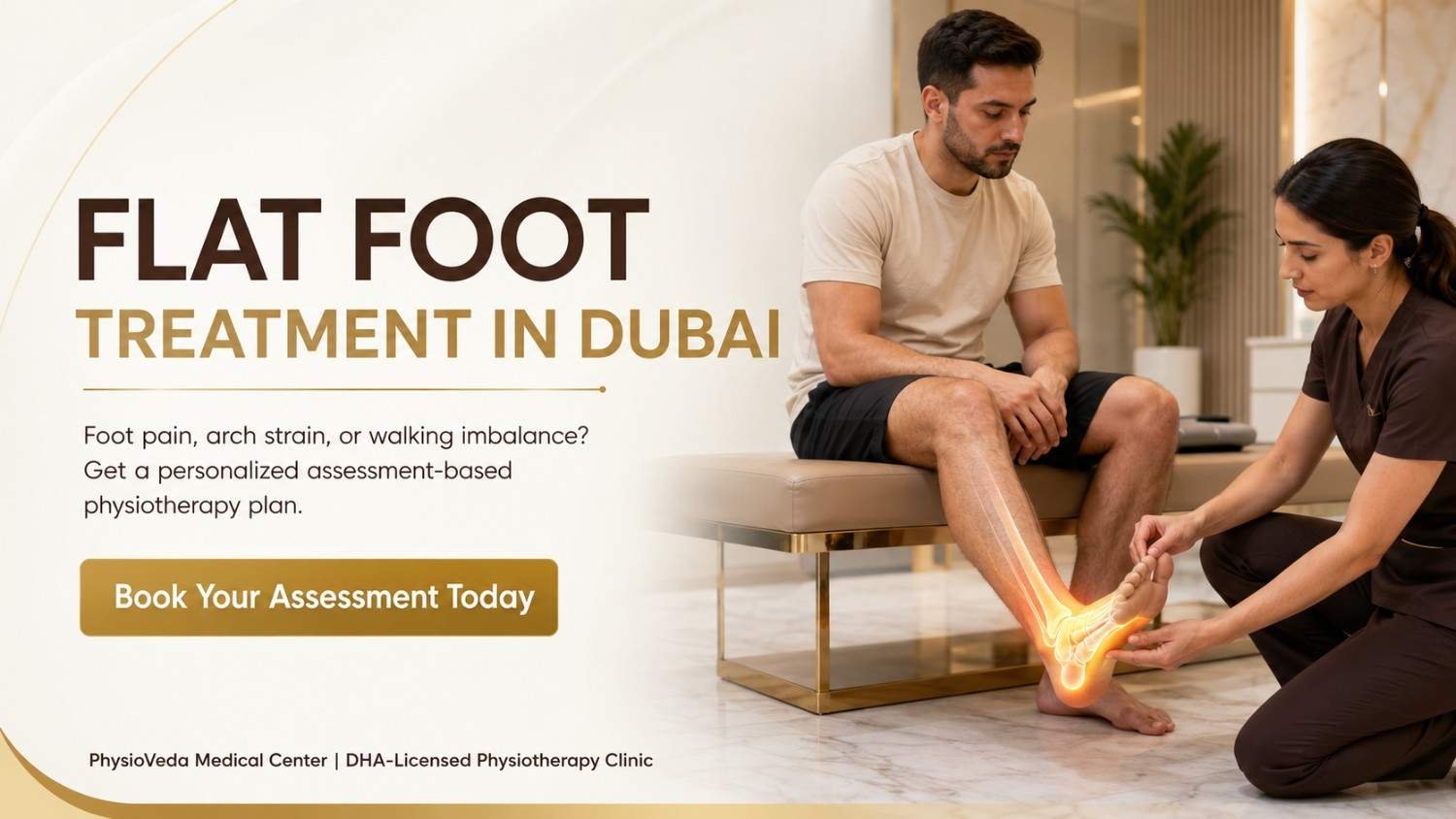
Flat Foot Treatment in Dubai. Flat foot (pes planus) means the foot has little or no arch when standing. This is very common; all infants have flat feet, and many develop arches by around age 10. However, arches sometimes never form or may later collapse, often called fallen arches, which can affect walking. When a flat foot causes pain, strain, or imbalance, it may need assessment and treatment. In this guide, we explain what flat feet are, who may need help, and the options for treatment, from simple exercises to orthotic supports, with insights on how PhysioVeda Medical Center in Dubai approaches care.
What Is Flat Foot Treatment in Dubai? Types, Symptoms, Causes
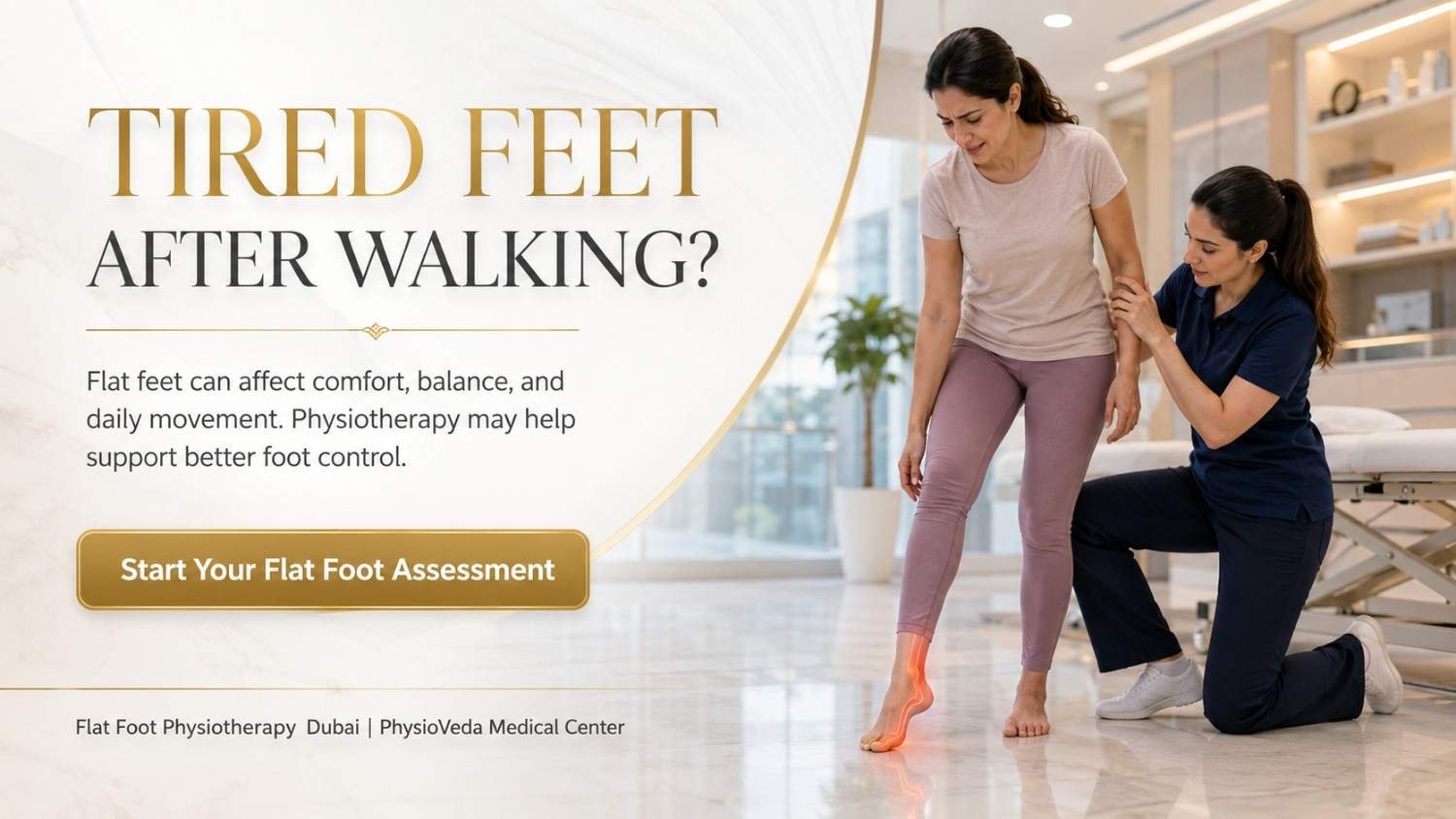
Flat foot Treatment in Dubai means the medial arch of the foot is flattened, so the entire sole may touch the ground. People often use overpronation, where the foot rolls inward, as a giveaway sign. Most flat feet are flexible: the arch appears when you sit or rise on tiptoes, but collapses when you stand. A smaller number are rigid, remaining flat even when non-weight-bearing. Flat feet can be congenital, present from childhood, or acquired later in life.
Common symptoms, when present, include:
- Foot or heel pain, especially after walking or standing for long periods.
- Inner ankle or arch pain and swelling.
- Tired, achy feet or legs.
- Shin splints or knee, hip, and lower back pain from altered gait mechanics.
- Rapid wear on the inner side of shoes.
By itself, a flat arch is not always a problem. Many people walk and stand normally. But if the foot rolls in excessively or the arch collapse leads to pain or alignment issues, assessment and treatment may be helpful. For example, the UK’s Chelsea & Westminster Hospital notes that flatfoot is only pathological when it causes pain or fatigue, in which case conservative treatment such as exercise, orthoses, and supportive shoes is advised.
Causes of flat feet include genetics, ligament laxity, injuries or tendon irritation, especially involving the posterior tibial tendon that supports the arch, obesity or rapid weight gain, arthritis, diabetes, or years of stress on the foot. Pregnancy can also loosen ligaments and contribute temporarily. In children, flat feet are common; most develop arches by age 10, but a pediatric flat foot that is painful or stiff should be checked by a specialist.
Who Might Need Flat Foot Treatment in Dubai?
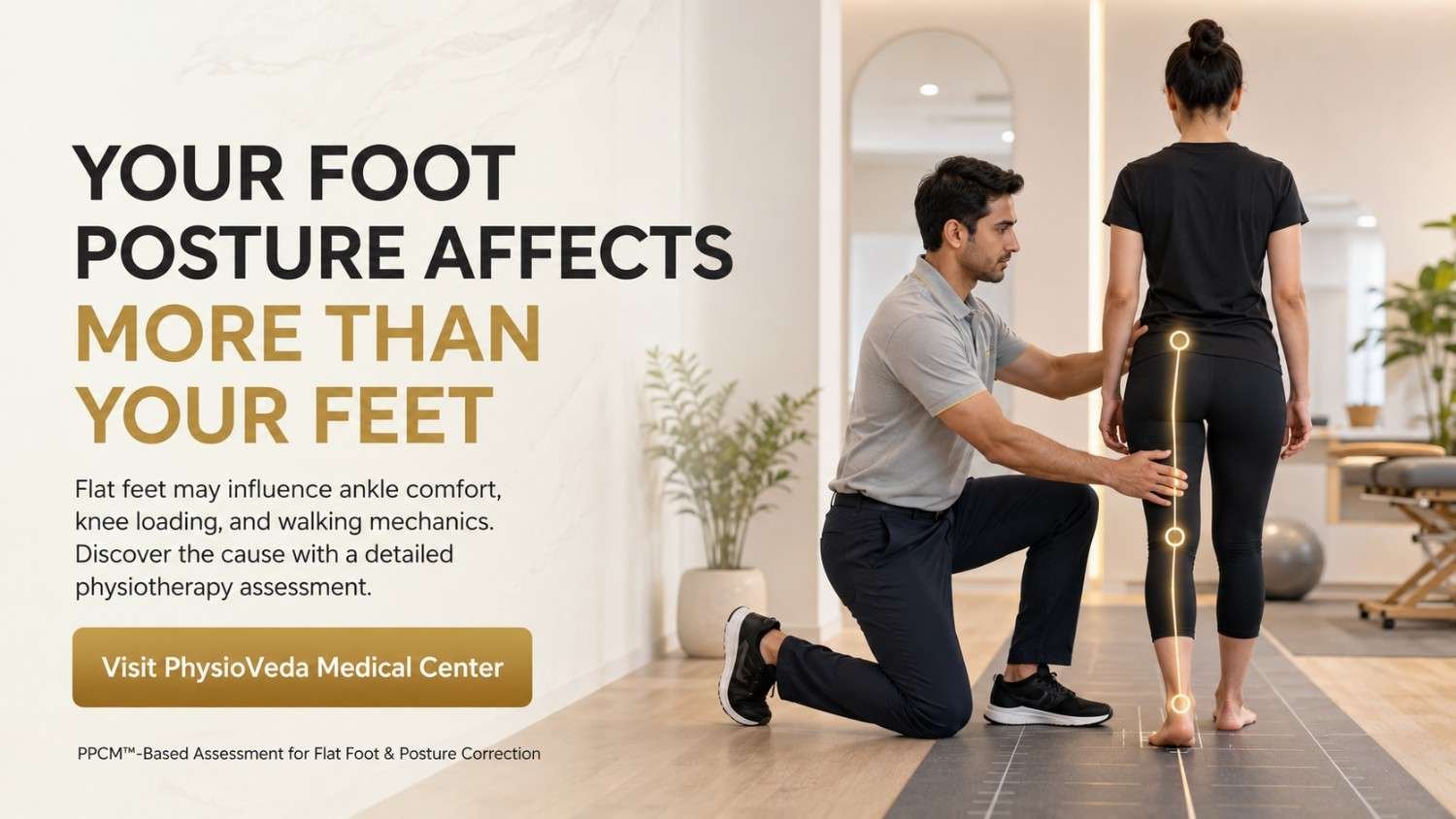
Not everyone with flat feet needs care. If you never notice symptoms, no treatment is usually needed. However, treatment may be recommended when:
- You feel pain or discomfort in the feet, ankles, knees, or hips that seems linked to your flat feet.
- You notice progressive flattening of one or both feet, or a feeling of ankle instability.
- You have fatigue or muscle tightness in the legs due to foot posture.
- Your flat feet are new, worsening, or limiting your activities.
In short, persistent symptoms are a reason to seek assessment. As the Cleveland Clinic advises, it is appropriate to consult a specialist if flat feet cause pain or walking problems. Today’s busy lifestyles and active communities mean foot health matters: early assessment may help guide the right treatment approach and reduce unnecessary trial-and-error. PhysioVeda’s team encourages an evaluation of foot structure, gait, and posture whenever flat feet contribute to ongoing aches.
Flat Foot Treatment Options in Dubai
Flat feet are usually managed conservatively, without surgery, as the first approach. An NHS patient leaflet and major medical centers emphasize supportive shoes, orthotics, and targeted exercises as the foundation of treatment. Below are the main options:
Supportive Footwear: Shoes with a firm heel counter and good arch support may help improve comfort for some patients. Look for lace-up shoes, not floppy slip-ons, that hold the foot snugly and reduce excessive motion. A stiffer shoe may help reduce excessive arch collapse during walking. For many people, switching from very flat or flexible shoes to supportive athletic or walking shoes can ease strain by the end of the day.
Orthotic Insoles: Over-the-counter or custom-made arch supports, also called orthoses, help guide weight across the foot. Their goal is to realign the foot and absorb stress. Mild cases often do well with good-quality prefabricated insoles, while others, especially with pronounced pronation, may benefit from custom orthotics shaped to the individual’s arch and gait. Physiotherapy clinics in Dubai, like PhysioVeda, can arrange gait analysis and proper fitting. Proper orthotics should feel comfortable and improve alignment; they are tools to use during recovery rather than something to depend on without active rehabilitation.
Physiotherapy & Exercises: A personalized exercise program is key to strengthening the arch-supporting muscles and improving balance. Physical therapists focus on:
- Stretching tight muscles: Calf and Achilles stretches, such as a daily slant-board exercise, improve ankle flexibility. NHS guidelines note that tight calf muscles often accompany flat feet and stretching can reduce the tendency of the foot to roll in.
- Strengthening intrinsic foot muscles: Short-foot exercises, toe curls, foot-grip exercises, and towel scrunches help train the small muscles that support the arch.
- Functional training: Balance and gait exercises, sometimes using wobble boards or walking drills, retrain the way you walk to reduce overpronation.
- Core and leg strengthening: Because flat feet involve a chain of alignment, therapists often strengthen hips, thighs, and core to improve overall posture, as recommended by specialists.
Research supports these approaches: gentle strength and control training can improve foot mechanics. For example, one study found that combining core stability exercises with intrinsic foot muscle exercises reported improvement in foot function in flatfoot patients. Overall, consistent physiotherapy and exercise can improve walking mechanics and reduce overload on the inner ankle.
Pain Management: In flare-ups, simple measures help. Over-the-counter NSAIDs or acetaminophen can ease pain when medically suitable. Icing the arch or ankle for 15 to 20 minutes may reduce inflammation. Short-term orthotic taping or bracing can support the foot until swelling settles. Long-term use of painkillers is not advised, but these measures can help manage discomfort while you build strength.
Other Modalities: Some clinics use adjunctive therapies. For example, shockwave therapy and therapeutic ultrasound may have roles in plantar fascia pain, which can occur with flat feet, and may be available at clinics such as PhysioVeda, depending on assessment. However, orthotics and exercise remain commonly recommended mainstays.
Surgical Treatment (Last Resort): Surgery is rarely the first option. It is reserved for severe cases where conservative care fails or an underlying structural problem exists. Possible procedures include bone osteotomies, tendon transfers or lengthening, and joint fusions to improve alignment. For example, lengthening a tight calf tendon may accompany flatfoot surgery to improve flexibility. Outcomes depend on many factors, including age, flexibility, tissue condition, and the underlying diagnosis. Important: only a foot surgeon or orthopedist can decide if surgery is needed. In Dubai, surgeons at established hospitals may manage complex foot reconstruction, but many patients are first managed with conservative care.
Approach | What It Does | When It Helps |
Supportive Shoes | Provide firm heel and arch support to limit excessive pronation | Common first step for symptomatic flatfoot |
Orthotic Insoles | Guide weight distribution; custom or OTC arch support | Symptomatic flatfoot, mild to moderate cases, usually with physiotherapy |
Physiotherapy/Exercise | Strengthen foot and leg muscles; improve flexibility and balance | Flexible flatfoot, pain or tightness from flat arches, and ongoing management |
Pain Relief | NSAIDs, ice, rest, and taping to control symptoms | During flare-ups or acute discomfort, short-term only |
Surgery | Bone realignment, tendon repair/transfers, or joint fusions | Severe flatfoot not responding to conservative care; structural issues such as tendon rupture or arthritis |
Why Choose PhysioVeda for Flat Foot Treatment in Dubai
PhysioVeda Medical Center in Dubai offers a patient-centered approach to flat foot treatment. Here’s what sets us apart:
Experienced, Licensed Team: Our multidisciplinary staff includes DHA-licensed physiotherapists, orthopedic specialists, and general practitioners. The team has years of clinical experience in musculoskeletal care. This means your flat foot will be assessed not just as an isolated arch issue, but in the context of overall posture and gait.
Evidence-Based Practice: We emphasize treatments supported by research. Our therapists use evidence-informed physiotherapy techniques, including manual therapy, exercise prescription, shockwave, and electrotherapy when appropriate, to help manage pain and support functional improvement. We also employ our proprietary Physioveda Posture Correction Matrix (PPCM®) system when indicated, to address movement and posture-related imbalances linked with flat feet.
Personalized Care: At PhysioVeda, you’re at the center of the plan. We conduct a thorough assessment of your feet, ankles, and movement. Then we tailor a rehab program to your needs and goals. For instance, two people with flat feet may get different stretches and exercises based on strength, flexibility, and activity level.
Patient-Centered Care & Clinical Experience: Many patients choose PhysioVeda for physiotherapy care in Dubai because of our structured assessment, clear communication, and individualized treatment planning. Our team focuses on helping patients understand their condition and follow a practical rehabilitation plan based on their needs.
Convenience & Support: We have central Dubai locations in Al Wasl/Jumeirah and Al Karama for easy access. We also offer home-visit physiotherapy for suitable cases. Our center handles insurance billing with several insurance partners and offers flexible scheduling. In short, getting started with us is straightforward and patient-friendly.
In short, PhysioVeda combines evidence-informed physiotherapy knowledge with a warm, professional bedside manner. As a patient, you benefit from our clinic’s resources, such as gait analysis equipment and orthotic fitting services, and close supervision by senior therapists and doctors.
How to Proceed For Flat Foot Treatment In Dubai
If you suspect your flat feet are causing trouble, taking action through proper assessment can be helpful. You can schedule a consultation by calling PhysioVeda or booking online. On your first visit, a therapist will perform a detailed evaluation: examining foot posture, ankle mobility, leg strength, and walking pattern. We may look at your shoes, watch you walk, and assess muscle tightness.
Expect the therapist to discuss findings and a plan. This could involve a trial of custom insoles, a set of stretching and strengthening exercises to do at home, or other physiotherapy treatments such as shockwave or targeted therapy, depending on assessment. We will set realistic goals together, such as improving walking comfort, reducing strain during daily activity, and supporting better foot function over time. Your therapist will also explain what to do at home between visits.
PhysioVeda’s team focuses on clear communication: we’ll explain the nature of your flat foot in plain language and describe each recommended treatment. Throughout your recovery, your therapist will monitor progress and adjust the plan. You’ll understand why a particular exercise or support is prescribed.
If necessary, we can also liaise with a Dubai orthopedist or podiatrist for imaging or further consultation. In many cases, persistent pain and arch weakness may improve with consistent conservative care, depending on the individual case.
When to come in: According to experts, you should consult if flat feet lead to pain, fatigue, or any change in foot shape. If foot discomfort continues or starts affecting walking, standing, or daily activity, a physiotherapy assessment may help identify the contributing factors. PhysioVeda welcomes questions and offers appointments based on availability. Our team aims to make your evaluation and therapy process comfortable and clear.
FAQS For Flat Foot Treatment In Dubai
What is the best treatment for flat feet in Dubai?
The most suitable treatment for flat feet in Dubai depends on the cause, symptoms, foot posture, walking pattern, ankle mobility, and overall body alignment. At PhysioVeda Medical Center, flat foot treatment is assessment-based and may include foot muscle strengthening, arch control exercises, ankle mobility work, gait correction, balance training, and PPCM™-based posture correction. A qualified physiotherapist can assess your condition and recommend a personalized plan.
Can physiotherapy help with flat feet?
Yes, physiotherapy may help manage flat feet, especially when the condition is linked with foot pain, arch discomfort, ankle strain, walking imbalance, or lower-limb weakness. Physiotherapy for flat feet focuses on improving foot muscle activation, ankle control, balance, calf flexibility, hip strength, and walking mechanics. Results vary depending on the individual assessment, severity, age, activity level, and consistency with the treatment plan.
When should I visit a physiotherapist for flat foot treatment in Dubai?
You should consider visiting a physiotherapist if your flat feet are causing foot pain, heel pain, arch pain, ankle discomfort, knee strain, tired feet after walking, repeated ankle rolling, uneven shoe wear, or difficulty standing for long hours. If flat feet are affecting your work, gym routine, sports activity, or daily movement comfort, an assessment at a DHA-licensed physiotherapy clinic in Dubai can help identify the contributing factors.
Can flat feet cause ankle, knee, hip, or back pain?
Flat feet may contribute to altered loading through the ankle, knee, hip, pelvis, and lower back in some people. When the foot rolls inward excessively or the arch does not control pressure well, it can affect walking mechanics and lower-limb alignment. However, not every case of knee, hip, or back pain is caused by flat feet, so a proper gait assessment and posture evaluation are important before starting treatment.
How does PhysioVeda Medical Center treat flat feet?
PhysioVeda Medical Center provides assessment-based flat foot treatment in Dubai through a structured physiotherapy approach. Treatment may include detailed foot and posture assessment, gait and walking pattern analysis, arch control training, intrinsic foot strengthening, ankle mobility work, calf flexibility, balance training, lower-limb strengthening, pain management, and a personalized home exercise program. PhysioVeda also uses PPCM™ — PhysioVeda Posture Correction Matrix — to assess foot mechanics, posture, movement, balance, and full-body alignment for a more personalized rehabilitation plan.
For more guidance on related foot and movement concerns, you can explore our previous PhysioVeda blogs on Plantar Fasciitis Treatment in Dubai, Ankle Pain Treatment in Dubai, Foot Pain Treatment in Dubai, Back Pain Treatment in Dubai, Sports Massage Dubai, and TECAR Physiotherapy in Dubai. These resources can help you understand how foot posture, ankle mobility, walking pattern, lower-limb strength, and body alignment may affect daily movement comfort. You can also learn more about our PPCM™ Posture Correction approach, which focuses on posture, movement, balance, and alignment as part of a personalized physiotherapy plan. For more physiotherapy tips, patient education, and clinic updates, follow PhysioVeda Medical Center on Instagram at @physioveda.
Book a Consultation
It’s easy and free!
Tags:ankle and foot pain treatmentankle pain physiotherapy dubaiarch pain treatment Dubaiarch strengthening exercisesDHA licensed physiotherapy clinic Dubaifallen arches treatment Dubaiflat feet exercisesflat feet in adultsflat feet in childrenflat feet treatment Dubaiflat foot correction exercisesflat foot pain treatmentflat foot physiotherapy Dubaiflat foot treatment in Dubaifoot and ankle physiotherapy Dubaifoot pain physiotherapy Dubaifoot pain treatment in dubaifoot posture correction Dubaigait assessment Dubaiheel pain treatment Dubaiinner arch painlower limb alignment physiotherapy.overpronation treatment Dubaiphysiotherapy clinic in Dubaiphysiotherapy for flat feetposture correction physiotherapy DubaiPPCM posture correctionsports physiotherapy Dubaitired feet after walkingwalking imbalance treatment Dubai