Knee pain while climbing stairs may be linked to joint stiffness, muscle weakness, overuse, or altered movement patterns. Learn the common causes, warning signs, and how physiotherapy assessment and personalised knee pain treatment in Dubai may support better mobility and everyday movement.


If you feel knee pain while climbing stairs, you are not imagining it and you should not simply “walk it off.” Stairs place extra load on the knee joint, especially around the kneecap, so a small problem that feels manageable on flat ground often becomes obvious the moment you go up or down steps. In many cases, knee pain while climbing stairs points to irritation around the kneecap, early cartilage wear, muscle imbalance, tendon overload, or a mechanical knee problem that needs a proper exam.
The good news is that knee pain while climbing stairs is often treatable without surgery, especially when it is diagnosed early. DHA guidance supports a treatment plan built around patient education, exercise, weight management when needed, and careful assessment of red flags, while Dubai Health offers both Orthopedic Surgery services and a Physiotherapy and Rehabilitation Center for patients who need a more structured recovery plan.
If your symptoms have lasted more than a few days, keep coming back, or are starting to affect your daily routine, this is the right time to book an evaluation instead of guessing. A clear diagnosis matters, because the best treatment for knee pain while climbing stairs depends on whether the source is patellofemoral pain, osteoarthritis, tendinitis, instability, or a meniscus problem.
Knee pain while climbing stairs causes
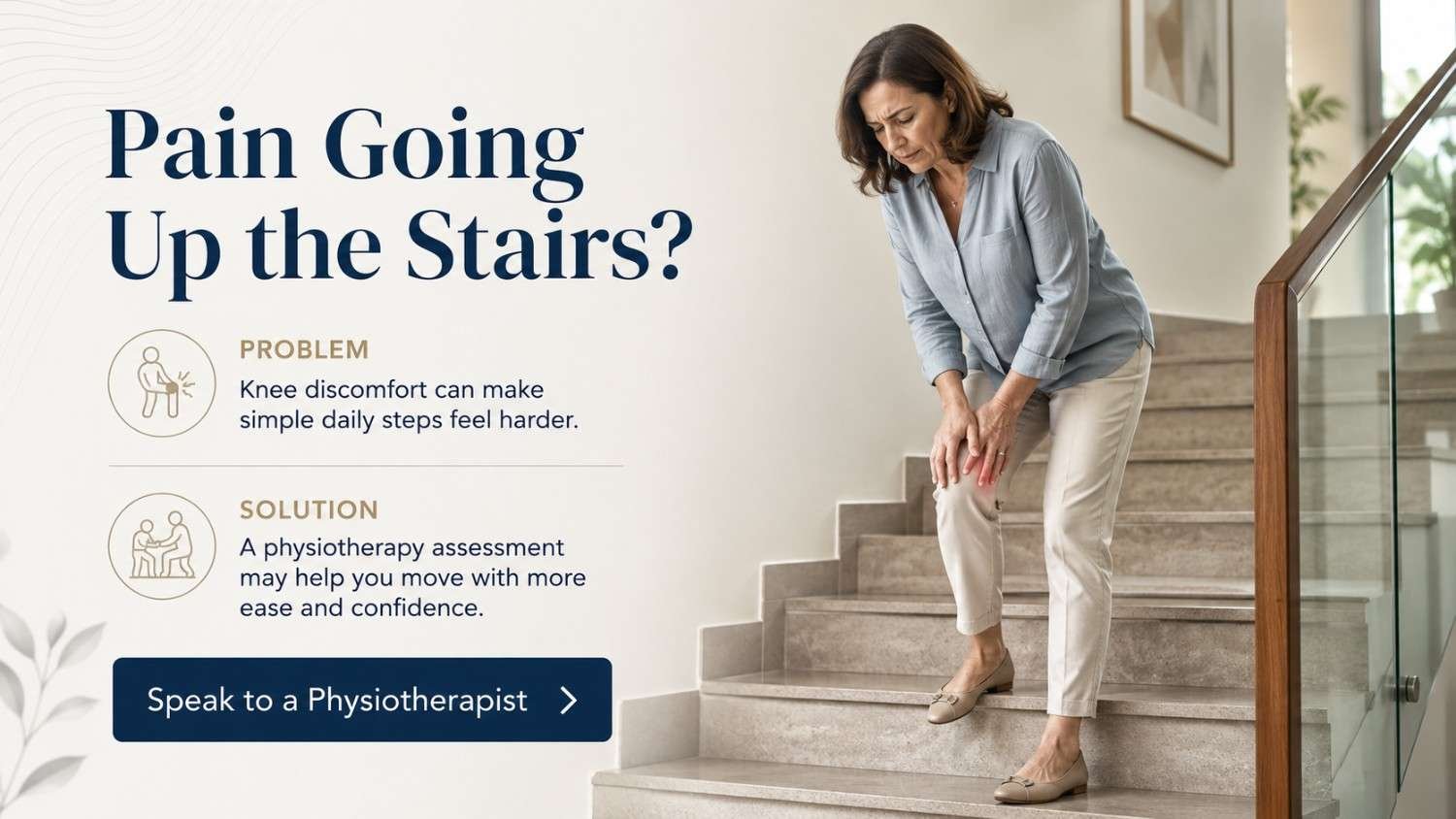
The most common reason for knee pain while climbing stairs is that stairs increase stress through the front of the knee, especially the patellofemoral joint. DHA notes that patellofemoral osteoarthritis pain often becomes worse with stair climbing or inclines, and AAOS and Mayo Clinic describe a very similar pattern in patellofemoral pain syndrome, where the pain is usually felt around or behind the kneecap during activities that repetitively bend the knee.
One major cause is patellofemoral pain syndrome, sometimes called runner’s knee. This happens when the kneecap does not track smoothly in its groove and the surrounding tissues become irritated. It is especially common in active adults, younger patients, and people with weak hip or thigh muscles, recent training changes, or poor movement mechanics. Pain with stair climbing, squatting, and sitting with the knees bent are classic signs.
Another common cause is osteoarthritis, including wear behind the kneecap. DHA states that knee osteoarthritis is a major cause of lower-limb disability in adults over 50 and may present with usage-related pain, stiffness, motion restriction, and buckling. AAOS adds that knee arthritis symptoms often worsen with activities such as climbing stairs, while patellofemoral arthritis can specifically make it hard to kneel, squat, or go up and down steps.
Tendon overload is another possibility. Patellar tendinitis usually causes pain at the front of the knee and often feels worse when you use the knee powerfully, including during stairs, squatting, or sports. If your pain is tied to jumping, running, gym work, or a sudden increase in training, your tendon should be part of the discussion during assessment.
A meniscus tear should be considered when the pain started after a twist, awkward step, or loaded bend of the knee, or when you also notice swelling, catching, or locking. AAOS describes stiffness, swelling, locking, limited range of motion, and the feeling that the knee gives way as common meniscus-tear symptoms. DHA also highlights true locking as a reason to look for additional mechanical derangement.
Sometimes knee pain while climbing stairs is related to instability or maltracking. If the kneecap feels like it shifts, catches, cracks, or slides, the problem may be more than simple irritation. Instability can make the knee feel unreliable during weight-bearing, and that is one more reason not to self-diagnose.
Knee pain while climbing stairs when bending

If you also have knee pain while climbing stairs when bending, that detail helps narrow the cause. Pain in a bent-knee position is common with patellofemoral pain, patellofemoral arthritis, tendinopathy, and some meniscus injuries because those positions increase pressure inside the joint or place more strain on irritated tissues. That is why patients often say the pain shows up during stairs, squats, lunges, getting up from a chair, or sitting with the knee bent for too long.
Still, not every case of knee pain while climbing stairs and bending is routine. You should seek prompt assessment if the knee is suddenly swollen, hot, red, severely painful, unstable, or truly locked, or if you cannot bear weight after an injury. DHA flags swelling, redness, heat, persistent fever, night pain, and unintentional weight loss as warning signs, and Mayo Clinic advises urgent evaluation after major injury if the knee cannot bear weight, looks deformed, or swells suddenly.
A proper knee evaluation usually starts with your history and a physical exam. DHA notes that osteoarthritis can often be diagnosed clinically, while imaging is added when the diagnosis is unclear or another condition must be ruled out. X-rays remain the most common first imaging choice for arthritis, while MRI may help when soft tissues, early structural change, or alternative diagnoses are being considered.
Knee pain while climbing stairs treatment

The right knee pain while climbing stairs treatment starts with the exact source of your symptoms, but most evidence-based care begins conservatively. If you have knee pain while climbing stairs, the first goal is to calm the irritated tissue, reduce overload, and restore better movement. That usually means short-term activity modification, a guided strengthening plan, and a careful return to regular activity instead of total rest for weeks. DHA states that nonpharmacologic treatment should be tried first and that patient education is essential because people do better when they understand the purpose of treatment and what improvement should realistically look like.
When physiotherapy is needed, it should be individualized. DHA’s physiotherapy standards say appropriate patient education should be provided and the treatment program should be delivered in agreement with the patient. For patellofemoral pain, the strongest exercise evidence supports hip and quadriceps strengthening, because stronger thigh and hip muscles improve tracking, reduce pain, and improve daily function.
If your pain is being driven by overload and muscle weakness, your treatment plan may include straight-leg raises, hip abductor work, step control drills, gentle closed-chain strengthening, and a graded return to stairs. If the pain is severe, some exercise progressions start with the hip before loading the knee more heavily. That is especially useful for patients with knee pain while climbing stairs who flare during squats or step-ups.
Weight management matters too when excess load is part of the picture. DHA’s osteoarthritis guideline states that in overweight or obese patients with knee OA, losing at least 10% of body weight through diet and exercise has been associated with a 50% reduction in pain scores after 18 months. For many patients, that makes weight reduction one of the highest-impact parts of knee pain treatment.
Medication can sometimes help, but it should support the plan, not replace it. DHA notes that exercise can improve pain and function to a degree similar to NSAIDs in osteoarthritis, while AAOS describes rest, ice, compression, elevation, and carefully selected pain relief as common early measures depending on the diagnosis. In other words, temporary symptom relief is helpful, but it works best when combined with a real rehab strategy.
For some patients, braces, orthotics, walking aids, injections, or more advanced orthopedic care may be appropriate. DHA says braces and walking aids may improve pain in selected osteoarthritis patients, and its knee-surgery guidance says early non-surgical care may include weight reduction, activity modification, exercise, medicines, injections, walking aids, and other physical therapies before surgery is considered.
If your symptoms are becoming persistent, disabling, or are stopping you from walking comfortably, exercising, working, or sleeping, you should not keep guessing. AAOS notes that knee replacement may be considered when pain or stiffness limits everyday activities such as walking or climbing stairs despite nonsurgical care. Not everyone with knee pain while climbing stairs needs surgery, but patients with advanced arthritis do better when they are assessed before the condition becomes unmanageable.
Not every case of knee pain while climbing stairs requires surgery. The appropriate treatment depends on the cause, severity, duration of symptoms, and findings from a professional assessment. Physiotherapy may help address contributing factors such as reduced knee mobility, muscle weakness, joint stiffness, and altered movement patterns.
At PhysioVeda Medical Center, our DHA-licensed physiotherapists provide personalised knee pain assessment and rehabilitation based on each patient’s condition and functional requirements. Treatment may include guided exercises, strengthening, mobility work, manual therapy, movement education, and a progressive rehabilitation programme, depending on the assessment findings.
To arrange a knee physiotherapy appointment at our Al Wasl/Jumeirah or Al Karama location, call 800 8332 or WhatsApp +971 56 546 1900. Learn more about our knee pain treatment in Dubai: https://physioveda.ae/knee-pain-treatment-in-dubai/
Left knee pain while climbing stairs. What Is the ICD-10-CM Code
People searching for “left knee pain while climbing stairs ICD-10” may be looking for information about the diagnosis code recorded in their medical or insurance documentation. The ICD-10-CM code commonly used to describe pain in the left knee is M25.562. This code describes the location of the symptom but does not explain why the knee hurts or provide a complete diagnosis.
Knee pain while climbing stairs may have different contributing factors, including joint irritation, reduced mobility, muscle weakness, overuse, or an underlying knee condition. The appropriate diagnosis and medical code should therefore be determined by a qualified healthcare professional following an assessment.
For patients, the main concern should not be the code alone, but what may be contributing to the pain, how it affects movement, and which treatment or rehabilitation approach may be appropriate.
Frequently asked questions for knee pain while climbing stairs
Why do I get knee pain while climbing stairs but not while walking on flat ground?
Because stairs increase the load across the knee, especially around the kneecap and patellofemoral joint. Problems that feel mild during normal walking often become obvious when you go up or down steps.
Is knee pain while climbing stairs always arthritis?
No. It can also come from patellofemoral pain syndrome, tendon overload, a meniscus tear, or kneecap instability. The pattern of pain, swelling, locking, buckling, and your activity history help narrow the cause.
When should I worry about knee pain while climbing stairs?
You should book an assessment sooner if the pain keeps returning, is getting worse, or is limiting normal life. You should seek urgent care if the knee is hot, swollen, red, severely painful after injury, cannot bear weight, or becomes truly locked.
What is the best knee pain treatment if the pain is near the kneecap?
For many patients, the best starting point is an individualized plan that combines education, activity modification, physiotherapy, and targeted strengthening for the hip and quadriceps. Weight management, bracing, injections, or surgical review may be considered depending on the diagnosis.
Can exercise make knee pain while climbing stairs worse?
The wrong exercise or too much load can aggravate symptoms, but the right exercise program is one of the most evidence-based treatments for both patellofemoral pain and knee osteoarthritis. The key is graded, diagnosis-led progression instead of pushing through sharp pain.
Should I get an X-ray or an MRI?
Not always. DHA notes that many cases can be diagnosed clinically first. X-rays are commonly used when arthritis is suspected, while MRI is usually more helpful when the diagnosis is unclear or when soft-tissue injury or another condition needs to be assessed.
Knee pain during walking, climbing stairs, squatting, exercising, or prolonged sitting should not be ignored. A personalised physiotherapy assessment may help identify contributing factors such as reduced mobility, muscle weakness, joint stiffness, or altered movement patterns. Learn more about our knee pain treatment in Dubai and sports physiotherapy services, or explore more practical recovery guidance on the PhysioVeda health blog. You can also follow PhysioVeda on Instagram and watch our latest knee pain awareness reel for simple information on recognising symptoms and knowing when to seek professional assessment.
Book a Consultation
It’s easy and free!
Tags:book knee physiotherapy Dubaican physiotherapy help knee pain on stairschronic knee painDHA licensed physiotherapist Dubaifront knee painknee pain after walkingknee pain assessmentknee pain causesknee pain clinic Dubaiknee pain going downstairsknee pain going upstairsknee pain physiotherapyknee pain treatmentknee pain treatment Al Karamaknee pain treatment Dubaiknee pain treatment Jumeirahknee pain treatment near meknee pain when bendingknee pain when climbing stairsknee pain when squattingknee pain while climbing stairsknee physiotherapy Al Waslknee physiotherapy Dubaiknee physiotherapy near meknee rehabilitationknee stiffnessknee strengthening physiotherapyknee weakness on stairskneecap painpatellofemoral painphysiotherapist for knee painphysiotherapy for knee painwhere can I get knee pain treatment in Dubaiwhy does my knee hurt when I climb stairs