Explore how geriatric physiotherapy in Dubai may support mobility, balance, strength and confidence through personalised clinic and home physiotherapy care.

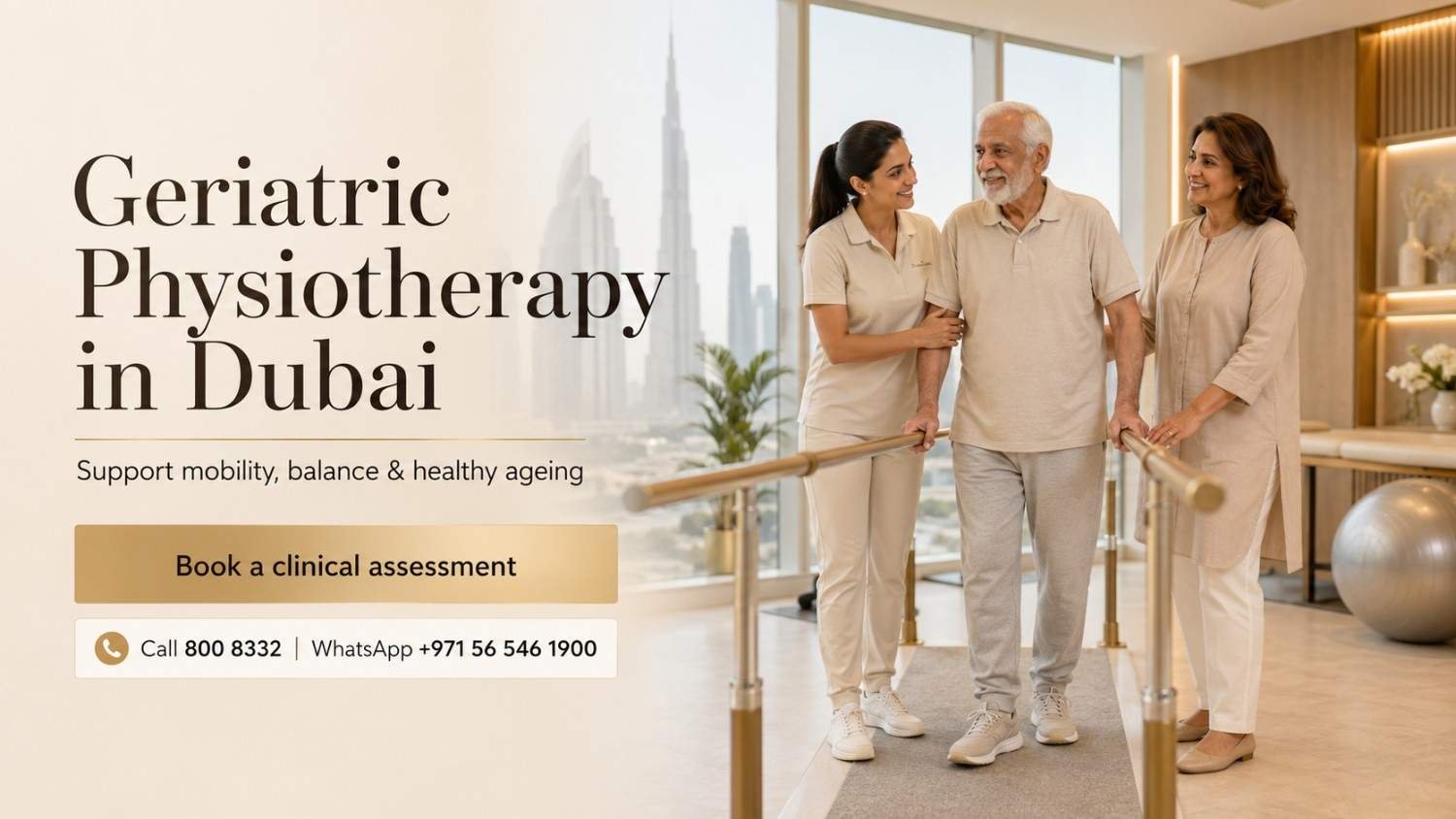
One of the most common things families tell me is this: “There hasn’t been one major injury. Mum or Dad just seems to have slowed down.” That is exactly where Geriatric Physiotherapy in Dubai often becomes important. In many older adults, the first warning signs are subtle: shorter walks, slower turns, fear on stairs, stiffness after sitting, or a growing hesitation about leaving the house. The NHS defines physiotherapy as treatment that can ease pain and improve movement through exercise, manual techniques and other approaches, and that broad definition becomes especially meaningful in older age, when the goal is not just symptom relief but preserving independence.
At Physioveda Medical Centre, the brief is clear: provide a complete, practical guide for families in Dubai who want trusted, DHA-aligned physiotherapy support for ageing parents. Physioveda currently presents itself as a Dubai physiotherapy provider with DHA-licensed physiotherapists, home-care availability, and clinic locations in Al Wasl and Al Karama.
What Is Geriatric Physiotherapy in Dubai?
Geriatric Physiotherapy in Dubai is not “exercise for old people”. It is a specialised, assessment-led branch of physiotherapy designed around the way ageing changes movement, balance, tissue resilience and recovery. The World Health Organization notes that ageing is associated with a gradual decline in physical and mental capacity, and that common conditions in older age include back and neck pain, osteoarthritis, diabetes and frailty.
In practical terms, that means the body becomes less forgiving. Tendons and ligaments usually lose some elasticity. Muscles gradually lose mass and strength, a process many families recognise long before they hear the word sarcopenia. The joint and foot sensors that help the brain understand body position are often less sharp than they once were, which is one reason confidence and balance can change together. Healing also tends to slow with age, so the same flare-up, sprain or post-operative setback may take longer to settle than it did ten or twenty years ago.
That is why proper elderly physiotherapy in Dubai must start with assessment, not assumption. At Physioveda, the current service pages describe a structured evaluation-led approach and position PPCM™ as the clinic’s proprietary posture and movement assessment framework. Their posture correction page describes PPCM™ as a scientifically designed programme built around posture analysis, movement assessment and correction of muscle imbalance rather than generic exercise sheets. If I am treating an older adult, I want to understand how they sit, stand, turn, transfer, walk, compensate and fatigue before I write a single exercise.
That is also why a good plan often combines pain relief, strength work, gait retraining, balance practice, posture correction and family guidance.
Why Geriatric Physiotherapy in Dubai Is a Growing Need
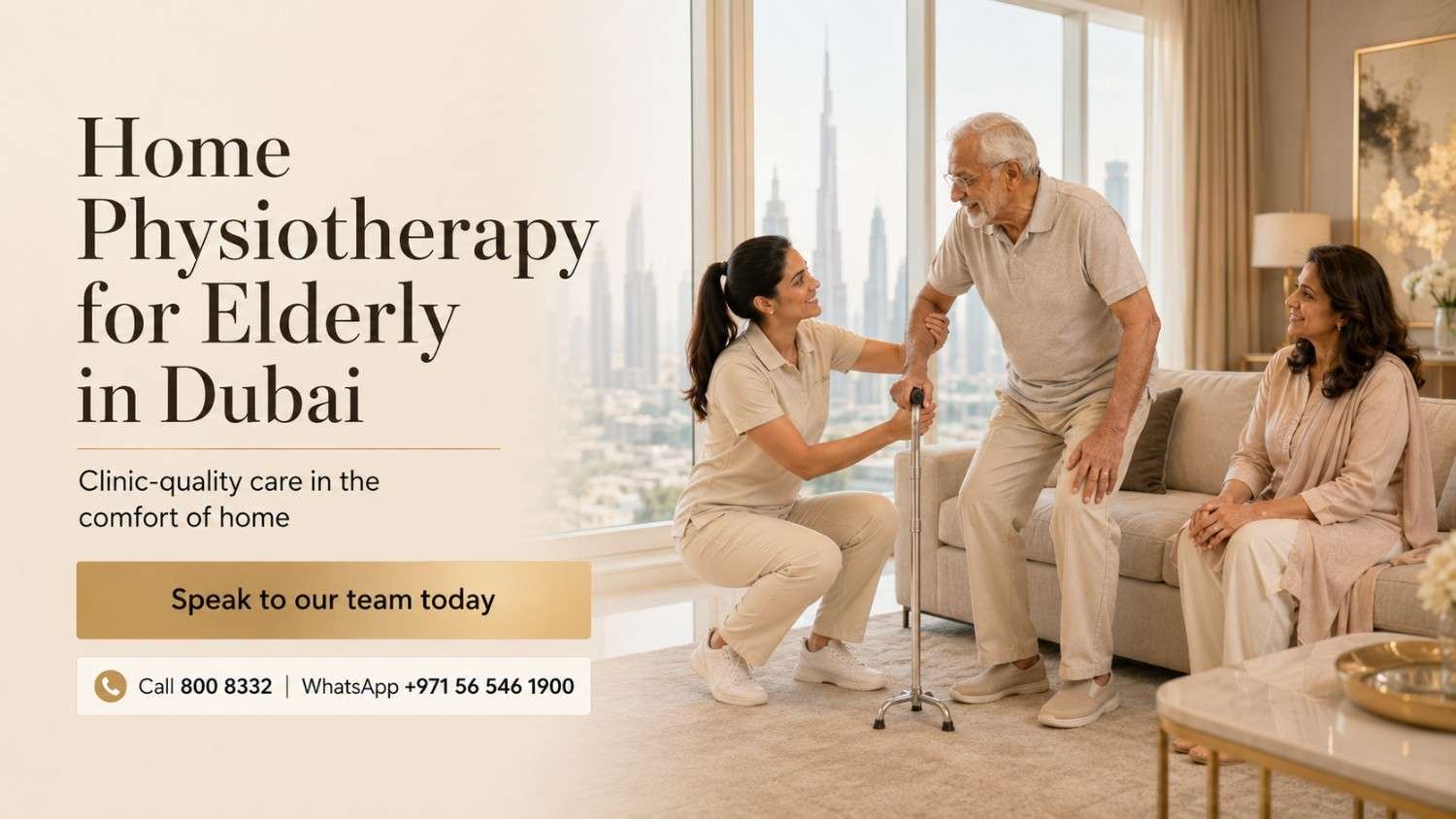
Dubai creates a very specific family dynamic. Many adult children live fast, demanding lives here and bring ageing parents to stay with them. I see this pattern often: a parent living in a comfortable flat or villa, but in a home that was never truly set up for reduced balance, weak stairs, bathroom transfers, or outdoor walking confidence. Function starts shrinking quietly. The family notices it only when the parent stops going out, avoids prayer positions, refuses stairs, or becomes frightened after one small slip.
The clinical need is also broader than “old age pain”. According to WHO, common health conditions in older age include back and neck pain, osteoarthritis, diabetes and frailty, and regular physical activity remains central to healthy ageing. NICE’s current falls guidance, published in April 2025, goes even further: for older adults at risk, clinicians should assess gait, balance, strength, home hazards and other modifiable factors, then tailor prevention accordingly.
That is why geriatric physiotherapy in Dubai is becoming less of a niche service and more of a necessary one. Families are not only asking, “Can you help with pain?” They are asking, “Can you help my father walk safely again? Can you help my mother regain confidence after a fall? Can you help us manage recovery at home?” Those are exactly the right questions.
World Physiotherapy’s World PT Day highlights the profession’s public-health role, and its recent campaigns have included healthy ageing as a major focus. That matters, because healthy ageing is not just about living longer. It is about staying mobile, capable and involved in daily life for as long as possible.
Common Conditions Treated with Geriatric Physiotherapy in Dubai
Arthritis and Joint Stiffness
Arthritis in older adults is rarely just about pain. It is about the way pain changes movement. A stiff knee changes walking speed. A painful hip changes how someone rises from a chair. A rigid upper back changes balance, breathing and even confidence on uneven ground. WHO specifically identifies osteoarthritis and back and neck pain as common conditions in older age.
In clinic, many patients describe arthritis as heaviness, morning stiffness, aching on stairs, or the feeling that the legs are no longer supporting them properly. Good geriatric physiotherapy in Dubai does not chase pain alone. It works on joint mobility, muscle support, walking tolerance, posture and the small daily tasks that define independence, such as turning in bed, getting to the bathroom, standing at the sink or getting in and out of a car.
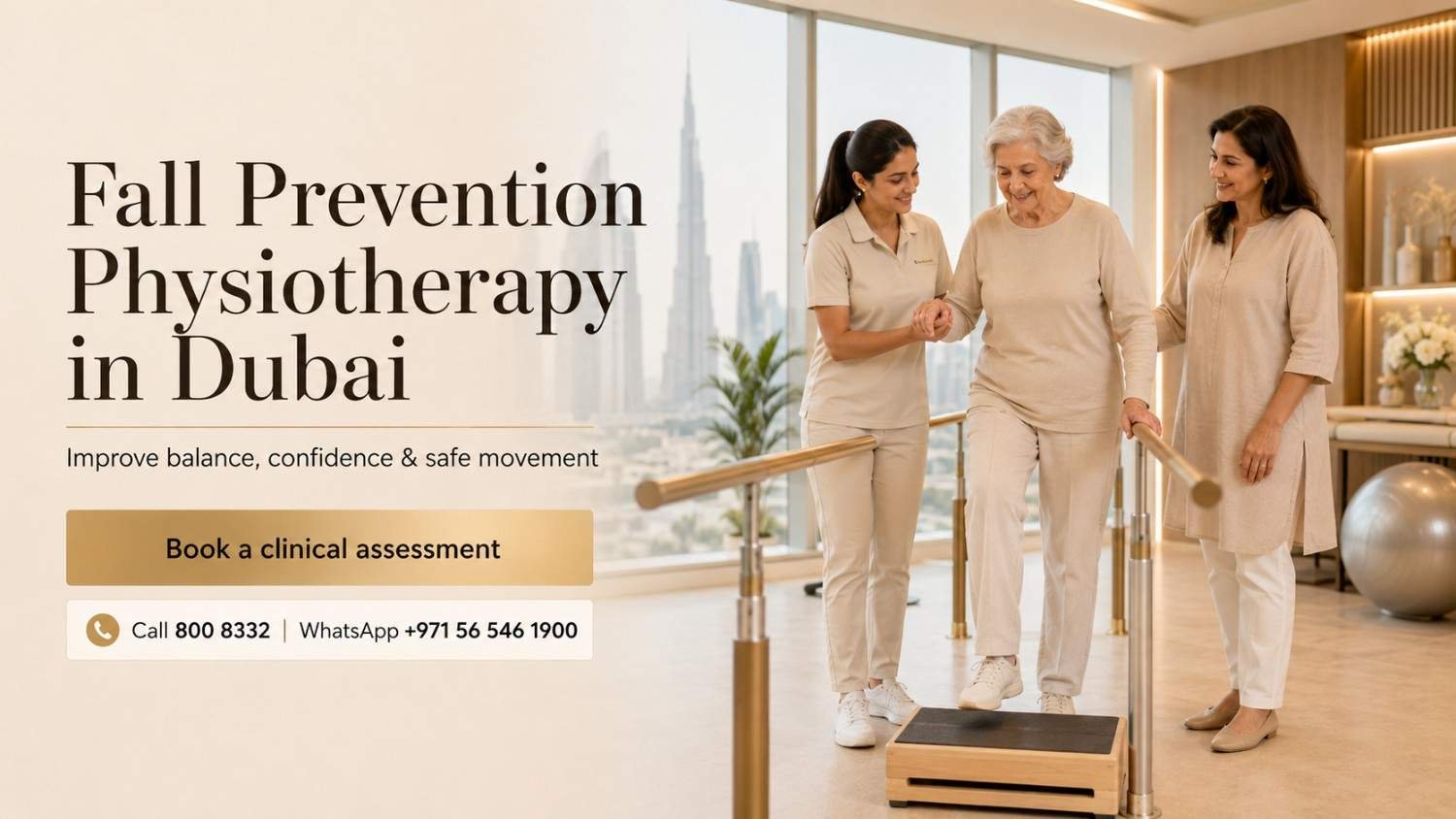
Balance Problems and Fall Risk
This is one of the biggest issues I see, and families often underestimate how much fear changes the body. Fear of falling becomes reduced activity. Reduced activity becomes weakness. Weakness then makes balance worse. That cycle can move surprisingly fast.
NICE now recommends gait and balance assessment for older people who have fallen, followed by a tailored falls prevention exercise programme and consideration of a home hazard assessment when impairment is found. The CDC’s STEADI programme similarly frames falls prevention around screening, assessment and intervention, including standardised gait and balance testing. In practice, tools such as the Timed Up and Go test and the Berg Balance Scale can help quantify how safe or unsafe everyday movement currently is. Programmes based on strength, balance and functional practice, including approaches inspired by the Otago Exercise Programme, are often useful because they focus on exactly what older adults need: steadier walking, stronger sit-to-stand ability, better turning control and safer confidence.
Knee Pain and Hip Pain
Knee and hip pain in older adults usually have more than one driver. Yes, there may be age-related joint wear. But I also look for hip weakness, trunk stiffness, ankle restriction, pelvic asymmetry and walking habits that are quietly overloading one side. If you only chase the sore spot, you often miss the reason it keeps coming back.
That is why whole-body assessment matters. At Physioveda, the clinic’s current positioning emphasises personalised plans, posture analysis and functional rehabilitation rather than one-size-fits-all treatment. If a parent is struggling with knee pain, I would want to understand how they stand up, how long each foot stays on the ground, whether they avoid loading the painful side, and whether fear is already changing the way they move.
Back Pain, Neck Pain and Cervical Spondylosis
Older adults often tell me, “It feels like I’ve become generally stiff.” That is a very real clinical pattern. The spine becomes less mobile, postural endurance falls, and long sitting or poor head position can make symptoms travel into the shoulders, upper back or arms. The answer is rarely just massage. It is better posture, better thoracic mobility, a calmer neck, improved shoulder mechanics and more confident movement.
This is where a structured posture-based framework can help. Physioveda’s PPCM™ positioning specifically highlights detailed posture and movement analysis, muscle imbalance identification and a longer-term correction plan. That kind of reasoning is useful in elderly care because spinal pain is often part of a wider movement story, not an isolated body-part problem.
Post-Surgery Rehabilitation
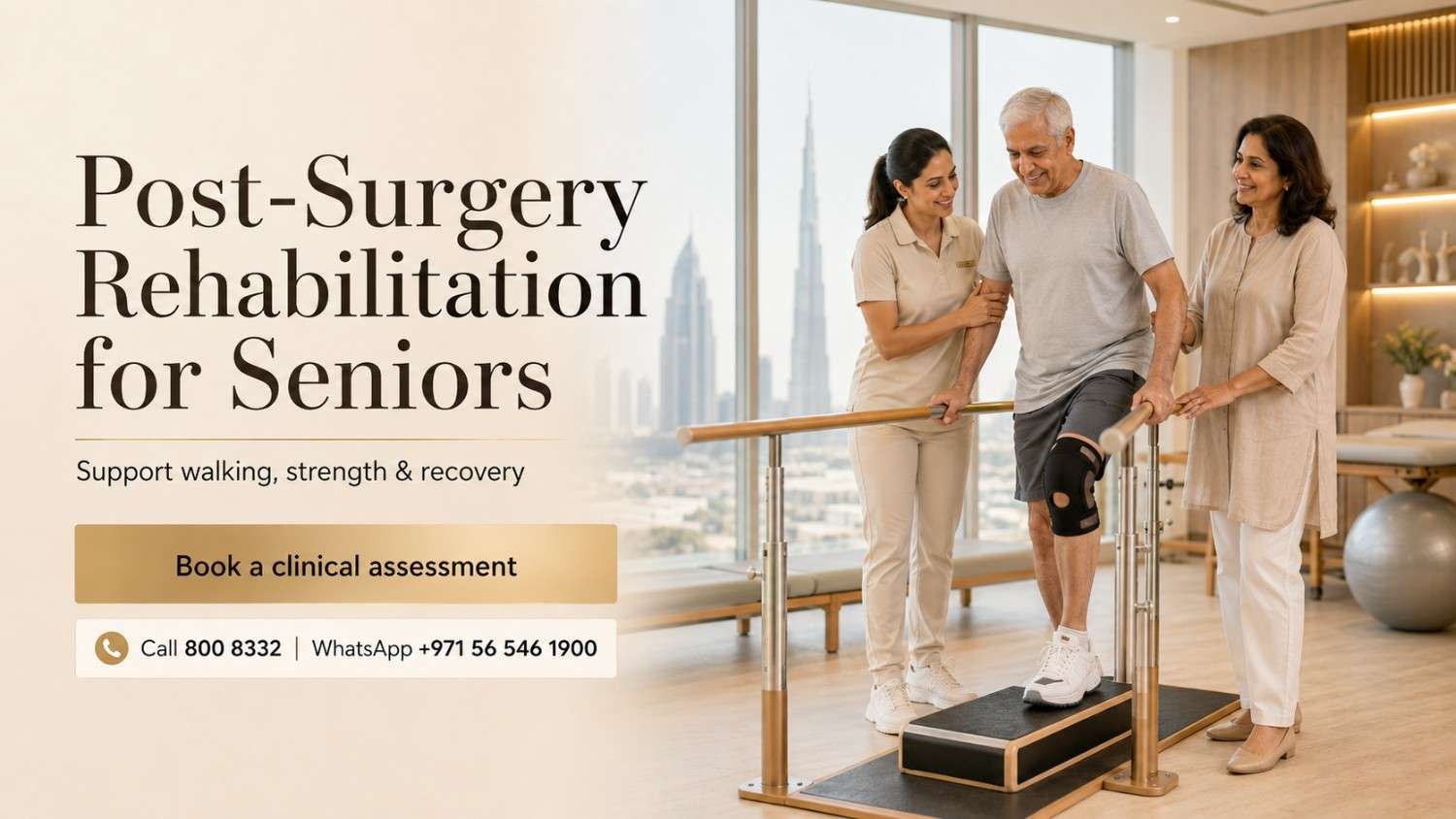
After knee replacement, hip replacement or spine surgery, older adults normally still pass through the three broad healing phases clinicians talk about: inflammatory, proliferative and remodelling. What changes with age is pacing. Tissues are often slower to calm, slower to rebuild and slower to tolerate progression. That is why rushed rehabilitation usually backfires.
The NHS notes that physiotherapy is often used after surgery to improve movement, strength and stamina. In older adults, that may include swelling control, walking retraining, safe transfer practice, stair training, balance re-education and a gradual return to confidence with daily activity. I often tell families that the operation may be one day, but recovery is a structured process. The remodelling phase especially can continue for many months.
Stroke and Neurological Rehabilitation
When an older adult has had a stroke or is living with Parkinson’s disease, physiotherapy is not just about limb strength. It is about timing, initiation, balance, turning, walking rhythm, transfer safety and confidence in movement again. The NHS identifies physiotherapy as helpful for problems moving after stroke and conditions such as Parkinson’s disease.
From the patient’s perspective, symptoms may feel like slowness, shuffling, freezing, weakness on one side, reduced arm swing or fear of falling when changing direction. A well-designed rehabilitation plan may focus on gait cues, sit-to-stand control, dual-task balance, hand and leg function, endurance and family instruction so the person is supported properly between sessions.
Diabetic Foot and Neuropathy
Diabetic neuropathy often presents in ways families recognise immediately: burning feet, numb toes, uncertain footing and a walk that suddenly looks less secure. WHO notes that diabetes is one of the common health conditions affecting older adults, and when diabetes combines with reduced sensation, the risk to balance rises sharply.
This is why physiotherapy can be valuable even when the patient does not describe “pain” in the usual way. I want to assess gait, foot placement, turning confidence, footwear habits, sit-to-stand stability and pressure patterns. The aim is to reduce avoidable instability, improve movement strategy, and help the person feel safe enough to stay active.
What Does Geriatric Physiotherapy Treatment Include at Physioveda?
Clinical Assessment and PPCM™ Framework
Every meaningful treatment plan begins with a careful first session. The NHS notes that a physiotherapist will usually ask about symptoms, medical history and lifestyle, and then examine strength and balance before discussing treatment options. In older adults, that assessment needs to go further. I want to know how the person gets out of bed, how they rise from a sofa, what happens in the bathroom, whether stairs are being avoided, and whether a previous fall has changed their confidence.
At Physioveda, the clinic’s current material presents PPCM™ as a structured posture-and-movement framework. In elderly physiotherapy, that kind of structure is useful because it helps turn a vague complaint like “weakness” into specific, workable findings: postural asymmetry, gait compensation, loss of hip control, poor turning mechanics, reduced step length, balance hesitation or a home setup that is making recovery harder than it needs to be.
Mobility and Gait Training
Walking is not one skill. It is a bundle of smaller skills: initiation, step length, foot clearance, turning, stopping, restarting, negotiating thresholds, and staying upright while distracted. Many falls are preceded by subtle gait changes long before a dramatic collapse.
So in geriatric physiotherapy in Dubai, gait training often includes bed mobility, sit-to-stand work, walking pattern correction, turning practice and stair training. If the person is post-operative or neurologically affected, I may spend a great deal of time on what families think is “simple walking”, because that is often where independence is either rebuilt or lost.
Balance and Proprioceptive Retraining
Balance training should not begin with gimmicks. It should begin at the person’s actual level. Some older adults first need to feel safe standing with an even weight distribution. Others are ready for step reactions, directional change, obstacle navigation or dual-task drills that combine movement with attention.
NICE recommends that falls-prevention exercise programmes be progressive, tailored, and focused on functional components such as balance, coordination, strength and power. That is exactly the logic behind good proprioceptive training. Static balance becomes dynamic balance. Stable ground becomes more variable challenge. Simple movement becomes movement plus attention or conversation. That graded progression is how older adults rebuild trust in their own bodies.
Strengthening Exercises
When families say, “She is unstable,” what they often mean clinically is this: the hips are weak, the legs fatigue quickly, the trunk cannot support posture well, and sit-to-stand has become effortful. That is why strengthening matters so much. But it has to be targeted.
A good programme might focus on quadriceps, gluteals, calf muscles, trunk stability and postural endurance. It should be progressed by assessment, not by guesswork. In older adults, strength work is not body-building. It is joint protection, safer walking, better transfers and more control in real life.
Pain Management
Pain relief still matters, of course. But in elderly care, pain management should support movement rather than replace it. The NHS describes physiotherapy as potentially including exercise, manual therapy, advice, ultrasound and TENS, while also reinforcing the importance of home exercises between visits. That is a sensible framework: use hands-on work and appropriate modalities to make movement easier, then immediately turn that window of relief into better function.
At Physioveda, the clinic currently describes manual therapy, exercise rehabilitation and selected electrotherapy options across its service pages. In practice, I would treat electrotherapy as an adjunct, not the whole plan. It may help specific patients at specific stages, but older adults usually do best when pain relief is integrated with walking, strengthening, posture correction, breathing, transfer practice and a simple home routine they can actually follow.
Home Exercise Programme
The best home exercise programme for an older adult is rarely the longest one. It is the one they will actually do. I prefer a short, clear plan with a few purposeful exercises, written in plain language, sometimes with pictures, and explained to both the patient and the family member or carer.
That matters because progress depends on repetition between sessions. The NHS also notes that home exercises are commonly given after treatment and need to be done regularly to support recovery. In older adults, adherence improves when the programme feels manageable, safe and relevant to what they want back in daily life.
Home Physiotherapy for Elderly Patients in Dubai
For many families, clinic visits are not the hardest part. Getting to the clinic is. That is why home-based care is so valuable. Physioveda’s current site states that it offers
with DHA-licensed professionals delivering care in the patient’s home environment. The NHS also notes that a physiotherapist may be able to visit at home when a patient’s condition prevents travel.
Clinically, home visits can be even more revealing than clinic sessions. I can observe bed transfers, bathroom access, chair height, floor surfaces, doorway turns, stair set-up and the exact places where the patient feels unsafe. NICE now specifically recommends considering home hazard assessment as part of falls prevention in the right patient. That is important, because many older adults do not fall because they are “fragile”. They fall because weak balance meets poor environment at the wrong moment.
Home physiotherapy is often especially appropriate for:
- post-surgery patients after hip or knee replacement or fracture
- stroke rehabilitation patients
- patients with significant balance problems or a fall history
- patients with diabetic neuropathy
- patients who are too weak, anxious or uncomfortable to travel
If your elderly family member finds it difficult to travel to a clinic, speak to our team about home physiotherapy options at Physioveda Medical Centre. For the right patient, treatment at home is not a compromise. It can be the most relevant setting of all.
Geriatric Physiotherapy in Dubai and Healthy Ageing
The mistake many families make is waiting until the problem becomes dramatic. But healthy ageing is not only about “recovery after something goes wrong”. It is about protecting independence before the decline becomes obvious. WHO’s ageing guidance makes this point clearly: supportive environments and regular physical activity help older adults maintain function and reduce dependence.
That is why I see Geriatric Physiotherapy in Dubai as part of a longer-term healthy-ageing strategy. It may help an older adult walk more confidently, sleep better because pain is reduced, tolerate outings again, regain a sense of control after surgery, or stay active enough to remain socially involved. World Physiotherapy’s public messaging around World PT Day reinforces this wider role of the profession in keeping people mobile, independent and engaged across later life.
So when is the right time to start? Earlier than most families think. If walking speed is decreasing, balance is uncertain, arthritis is limiting confidence, or a parent has begun avoiding activity, assessment is already worth doing. Early intervention is almost always easier than rebuilding function after a major decline.
Why Families in Dubai Choose Physioveda for Geriatric Physiotherapy
Families usually want the same few things.
Second, they want clarity: what is wrong, what can realistically improve, and what the family should do next. Third, they want care that feels personalised rather than generic. Physioveda’s current clinic and service pages emphasise DHA-licensed physiotherapists, assessment-led treatment, home care options, PPCM™-based posture analysis and personalised planning.
What makes that clinically useful is not marketing language. It is the combination of setting and method. A clinic-based parent can be assessed in a structured space. A frailer or post-operative parent can be managed. A patient whose pain is being driven by body mechanics may benefit from An active older adult who still plays padel, golf or trains regularly may even need elements of as part of staying active safely. For persistent joint symptoms, it should still be tied back to gait, strength and daily function rather than pain in isolation.
Just as importantly, realistic communication matters. No ethical physiotherapy team should promise miracles. Older adults improve at different rates depending on age, diagnosis, baseline strength, medical history, confidence and consistency with exercises. Trust grows when the clinician tells the truth, explains the process and involves the family.
Book Geriatric Physiotherapy in Dubai at Physioveda Medical Centre
If your parent or older family member is dealing with mobility loss, balance problems, joint stiffness, post-surgery recovery or reduced confidence in walking, now is a sensible time to book a clinical assessment. Geriatric Physiotherapy in Dubai is most helpful when it is matched to the person in front of us, not delayed until the problem becomes more disabling.
Call: 800 8332
WhatsApp: +971 56 546 1900
At Physioveda, we help elderly patients move with more comfort, confidence, and independence one step at a time.
Frequently Asked Questions Geriatric Physiotherapy in Dubai
What is geriatric physiotherapy and who needs it?
Geriatric physiotherapy is physiotherapy specifically adapted for older adults. It focuses on pain, mobility, balance, strength, walking, transfers and safe independence in daily life. It may help people with arthritis, repeated falls, post-surgery weakness, stroke recovery, Parkinson’s disease, diabetic neuropathy or general deconditioning. In simple terms, it is for any older adult whose movement has become slower, less confident or more painful than it should be.
Is geriatric physiotherapy in Dubai available at home?
Yes, it can be. Physioveda currently offers home-care services in Dubai, and home visits can be especially useful for elderly patients who are post-operative, weak, anxious about travel or at significant risk of falling. Home treatment also allows the physiotherapist to assess real-life challenges such as bed transfers, bathroom access and stairs. The NHS similarly recognises that home visits may be appropriate when getting to clinic is difficult.
How does physiotherapy help elderly patients with balance and fall prevention?
Physiotherapy helps by identifying why balance is failing. NICE recommends assessing gait, balance, strength, footwear, medication, long-term conditions and home hazards when falls risk is present. Treatment may then include balance drills, strength work, walking retraining, turning practice, transfer practice and advice for the home environment. This matters because falls are rarely caused by one single issue.
Can elderly patients with arthritis benefit from physiotherapy?
Yes, many can. Physiotherapy may help older adults with arthritis by improving joint mobility, reducing stiffness, strengthening the muscles that support painful joints and making daily tasks more manageable. WHO identifies osteoarthritis as one of the common conditions in older age, and physiotherapy is often useful because it addresses function, not just symptoms. The aim is usually better walking, easier stairs, safer transfers and more confidence, rather than a quick fix.
How long does geriatric physiotherapy take to show results?
There is no honest one-size-fits-all answer. Some older adults feel early relief within a few sessions, especially when pain and stiffness are the main issues. Others, particularly after surgery, stroke or repeated falls, need a longer period of structured rehabilitation. Progress depends on the condition, overall health, strength, fear of movement and how consistently the home programme is followed. What matters most is steady, measurable improvement rather than unrealistic promises.
What conditions are treated with geriatric physiotherapy in Dubai?
Common examples include arthritis, knee pain, hip pain, back pain, neck pain, balance problems, recurrent falls, post-surgery recovery, stroke rehabilitation, Parkinson’s disease, diabetic neuropathy and general age-related weakness. WHO highlights back and neck pain, osteoarthritis, diabetes and frailty as common later-life problems, while the NHS notes physiotherapy can support movement after surgery, stroke and neurological conditions such as Parkinson’s disease.
How do I book geriatric physiotherapy for my elderly parent in Dubai?
The best first step is to book a clinical assessment rather than asking for a generic exercise package. Bring a brief history if you can: diagnosis, scan reports if relevant, surgeries, medication list, recent falls, and the main daily tasks that have become difficult. For Physioveda, the brief you supplied lists the booking routes as phone, WhatsApp and website: Call 800 8332, WhatsApp +971 56 546 1900, or enquire via Physioveda’s website.
Medical Disclaimer: The information provided in this article is for general educational purposes only and does not constitute professional medical or physiotherapy advice, diagnosis, or treatment. Results vary depending on individual age, medical history, severity of condition, and consistency of rehabilitation. Please consult a DHA-licensed physiotherapist for a personalised assessment. If you are experiencing an emergency or acute medical issue, contact emergency services immediately.
Mobility concerns in older adults often overlap with spinal stiffness, nerve-related discomfort, lower-limb weakness and reduced walking confidence. For more practical information, explore our detailed guides on back pain treatment in Dubai, sciatica treatment in Dubai, ankle pain treatment in Dubai and foot pain treatment in Dubai. You can also browse more physiotherapy and healthy-ageing resources on the Physioveda blog and follow Physioveda on Instagram for regular mobility, rehabilitation and wellness guidance.
Book a Consultation
It’s easy and free!
Tags:Balance Training for Elderly DubaiElderly Balance Assessment Dubaielderly physiotherapy dubaiElderly Rehabilitation DubaiFall Prevention Physiotherapy DubaiFall Risk Assessment DubaiGeriatric Physiotherapy in DubaiGeriatric Rehabilitation DubaiHome Care Physiotherapy Dubaihome physiotherapy DubaiHome Physiotherapy for Elderly Dubaiphysiotherapist in DubaiPhysiotherapy at Home for Seniors Dubaiphysiotherapy clinic dubaiPhysiotherapy for Older Adults DubaiSenior Physiotherapy Dubai