
Ankle pain treatment in Dubai focuses on identifying the root cause of discomfort and restoring mobility through evidence-based physiotherapy. Whether caused by a sprain, Achilles tendinopathy, or daily strain, early intervention and personalized rehabilitation can help you return to pain-free movement safely.


Ankle pain treatment in Dubai focuses on relieving discomfort, restoring mobility, and preventing long-term issues through safe, evidence-based physiotherapy. Our DHA-licensed specialists at PhysioVeda understand how ankle injuries – from sprains to chronic Achilles tendinopathy – can impact your daily life. Whether you’re an office worker on your feet all day, an athlete with a sports strain, or an expectant mother experiencing swelling, timely physiotherapy can make a difference. We emphasize a personalized, patient-first approach with advanced rehabilitation and multi-disciplinary care. (Results may vary. A thorough individual assessment by a qualified physiotherapist is essential.)
Understanding Ankle Pain Treatment in Dubai
Ankle pain can arise from injury, overuse, or degenerative changes in the joint, ligaments, tendons, or surrounding muscles. It often presents as tenderness and discomfort especially during weight-bearing activities. Common warning signs include pain when walking or standing, swelling or stiffness around the joint, a feeling that the ankle might “give way,” difficulty putting weight on the foot, and a reduced range of motion. In Dubai’s active environment – with gym workouts, sports, and long hours on the feet – these symptoms are increasingly common. Prompt attention to any persistent ankle pain can help prevent chronic problems. Early physiotherapy evaluation and treatment helps address the root causes before they worsen.
Signs and Symptoms Ankle Pain Treatment in Dubai

- Pain while walking or standing: Persistent ache or sharp pain when bearing weight.
- Swelling or stiffness: Noticeable swelling around the ankle or difficulty bending it.
- Instability or “giving way”: Feeling that the ankle is weak or unstable during movement.
- Difficulty bearing weight: Trouble standing, climbing stairs, or walking normally.
- Reduced range of motion: Limited ability to flex, point, or rotate the foot comfortably.
These symptoms may come on gradually from overuse or suddenly after an injury (like twisting the ankle). If you experience any of these signs, seeking a professional ankle pain treatment in Dubai can help preserve mobility and prevent long-term damage.
Common Causes of Ankle Pain Treatment in Dubai

Ankle discomfort can stem from a variety of conditions and injuries. At PhysioVeda, we regularly treat the following causes of ankle pain:
- Ankle sprains (ligament strains): Twisting or rolling the ankle can overstretch or tear ligaments, especially the lateral (outer) ligaments.
- Ligament instability: Repeated sprains or laxity can lead to chronic ankle instability and pain.
- Tendonitis and tendon injuries: Overuse can inflame tendons such as the peroneal tendons or the Achilles tendon, leading to pain with movement.
- Achilles tendinopathy: Chronic overload of the Achilles tendon can cause pain at the back of the heel and calf, requiring specialized rehab.
- Plantar fasciitis-related strain: Tight calf muscles or plantar fascia issues can refer pain to the ankle or heel.
- Arthritis or joint degeneration: Wear-and-tear (osteoarthritis) or inflammatory arthritis can cause deep ankle joint pain and stiffness.
- Stress fractures or injuries: Tiny cracks in ankle bones from repetitive impact (common in runners) or sudden fractures after trauma.
- Imbalanced gait and posture issues: Abnormal foot alignment, flat feet, or poor posture can put extra stress on the ankles over time.
Each of these conditions disrupts normal function and causes pain. For example, an ankle sprain is the most common cause of acute ankle pain. A strained ligament on the side of the ankle (illustrated above) can cause sharp pain and swelling, while an overused Achilles tendon may hurt when you climb stairs or run. Identifying the specific cause is key to effective treatment.
Who Is at Risk for Ankle Pain Treatment in Dubai
Certain activities and lifestyles increase the likelihood of ankle problems. Those who commonly experience ankle pain include:
- Athletes and Fitness Enthusiasts: Sports that involve running, jumping, or sudden direction changes (soccer, basketball, track, tennis, etc.) often lead to ankle sprains or tendon strains. Sports physiotherapy can help rehab these injuries.
- Runners and Cyclists: High-impact training can overload ankle structures, especially without proper conditioning or rest.
- Active Individuals: Gym-goers or weekend warriors who push their body without adequate recovery are at risk of overuse injuries.
- Pregnant Women: Weight gain and hormonal changes (increased laxity) during pregnancy can cause ankle swelling, instability, and pain. Specialized women’s health physiotherapy can provide safe care for expectant mothers.
- Office Workers on Their Feet: Those who stand or walk a lot at work (retail, hospitality, healthcare) may develop ankle fatigue, swelling, or chronic strain. Improper footwear or flat surfaces can contribute.
- Older Adults: Degenerative changes (arthritis) in the ankle become more common with age, leading to pain and stiffness.
- Postural and Gait Issues: Individuals with poor posture or imbalance (even from sedentary lifestyles) may place uneven stress on one ankle, causing pain over time.
An “ankle pain treatment in Dubai” often involves addressing these underlying risk factors. For example, if poor posture or muscle imbalance is to blame, our Physioveda Posture Correction Matrix (PPCM™) program will identify and correct faulty movement patterns. Likewise, if pregnancy is a factor, we tailor the rehab plan to ensure both mother and baby are safe and comfortable.
When to Seek Ankle Pain Treatment in Dubai
Knowing when to get help can make rehabilitation faster and more effective. Consult a qualified physiotherapist if you notice any of the following:
- Persistent ankle pain or swelling: If discomfort lasts more than a few days or keeps coming back even after rest.
- Difficulty walking or climbing stairs: When simple daily activities become painful or impossible.
- Repeated ankle sprains: Frequent “rolled” ankles suggest underlying weakness or instability that needs professional care.
- Feeling unstable or imbalanced: If the ankle often “gives way” or you notice weakness.
- Pain after sports or exercise: Discomfort that starts during or after activity, and doesn’t improve with rest.
- Symptoms lasting more than 1–2 weeks: Lingering pain, stiffness, or swelling should be evaluated.
Early intervention leads to faster recovery. Catching ankle issues early prevents them from becoming chronic problems. In fact, physiotherapy is most effective when started soon after the injury or onset of symptoms. According to guidelines, exercise-based rehabilitation (often with bracing or manual support) is recommended early on for ankle sprains. Don’t wait for ankle pain to resolve by itself – book an assessment to protect your mobility and prevent future injury.
Benefits of Physiotherapy for Ankle Pain Treatment in Dubai
Physiotherapy offers evidence-based, non-invasive care that addresses ankle pain at its source. Some key benefits include:
- Pain Relief and Swelling Reduction: Through manual therapy techniques, controlled movements, and modalities (like cryotherapy or electrotherapy), we help calm inflammation and ease pain. This often reduces the need for pain medications.
- Restored Strength and Stability: Targeted exercises improve the strength of ankle muscles and tendons. Strong muscles around the joint support it better, reducing chronic instability. For example, neuromuscular training and balance exercises have been shown to significantly improve ankle stability in chronic ankle instability.
- Improved Range of Motion: Gentle mobilization and stretching help break up stiffness. Ankle sprains often cause stiffness, and physiotherapy helps restore normal joint mobility. Early mobilization is considered an integral part of sprain recovery, so we begin gentle movement soon after injury.
- Proprioception (Balance) Training: Specialized balance and coordination exercises re-train the “sense” of your ankle’s position. This proprioceptive training is key to preventing repeat sprains.
- Faster and Lasting Recovery: A structured rehab program that targets the root cause (rather than just masking pain) leads to longer-lasting results. One review found that exercise-based rehab can reduce the likelihood of future ankle sprains.
- Holistic Health and Function: We don’t just treat the ankle – we look at posture, gait, and overall biomechanics. Correcting any contributory issues (like flat feet or poor posture) helps you recover fully and prevents other problems (knees, hips, back) down the line.
In short, physiotherapy is a cornerstone of conservative ankle injury care. It empowers you to heal through movement and education. In many cases, patients improve without any need for surgery. Conservative management led by physiotherapy is often the “gold standard” for ankle sprains, meaning non-surgical rehab is the preferred first-line approach. By choosing physiotherapy for ankle pain, you get expert guidance to rehabilitate safely and avoid chronic complications.
PhysioVeda’s Approach to Ankle Pain Treatment in Dubai
At PhysioVeda Medical Center, our ankle pain treatment in Dubai is highly personalized and multidisciplinary. Every patient benefits from:
- DHA-licensed Expert Therapists: Our team consists of experienced physiotherapists licensed by the Dubai Health Authority, skilled in musculoskeletal rehab. We take a patient-first, empathetic approach to care.
- Comprehensive Initial Assessment: We begin with a detailed evaluation of your condition. This includes medical history, pain triggers, functional limitations, and a hands-on physical exam of the foot and ankle. We also perform gait and posture analysis to spot any imbalances that might have contributed to your pain. For example, the PhysioVeda Posture Correction Matrix (PPCM™) uses advanced movement analysis to pinpoint misalignments affecting your ankles.
- Personalized Treatment Plan: Based on the assessment, we design a tailored rehabilitation program. This plan focuses on your specific injuries and goals, whether it’s returning to sports, standing comfortably at work, or resuming daily walks. The plan evolves as you improve, ensuring a safe progression.
- Multidisciplinary Care: We collaborate across specialties – from sports physiotherapy to women’s health – to address all aspects of your recovery. For instance, if muscle imbalance is a factor, our Posture Correction program will address it. If you need additional support, we coordinate with orthopedists or podiatrists (orthopedic surgeons or foot specialists) as needed.
- Safe, Evidence-Based Modalities: We use advanced, non-invasive therapies to support healing. Depending on your needs, treatments may include manual therapy, therapeutic exercises, dry needling, kinesio taping, cryotherapy, shockwave therapy, and therapeutic electrotherapy. (All methods are used judiciously and as guided by evidence.) Rest assured, we avoid unproven “gimmicks” and focus on what works.
- Home Physiotherapy and Convenience: We understand life in Dubai can be busy. PhysioVeda offers home visit physiotherapy across Dubai for those who cannot come to the clinic. You get the same expert care in the comfort of your home or workplace.
- Comfortable Clinic Setting: Our state-of-the-art clinics in Al Wasl (Jumeirah) and Al Karama feature modern equipment and a patient-centered environment. You’ll receive one-on-one attention in a private treatment room at every session.
By combining these elements, PhysioVeda’s ankle pain treatment in Dubai stands out for its clinical expertise and compassionate care. We focus on education and empowerment, teaching you how to support your own recovery with safe movements and lifestyle advice. Throughout your rehab journey, we track progress with objective measures (strength tests, gait re-assessment) so you always know how you’re improving.
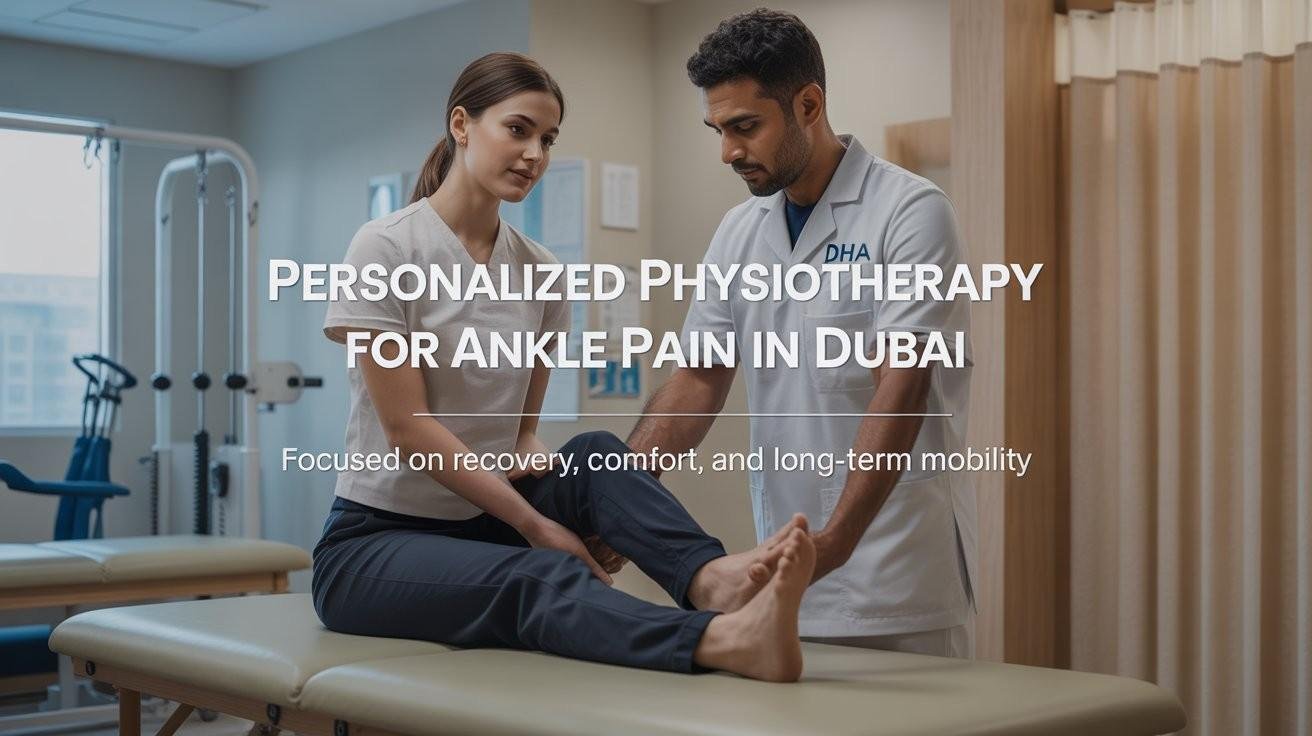
Our therapists work hands-on with each patient. We might use gentle mobilizations and guided exercises to gradually restore function (shown above). All treatments are tailored to your comfort level. You’ll notice our warm, supportive approach from day one.
What to Expect During Your Ankle Pain Treatment in Dubai
Visiting PhysioVeda for ankle pain treatment in Dubai is a step-by-step process:
- Initial Consultation: You’ll meet with a physiotherapist who will review your history and symptoms. We perform a hands-on examination – checking ligament stability, joint movement, muscle strength, and gait. (Diagnostic imaging like X-rays or MRI may be recommended if needed.)
- Goal Setting: Together we set realistic recovery goals: better walking ability, pain-free sports participation, returning to work, etc.
- Treatment Plan Implementation: In early sessions, we focus on pain and swelling control with gentle techniques (e.g. manual release, taping, strapping) and begin light mobility exercises if appropriate. Gradually we introduce strengthening and proprioceptive (balance) exercises. You may use equipment like resistance bands, balance boards, or machines as appropriate.
- Hands-on and Modalities: Our physiotherapists apply hands-on therapy to mobilize stiff joints and soft tissues. We often use therapeutic modalities (like TENS or ultrasound) to reduce pain and enhance healing. If needed, advanced techniques like shockwave therapy or dry needling can be integrated safely.
- Progress Tracking: We reassess your ankle regularly – measuring range of motion, strength, balance, and pain levels. This helps us adjust the program. You should notice gradual improvement: less pain, more stability, and confidence in movement.
- Home Exercise and Education: You’ll learn exercises and stretches to do between sessions to reinforce progress. We also advise on footwear, activity modification, and posture/gait habits to prevent re-injury.
- Graduation and Maintenance: Once goals are met (for example, full range restored and activities resumed), we plan a taper to maintenance. We’ll advise on a home program to keep the ankle strong, and discuss preventive measures (see next section).
Throughout your treatment, expect a professional yet caring atmosphere. You are encouraged to ask questions and participate actively in your recovery. Our aim is full transparency and empowerment – we explain each step and why it’s important.
Preventive Tips for Healthy Ankles
After recovery, maintaining ankle health is crucial. Here are general tips (always consult your physiotherapist for a personalized plan):
- Wear Supportive Footwear: Choose shoes with good arch support and cushioning, especially if you spend long hours standing. Avoid unsupportive high heels or flip-flops for extended periods.
- Maintain Strength and Flexibility: Regularly stretch your calf muscles and Achilles tendon gently. Simple balance exercises (standing on one foot) can be done at home to keep ankles stable.
- Warm Up Before Exercise: Always do a proper warm-up and cool-down when playing sports or running. Gradually increase intensity to avoid sudden overload.
- Listen to Your Body: Don’t push through sharp pain. If an activity hurts your ankle, stop and rest. Early intervention prevents small issues from becoming chronic.
- Mind Your Posture and Gait: Pay attention to how you stand and walk. Good posture and even weight distribution reduce stress on ankles. If you notice limping or uneven wear on your shoes, have your gait checked.
- Stay Active and Maintain Healthy Weight: Excess weight increases pressure on your ankles. Regular low-impact exercises (swimming, cycling) can keep joints mobile without strain.
- Follow Professional Advice: If you’ve had an ankle injury before, adhere to recommended rehab exercises and possibly use supportive braces during high-risk activities until you’re fully healed.
Implementing these tips can reduce the risk of re-injury. Remember, even after you feel better, gradual return to full activity is safest. Ask your physiotherapist for preventive ankle exercises or ergonomic advice tailored to your situation.
Questions to Ask Your Physiotherapist For Ankle Pain Treatment in Dubai
When meeting your physiotherapist, it’s good to ask questions that clarify your care and build trust. Some helpful questions include:
- “Is my physiotherapist qualified and licensed by the DHA?” – Ensures you’re receiving expert care in line with Dubai Health Authority standards.
- “What is the root cause of my ankle pain?” – Understanding the diagnosis helps you follow the treatment plan.
- “What can I do at home to help my recovery?” – Your therapist should give you safe home exercises or stretches to do between sessions.
- “How long will treatment take, and how often should I come?” – Get an estimated timeline and schedule so you can plan accordingly (recovery varies by injury severity).
- “What activities should I avoid, and when can I return to sports or work?” – Knowing precautions helps you heal without setbacks.
- “Do I need any special footwear or supports?” – Sometimes braces, orthotics, or shoe changes can speed recovery.
- “What outcomes can I expect?” – A good therapist will set realistic goals and explain how therapy will improve your ankle health.
Physioveda therapists welcome these questions. Your informed participation ensures a better, faster recovery. We emphasize clear communication and patient education, because an educated patient is an empowered patient.
Frequently Asked Questions For Ankle Pain Treatment in Dubai
What is the most common cause of ankle pain?
The most common cause is an ankle sprain, where ligaments on the outside of the ankle stretch or tear
. Overuse injuries like Achilles tendinopathy or plantar fasciitis can also cause ankle pain.
Can ankle pain heal without treatment?
Mild strains may improve on their own, but improper healing can lead to chronic instability or ongoing pain. Early physiotherapy helps ensure ligaments and tendons heal correctly, reducing the risk of future problems.
Is physiotherapy effective for ankle pain?
Yes. Physiotherapy is one of the most effective conservative treatments for ankle issues
. By strengthening muscles, improving balance, and restoring mobility, it promotes healing and prevents recurrence more reliably than rest alone.
How long does recovery from an ankle injury take?
Recovery time varies by injury severity and patient factors. Your therapist will tailor the pace to your progress. Consistent therapy usually leads to recovery.
Can I walk on a painful ankle?
Gentle walking is usually fine, but avoid excessive strain or twisting on a painful ankle. If walking causes sharp pain, use support (crutches or a brace) and schedule a physiotherapy assessment. The right therapy will guide you on safe weight-bearing activities.
Do I need surgery for an ankle injury?
Most ankle pain and sprains can be treated successfully with non-surgical methods. Surgery is generally considered only if there is severe ligament rupture, fracture, or if conservative therapy fails over time. Our priority is to try personalized physiotherapy first to restore function.
Should I use an ankle brace?
An ankle brace can provide temporary support after an injury. However, it should not replace rehabilitation. We encourage using braces during initial healing, combined with exercises to strengthen the ankle. Eventually, you’ll wean off the brace as your muscles get stronger.
Is ankle physiotherapy painful?
No. Treatment is designed to be progressive and as comfortable as possible. Initially, you may feel some discomfort when performing new movements or stretches, but your therapist will work within your comfort level. The goal is gradual improvement without unnecessary pain.
When should I see a physiotherapist for ankle pain?
If ankle pain persists beyond a few days, interferes with walking, or follows a sprain/injury, it’s wise to seek help. Also, if symptoms like swelling or instability are getting worse or not improving, an early consultation is best.
Can physiotherapy prevent future ankle injuries?
Yes. Proper rehabilitation improves muscle strength, balance, and joint control
, which significantly reduces the risk of re-spraining your ankle. We also address gait and posture issues to prevent overloading the ankle in the future.
Ready to Take the First Step for Ankle Pain Treatment in Dubai
Contact PhysioVeda Medical Center to start your journey toward pain-free movement. Our friendly team is here to guide you with expert care.
- Phone: +971 56 546 1900 (mobile) or 800 8332 (toll-free)
- WhatsApp: Chat with us for appointments and inquiries
Clinic Locations: Al Wasl (Jumeirah) and Al Karama, Dubai. We also offer at-home physiotherapy visits across Dubai.
Take the first step toward recovery with confidence and care. Our DHA-licensed team is ready to help you restore ankle function and return to the activities you love — safely and effectively.
Read Our previous blog doctor on call
Disclaimer: The information provided here is for educational purposes. Results may vary. Always consult a qualified physiotherapist for an individual assessment and personalized treatment plan.
Book a Consultation
It’s easy and free!
Tags:ankle injury treatment Dubaiankle instability treatment Dubaiankle ligament injury treatment Dubaiankle pain clinic Dubaiankle pain clinic near me Dubaiankle pain doctor Dubaiankle pain physiotherapist near meankle pain physiotherapy dubaiankle pain relief Dubaiankle pain specialist Dubaiankle pain treatment Dubaiankle pain treatment near me Dubaiankle rehab Dubaiankle rehabilitation center Dubaiankle sprain treatment dubaiankle therapy Dubaibest physiotherapy for ankle pain Dubaifoot and ankle pain Dubaiphysiotherapy for ankle pain Dubaisports injury ankle treatment Dubai