Ligaments are strong, fibrous bands of tissue that connect bones to each other, providing stability and support to our joints. When a ligament tears, whether from a sports injury, accident, or sudden awkward movement, it can significantly impact your mobility, cause considerable pain, and compromise joint stability. Understanding ligament tears and the vital role physiotherapy …

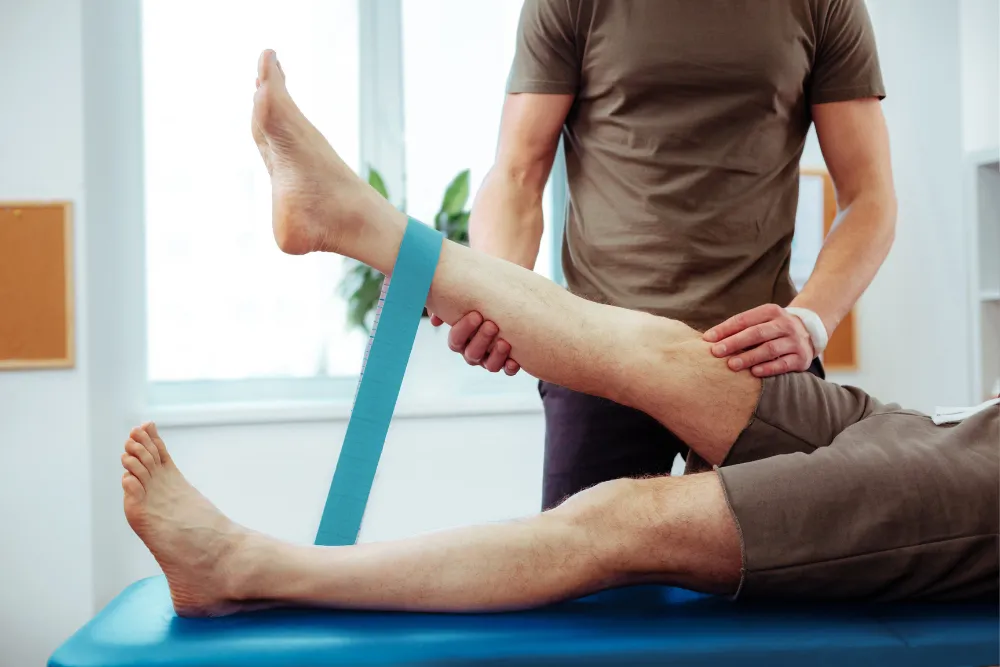
Ligaments are strong, fibrous bands of tissue that connect bones to each other, providing stability and support to our joints. When a ligament tears, whether from a sports injury, accident, or sudden awkward movement, it can significantly impact your mobility, cause considerable pain, and compromise joint stability. Understanding ligament tears and the vital role physiotherapy plays in recovery can make the difference between a full return to activity and ongoing joint problems.
Types of Ligament Tears
Ligament injuries are classified using a grading system that helps healthcare professionals determine severity and appropriate treatment:
- Grade 1 (Mild Sprain): The ligament fibers are stretched but remain intact. You may experience mild pain and tenderness with minimal swelling. Joint stability is usually maintained, and recovery typically takes a few weeks.
- Grade 2 (Partial Tear): Some ligament fibers are torn while others remain connected. This moderate injury causes noticeable pain, swelling, and bruising with some joint instability. Recovery can take several weeks to a few months.
- Grade 3 (Complete Tear): The ligament is completely ruptured or separated from the bone. This severe injury results in significant swelling, bruising, and joint instability. These injuries may require surgical intervention and extended rehabilitation.
Common Locations for Ligament Tears
Knee Ligaments:
- ACL (Anterior Cruciate Ligament)
- PCL (Posterior Cruciate Ligament)
- MCL (Medial Collateral Ligament)
- LCL (Lateral Collateral Ligament)
Ankle Ligaments:
- Lateral ligaments
- Deltoid ligament
Wrist Ligaments:
- Scapholunate ligament
Shoulder Ligaments:
- Glenohumeral ligaments
- AC (Acromioclavicular) ligaments
Thumb Ligaments:
- UCL (Ulnar Collateral Ligament)
How Physiotherapy Helps in Ligament Tear Recovery
Pain and Swelling Management
Your physiotherapist will implement strategies to control inflammation and reduce discomfort, including ice therapy to decrease swelling, compression techniques to minimize fluid accumulation, elevation to promote drainage, and gentle manual therapy or massage to improve circulation.
Restoring Movement and Flexibility
Once the acute inflammation subsides, your physiotherapist will guide you through carefully progressed range-of-motion exercises that prevent stiffness without stressing the healing ligament. Gentle stretching helps maintain flexibility in surrounding tissues, while manual therapy techniques address any restrictions in joint movement.
Strengthening Surrounding Muscles
As your ligament heals, the muscles around the injured joint must be strengthened to provide additional support and stability. Your physiotherapist will design progressive resistance programs targeting specific muscle groups that protect and stabilize your joint. For knee injuries, this includes quadriceps and hamstring strengthening, while ankle injuries benefit from calf and peroneal muscle exercises. This muscular support reduces stress on the healing ligament and helps prevent future injuries.
Improving Balance and Proprioception
Ligament injuries often damage proprioceptive nerve endings that tell your brain where your body is in space. Physiotherapy includes specialized exercises to retrain these systems through single-leg balance activities, unstable surface training, and sport-specific agility drills. This retrains your body’s spatial awareness to reduce re-injury risk.
Guiding Gradual Return to Activities
Your physiotherapist serves as your guide through the recovery journey, ensuring you progress at the right pace. They’ll help you safely return to daily activities through functional training that mimics your specific activities, sport-specific drills when appropriate, and ongoing assessment to ensure your joint is ready for each new challenge.
Importance of Early Physiotherapy Intervention
Beginning physiotherapy soon after a ligament injury offers significant advantages:
- Faster recovery: Establishes the right healing environment from the start and prevents compensatory movement patterns
- Better function restoration: Maintains mobility during healing, preventing stiffness and muscle atrophy
- Prevention of chronic problems: Addresses all aspects of joint function, reducing risk of persistent instability and future injuries
When Is Surgery Needed?
Grade 3 complete tears often require surgical repair, particularly for:
- Young, active individuals
- Critical stabilizing ligaments like the ACL
- Cases with significant instability or associated injuries
Physiotherapy’s Role:
- Pre-surgery (Prehabilitation): Reduces swelling, maintains muscle strength, prepares you for post-operative exercises
- Post-surgery: Guides structured rehabilitation to protect the surgical repair while progressively restoring strength, flexibility, and function
Conclusion
Ligament tears are highly treatable when approached with proper care and professional guidance. Physiotherapy offers a comprehensive approach to rehabilitation, addressing not just the injured ligament but all supporting structures necessary for complete recovery. From managing initial pain through progressive strengthening and return to full activity, physiotherapy provides the expertise and support you need to heal properly.
The key to optimal recovery lies in seeking professional help early. Whether you’ve just sustained an injury or are dealing with a lingering problem from a past ligament tear, a qualified physiotherapist can assess your specific situation and develop a personalized treatment plan.
If you’re in Dubai and dealing with a ligament injury, don’t stay sidelined longer than necessary. Visit a trusted physiotherapy center in Dubai for a thorough assessment and start your recovery journey today.
References
- Hughston JC (1994). The importance of the posterior oblique ligament in repairs of acute tears of the medial ligaments in knees with and without an associated rupture of the anterior cruciate ligament. Journal of Bone and Joint Surgery.
- Vuurberg G, Hoorntje A, Wink LM, et al. (2018). Diagnosis, treatment and prevention of ankle sprains: update of an evidence-based clinical guideline. British Journal of Sports Medicine.
- Logerstedt DS, Scalzitti D, et al. (2017). Knee Ligament Sprain: Clinical Practice Guidelines Revision 2017. Journal of Orthopaedic & Sports Physical Therapy.
- Kotsifaki R, Korakakis V, King E, et al. (2023). Aspetar clinical practice guideline on rehabilitation after anterior cruciate ligament reconstruction. British Journal of Sports Medicine.
- Adams D, Logerstedt DS, Hunter-Giordano A, et al. (2022). ACL Reconstruction Rehabilitation: Clinical Data, Biologic Healing, and Criterion-Based Milestones to Inform a Return-to-Sport Guideline. Sports Health.
- Schiftan GS, Ross LA, Hahne AJ (2015). The effectiveness of proprioceptive training in preventing ankle sprains in sporting populations: a systematic review and meta-analysis. Journal of Science and Medicine in Sport.
- Riva D, Bianchi R, Rocca F, Mamo C (2016). Proprioceptive training and injury prevention in a professional men’s basketball team: A six-year prospective study. Journal of Strength and Conditioning Research.
Book a Consultation
It’s easy and free!