Diastasis recti is a separation of the rectus abdominis muscles (your "six-pack" muscles) along the midline of your abdomen, commonly occurring during pregnancy but also possible in other situations. Who Is More Likely to Develop Diastasis Recti? While diastasis recti can affect anyone, certain factors increase your risk: Here's an evidence-based approach to physiotherapy for …

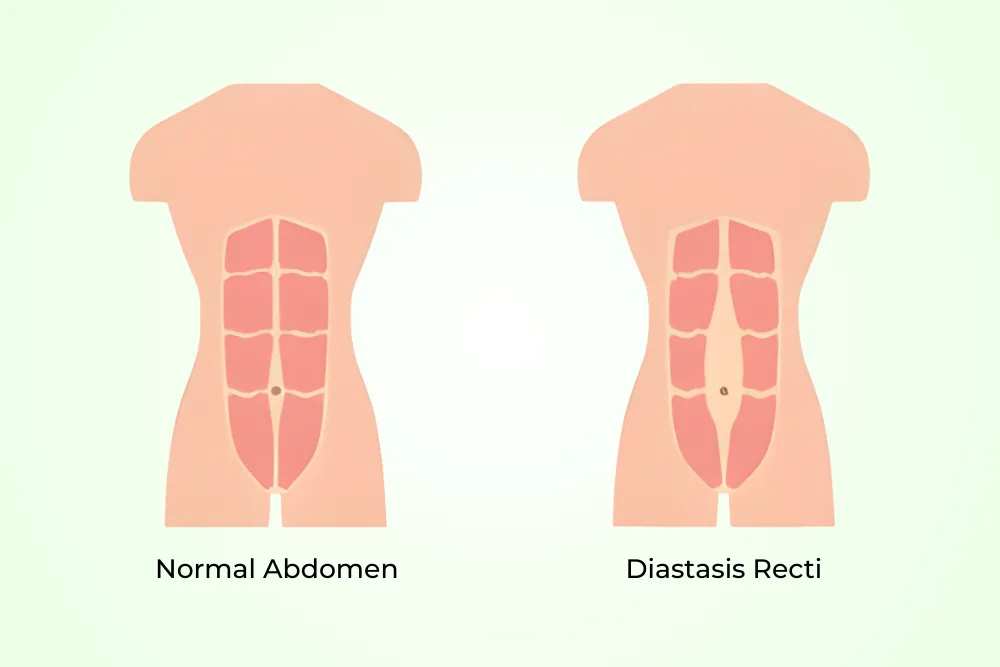
Diastasis recti is a separation of the rectus abdominis muscles (your “six-pack” muscles) along the midline of your abdomen, commonly occurring during pregnancy but also possible in other situations.
Who Is More Likely to Develop Diastasis Recti?
While diastasis recti can affect anyone, certain factors increase your risk:
- Pregnancy-related factors: Multiple pregnancies, carrying multiples (twins, triplets), having a large baby, or pregnancies close together put more strain on the abdominal wall. Women over 35 or those with excess amniotic fluid are also at higher risk.
- Pre-existing conditions: Poor core strength before pregnancy, previous abdominal surgery, or a naturally wider linea alba can make you more susceptible.
- Physical factors: Excessive weight gain during pregnancy, improper lifting techniques, or performing high-impact exercises without proper core engagement can contribute to the condition.
- Other populations: Men who lift heavy weights incorrectly, individuals with chronic coughing conditions, or those who have experienced significant weight fluctuations may also develop diastasis recti.
Here’s an evidence-based approach to physiotherapy for this condition.
Initial Assessment
A physiotherapist will first assess the width and depth of the separation, typically measured in finger-widths above, at, and below your navel.
They’ll also evaluate your core function and any related issues like back pain or pelvic floor dysfunction.
Core Principles of Treatment
Avoid increasing intra-abdominal pressure: This means avoiding traditional crunches, sit-ups, planks, and heavy lifting initially, as these can worsen the separation.
Focus on deep core activation: The goal is to restore functional tension across the linea alba (the connective tissue between the muscles) rather than just closing the gap.
Key Exercises
Transverse abdominis activation: Gentle drawing-in of your lower abdomen while breathing normally. This can be done lying down, sitting, or standing.
Pelvic tilts: Gentle tilting of your pelvis while engaging your deep core, helping to reconnect the brain-muscle pathway.
Diaphragmatic breathing: Proper breathing patterns are crucial for core coordination and reducing pressure on the abdominal wall.
Modified exercises: As you progress, exercises like modified bird-dogs, bridges, side-lying work, and eventually more challenging variations.
Important Considerations
Recovery typically takes 6-12 weeks of consistent work, though severe cases may take longer. The width of the gap matters less than the functional strength and tension of the connective tissue. Many people retain some separation but regain full function.
A pelvic floor physiotherapist is often the best specialist for this condition, as diastasis recti frequently occurs alongside pelvic floor issues.
If you’re postpartum, waiting until after your 6-week checkup to begin formal treatment is generally recommended, though gentle work can start earlier.
Ready to start your recovery journey?
At Physioveda, our specialized women’s health physiotherapists in Dubai are experienced in treating diastasis recti with personalized, evidence-based care.
Book your assessment today and take the first step toward rebuilding your core strength and confidence.
Book a Consultation
It’s easy and free!