As parents, we eagerly anticipate every milestone in our child's development. Watching your baby take those first wobbly steps is an unforgettable moment. However, when those steps don't come as expected, it's natural to feel concerned. If your baby isn't walking yet, you're not alone, and there's help available. At Physioveda, we specialize in pediatric …

As parents, we eagerly anticipate every milestone in our child’s development. Watching your baby take those first wobbly steps is an unforgettable moment. However, when those steps don’t come as expected, it’s natural to feel concerned. If your baby isn’t walking yet, you’re not alone, and there’s help available.
At Physioveda, we specialize in pediatric physiotherapy that supports babies and toddlers in reaching their developmental milestones. In this article, we’ll explore when walking typically occurs, signs that may warrant professional attention, and how physiotherapy can make a meaningful difference in your child’s motor development.
Understanding Normal Walking Development
Every child develops at their own pace, and walking is no exception. While there’s a typical timeline, it’s important to remember that variation is normal.
Typical Walking Timeline
9-12 months: Most babies begin pulling themselves up to stand and may cruise along furniture.
12-15 months: Many babies take their first independent steps during this period.
15-18 months: Most children are walking independently with increasing confidence.
By 18 months: The majority of toddlers are walking well on their own.
Important note: Some perfectly healthy children don’t walk until 16-17 months or even slightly later. However, if your child hasn’t begun walking by 18 months, it’s recommended to consult with a pediatric physiotherapist.
When Should You Consider Physiotherapy?
While patience is important, certain signs may indicate that your baby would benefit from professional evaluation and intervention. At Physioveda, we recommend considering physiotherapy if you notice:
Red Flags to Watch For
Delayed milestones: Not pulling to stand by 12 months, not attempting to walk while holding furniture by 15 months, or not walking independently by 18 months.
Muscle tone concerns: Your baby feels unusually stiff (hypertonic) or exceptionally floppy (hypotonic) when you pick them up.
Asymmetry: Consistently favoring one side of the body, using one hand or leg more than the other, or showing uneven movement patterns.
Poor weight-bearing: Difficulty supporting weight on legs when held in a standing position or walking on tiptoes exclusively.
Lack of progression: Missing earlier milestones like rolling, sitting independently, or crawling, or showing no interest in movement and exploration.
Regression: Losing previously acquired motor skills.
Trust your instincts: If something doesn’t feel right about your child’s movement or development, it’s always better to seek professional advice. Early intervention often leads to the best outcomes.
How Physioveda’s Pediatric Physiotherapy Can Help
Pediatric physiotherapy is specifically designed to support children in developing the strength, coordination, and confidence needed for movement. Our approach at Physioveda is gentle, play-based, and tailored to each child’s unique needs.
The Physioveda Assessment Process
Our physiotherapists begin with a comprehensive evaluation that examines:
Muscle strength and tone: Assessing whether muscles are developing appropriately for age.
Joint range of motion: Checking for any restrictions or tightness that may limit movement.
Balance and coordination: Evaluating how well your baby maintains stability and controls movements.
Gross motor skills: Observing skills like rolling, sitting, crawling, standing, and stepping.
Developmental history: Understanding your child’s birth history, medical background, and progression through other milestones.
Treatment Techniques
At Physioveda, we make therapy engaging and enjoyable. Our sessions are play-based and include:
Strengthening exercises: Activities that build core, leg, and overall body strength through play and movement.
Balance training: Games and exercises that improve stability and coordination.
Weight-bearing activities: Encouraging your baby to support their body weight in standing and stepping positions.
Gait training: Practicing walking patterns with support, gradually building independence.
Stretching and mobility work: Addressing any tightness or restrictions in muscles and joints.
Therapeutic play: Using toys, equipment, and fun activities that motivate movement and skill development.
Supporting Your Baby at Home: Physioveda’s Recommendations
Physiotherapy works best when it extends beyond our clinic. We’ll provide you with personalized home exercises and strategies, but here are some general tips to encourage walking development:
Create a Safe, Encouraging Environment
Maximize floor time: Give your baby plenty of supervised time on the floor to explore movement freely.
Furniture cruising: Arrange sturdy furniture so your baby can pull up and move along it safely.
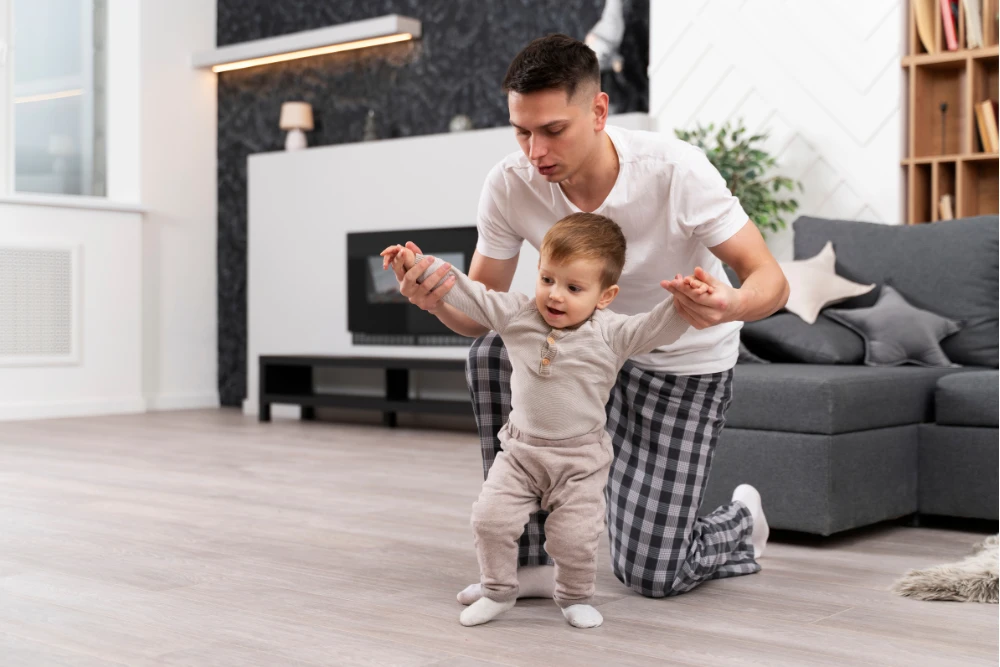
Hand-holding practice: Hold your baby’s hands and practice walking together, gradually reducing support.
Push toys: Provide stable push toys or activity walkers that support your baby as they practice stepping.
Limit restrictive equipment: Minimize time in bouncers, jumpers, or walkers that restrict natural movement patterns.
Make Movement Fun
Motivating toys: Place favorite toys just out of reach to encourage standing and stepping.
Music and movement: Play music and dance together, supporting your baby in standing and swaying.
Positive reinforcement: Celebrate every effort, whether it’s pulling up, taking a step, or simply trying.
Follow their lead: Don’t force practice. Let your baby explore at their own pace while providing gentle encouragement.
Common Conditions We Treat at Physioveda
Our pediatric physiotherapy team has experience supporting babies with various conditions that may affect walking development:
Developmental delay: When motor milestones are slower than expected without a specific diagnosis.
Hypotonia (low muscle tone): Muscles that are too relaxed, affecting strength and movement.
Hypertonia (high muscle tone): Muscles that are too tight, limiting flexibility and movement.
Cerebral palsy: A group of disorders affecting movement and posture.
Down syndrome: A genetic condition often associated with lower muscle tone and delayed motor development.
Torticollis: Tight neck muscles that can affect overall movement patterns.
Prematurity-related challenges: Developmental delays related to early birth.
What to Expect: Your Journey with Physioveda
Starting physiotherapy can feel overwhelming, but we’re here to support you every step of the way. Here’s what you can expect:
Initial Consultation
During your first visit, we’ll spend time getting to know your baby, understanding your concerns, and conducting a thorough assessment. We’ll discuss our findings with you and develop a personalized treatment plan together.
Treatment Frequency
Most babies benefit from 1-2 sessions per week, though this varies based on individual needs. Each session typically lasts 30-45 minutes, keeping it manageable for young children.
Progress Monitoring
We’ll regularly reassess your baby’s development and adjust treatment as needed. You’ll receive guidance on home activities to reinforce what we work on in sessions.
Timeline for Results
Every child is different, so progress timelines vary. Some babies show improvement within weeks, while others need several months of consistent therapy. The key is patience, consistency, and celebrating small victories along the way.
Frequently Asked Questions
Will my baby definitely walk if we do physiotherapy?
While we cannot guarantee specific outcomes, physiotherapy significantly improves most children’s motor development. Our goal is to help your baby reach their full potential, whatever that may be.
Is it too late to start physiotherapy if my baby is already 18 months or older?
It’s never too late! While early intervention is ideal, children can benefit from physiotherapy at any age. The brain and body are remarkably adaptable, especially in early childhood.
Will the exercises hurt my baby?
Pediatric physiotherapy should never be painful. Our approach is gentle, play-based, and designed to be enjoyable for your baby. If your baby shows signs of discomfort, we’ll adjust our approach immediately.
Do I need a doctor’s referral?
This depends on your insurance and location. At Physioveda, we can advise you on whether a referral is necessary and help coordinate with your pediatrician if needed.
Take the First Step Today
If your baby isn’t walking yet and you’re concerned, remember that seeking help is a sign of strength, not worry. Early intervention through pediatric physiotherapy can make a significant difference in your child’s development and confidence.
At Physioveda, we’re passionate about helping children reach their full potential. Our experienced pediatric physiotherapists create individualized, compassionate care plans that support both your baby and your family throughout the journey.
Contact Physioveda today to schedule an assessment. Together, we’ll help your little one take those important first steps toward a lifetime of confident movement.
Book a Consultation
It’s easy and free!